Best AI Voice Assistants in 2026
The leading AI voice assistants in 2026 deliver faster, more consistent customer experiences by resolving conversations end to end at scale.

Key highlights
TL;DR — Key Takeaways
- AI voice assistants improve customer experience by handling routine tasks quickly and consistently across phone calls
- Modern voice assistants use conversational AI, voice recognition, and real-time speech recognition to deliver accurate responses
- The biggest CX gains come from resolving customer queries end to end, not just routing calls
- Leading platforms in 2026 include Orvera, PolyAI, Cognigy, Dialogflow, Talkdesk AI, Vonage AI, VoiceSpin, Lindy, Synthflow, and VAPI
- Orvera stands out because of its sentiment analysis, smart routing, and scalable automation
Customer experience is now the strongest differentiator for modern businesses. Customers expect fast, accurate, and consistent responses across phone calls, inbound calls, and outbound calls, regardless of volume or business hours. Meeting those expectations at scale is where AI voice assistants have become essential.
The best AI voice assistants for CX in 2026 do far more than answer FAQs. They manage real customer conversations, understand intent, and perform tasks such as customer authentication, order status updates, and lead qualification. By combining natural language processing, automatic speech recognition, and voice automation, these systems reduce wait times, handle high call volumes, and improve service quality without increasing operational costs.
When deployed correctly, AI-powered voice assistants help contact centers optimize customer interactions, support human agents, and deliver personalized support across the entire customer journey.
In this guide, we break down how modern AI voice assistants work, the key features that matter for CX, and which platforms are leading in 2026, including why Orvera is increasingly chosen for real-world enterprise operations.
What Are AI Voice Assistants in 2026?
AI voice assistants in 2026 are advanced voice AI systems designed to manage complete customer interactions, not just trigger voice commands or route calls. They combine speech recognition, natural language understanding, and voice technology to convert spoken language into actions across existing systems.
Unlike earlier voice bots or basic AI voice bots, modern AI voice agents can:
- Understand customer intent across multi-step conversations
- Handle complex queries without restarting the flow
- Use customer data from customer relationship management systems
- Adapt responses based on sentiment analysis and context
- Deliver consistent service across multiple languages
These capabilities allow AI phone agents to handle routine support calls, answer FAQs, and manage repetitive customer interactions. As a result, teams reduce missed calls, shorten wait times, and improve customer satisfaction while allowing traditional systems to focus on cases that require empathy or judgment.
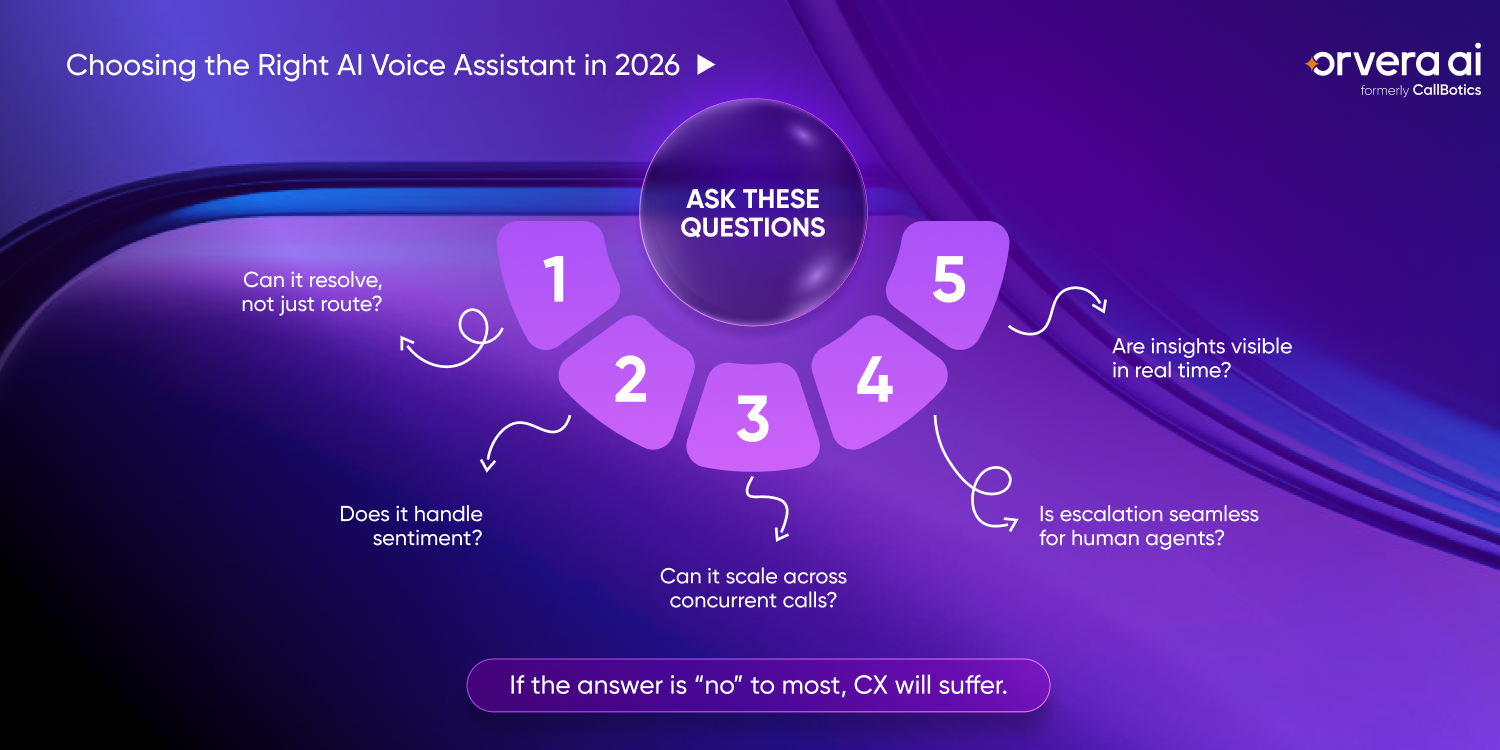
In the next sections, we’ll explore the benefits, challenges, and top platforms shaping AI voice assistants in 2026, with a practical focus on customer experience and operational impact.
Teams looking for faster resolution and fewer handoffs can explore how Orvera supports structured voice workflows in live contact center environments. (opens in a new tab)Benefits of AI Voice Assistants for Customer Experience
The value of AI voice assistants becomes clear (opens in a new tab) when they improve the parts of customer experience people notice most, such as response speed, consistency, and resolution quality. When deployed well, they reduce friction for customers while giving support teams more capacity to focus on higher-value conversations. The biggest gains come from using voice AI to complete real tasks, not just handle the first few seconds of a call.
Key benefits include:
- 24/7 availability and faster responses: AI voice assistants handle routine tasks such as answering FAQs, checking order status, and qualifying leads outside business hours. This reduces wait times, prevents missed calls, and maintains service quality during peak demand.
- Personalized support using customer data: By integrating with customer relationship management systems and other existing systems, AI voice assistants access customer data to deliver personalized support without customers repeating themselves, improving customer satisfaction.
- Fewer transfers and smoother resolution: AI voice agents intelligently route calls and complete tasks end-to-end. When escalation is needed, context is preserved for human agents, ensuring consistent service across customer conversations.
- Consistency across interactions: Using natural language understanding and defined conversation flows, AI delivers accurate responses regardless of time or volume, improving trust and overall customer experience.
- Insights through real-time analytics: With real-time analytics, teams can understand customer intent, spot friction, and continuously optimize customer interactions instead of relying on delayed reports.
- Lower operational costs without CX trade-offs: By automating predictable interactions and managing concurrent calls, AI-powered voice assistants reduce operational costs.
Common Challenges in CX With AI Voice Assistants
Not every AI voice assistant performs well once it moves from demo mode into live customer operations. Many teams run into problems when the platform cannot handle complexity, integrate with key systems, or escalate cleanly when the conversation changes. Understanding these common challenges is important because they often determine whether voice automation improves CX or creates more friction.
Common challenges include:
- Limited emotional understanding without sentiment analysis
- Accuracy issues with complex queries due to weak language models
- Integration gaps with CRM and scheduling systems
- High effort to create voice agents and maintain flows
- Inconsistent service across languages without multilingual support
- Escalation without context from AI phone agents to human agents
These challenges affect customer satisfaction, agent workload, and scalability. Platforms that succeed in 2026 balance voice automation, intelligent escalation, and strong analytics to support real customer conversations.
Top AI Voice Assistants in 2026
The top AI voice assistants in 2026 vary widely in how they are built, how quickly they can be deployed, and how well they support real customer experience goals. Some are better suited for developer control, some for branded voice experiences, and others for large-scale contact center execution. The platforms below are compared through a CX lens, with emphasis on practical fit rather than feature lists alone.
1. Orvera
Orvera is built for production contact center environments where automation needs to do more than handle surface-level conversations. It embeds AI directly into live call workflows, helping teams automate structured interactions end-to-end while escalating to agents only when needed. This makes it especially strong for organizations focused on reducing wait times, limiting transfers, and improving resolution quality at scale. It is best suited for teams that want operationally grounded CX automation.
Best Features
- Real-time sentiment analysis to adapt tone and escalation paths
- Smart intent-based routing that reduces transfers
- Inbound and outbound calls automation using the same logic
- Built-in analytics (opens in a new tab) with interaction-level visibility
- Designed for concurrent calls at enterprise scale
Why It Works for CX
Orvera focuses on outcomes customers feel: shorter wait times, fewer handoffs, and clear resolution. Calls do not stall halfway through automation. Either the AI completes the task or escalates with full context.
Pros
- Designed for real contact center workflows
- Faster time to value than most enterprise platforms
- Strong balance between automation and human intervention
- Cost-efficient for high-volume environments
Cons
- Less suitable for teams seeking deep custom code-first experimentation
2. PolyAI
PolyAI is best known for highly natural voice conversations (opens in a new tab) and a polished customer-facing experience. It is often a strong fit for brands that prioritize tone, speech quality, and conversational realism in voice interactions. While it performs well in premium CX environments, deployment can take longer and may be less flexible for teams that need to move quickly across multiple workflows. It is generally a better fit for voice experience quality than for rapid operational rollout.
Best Features
- Highly natural speech and conversational pacing
- Strong natural language understanding
- Well-suited for branded voice experiences
Pros
- Conversations feel close to human speech
- Strong for customer-facing brands focused on tone
Cons
- Premium pricing
- Longer deployment cycles
- Less flexible for rapid iteration across many workflows
3. Cognigy
Cognigy is an enterprise automation platform designed for organizations that need to orchestrate complex workflows across multiple channels. It offers strong control, deep integration, and governance, making it appealing for large teams with broad automation needs. At the same time, it usually requires significant implementation effort and a steeper learning curve than lighter-weight platforms. It fits best where enterprise process complexity matters more than deployment speed.
Best Features
- Complex workflow orchestration
- Deep integrations across enterprise stacks
- Multi-channel automation beyond voice
Pros
- Powerful for large, complex organizations
- Strong governance and control
Cons
- High implementation effort
- Steep learning curve
- Overkill for teams focused primarily on voice CX
4. Google Dialogflow
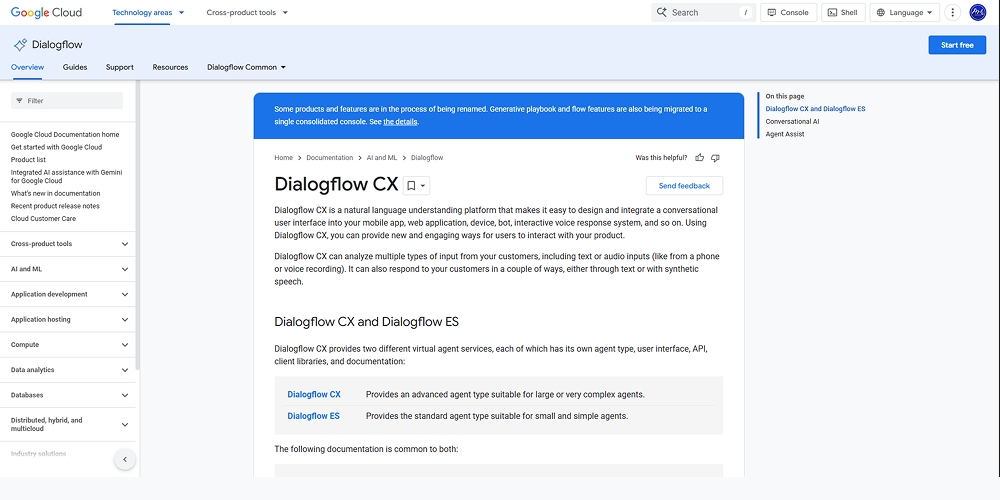
Dialogflow is a common choice for teams already invested in the Google ecosystem and seeking flexible, intent-based automation. It provides strong speech capabilities and a reliable cloud foundation for structured conversational use cases. However, much of the CX logic often needs to be built and maintained internally, which can increase technical overhead. It works best for teams with engineering resources that want flexibility over out-of-the-box contact center workflows.
Best Features
- Strong speech recognition and voice recognition
- Scales well with cloud infrastructure
- Flexible intent modeling
Pros
- Reliable core AI models
- Good performance for structured use cases
Cons
- Requires technical resources
- Limited out-of-the-box CX workflows
- Most logic must be built and maintained internally
5. Talkdesk AI
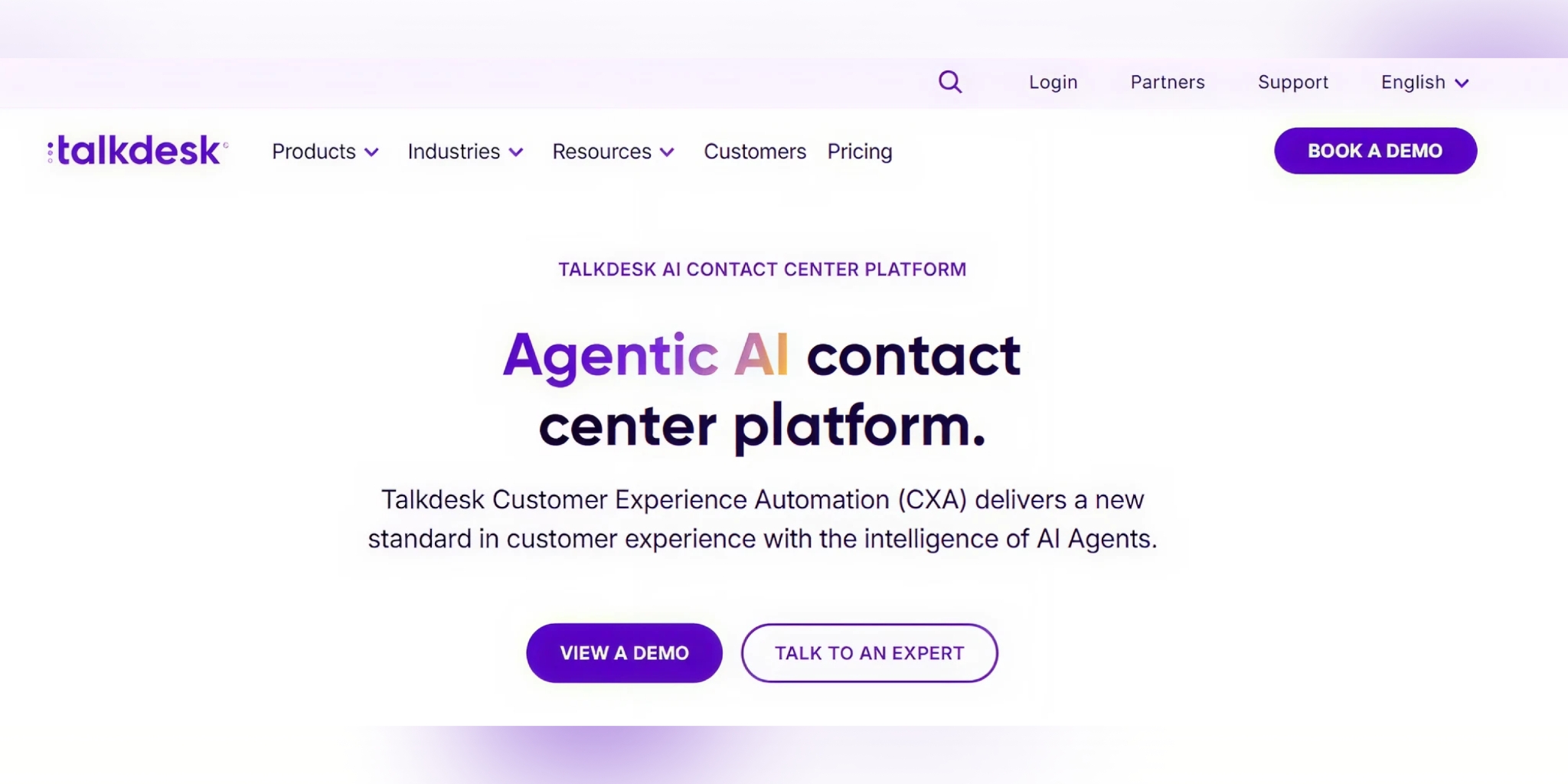
Talkdesk AI is most effective for organizations that already run their operations on the Talkdesk platform. Its main advantage is native integration, which can make deployment and reporting more seamless inside that ecosystem. For existing Talkdesk users, it can be a practical way to extend automation without rebuilding workflows elsewhere. Outside that environment, though, flexibility can be more limited.
Best Features
- Native integration with Talkdesk
- AI-driven routing and automation
Pros
- Seamless for existing Talkdesk customers
- Strong reporting within the ecosystem
Cons
- Platform lock-in
- Less flexible outside Talkdesk environments
6. Vonage AI
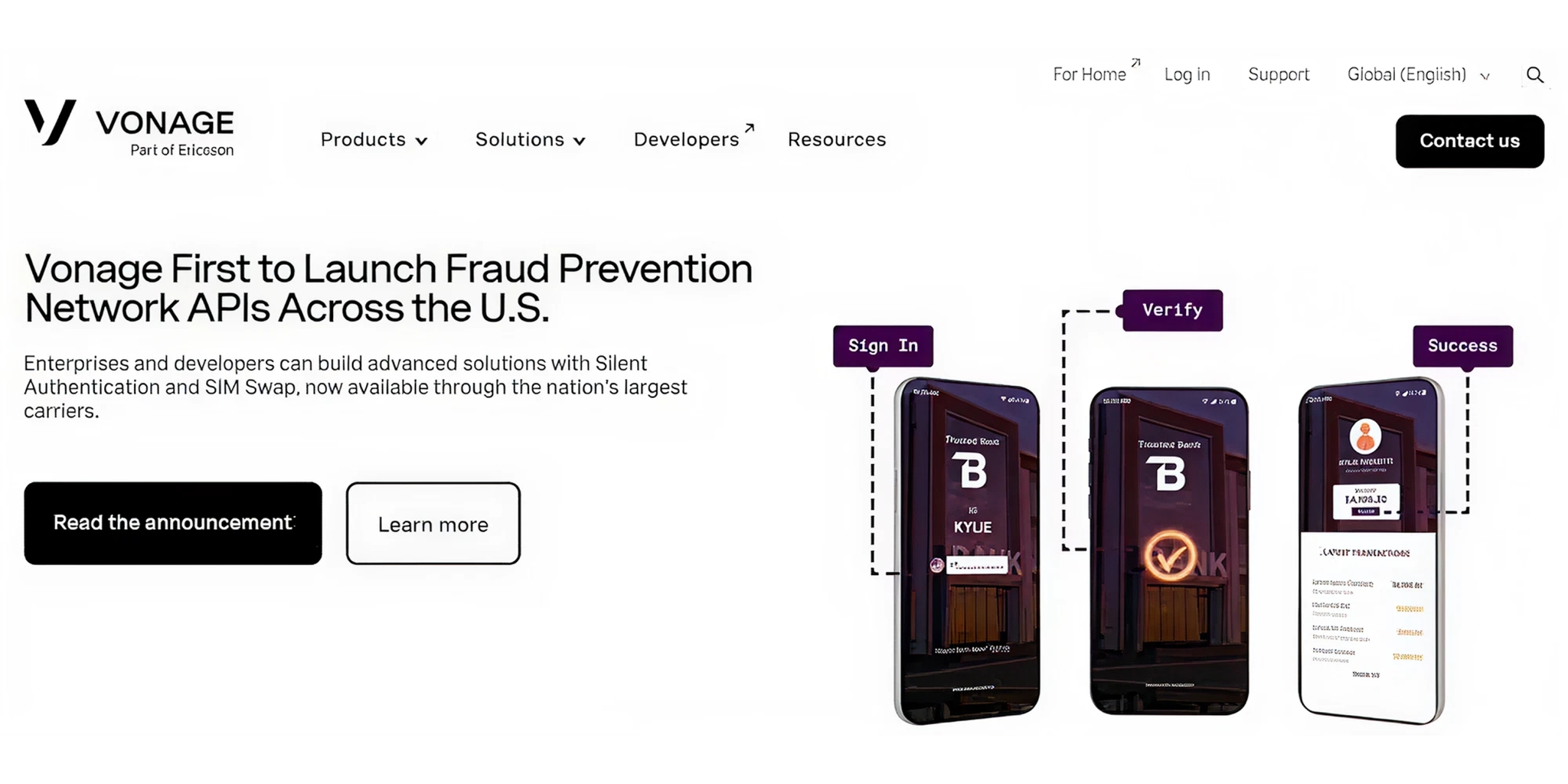
Vonage AI is geared toward teams that want programmable voice automation with strong telephony foundations. Its API-driven approach gives developers the flexibility to build customized workflows and communication logic for voice interactions. That flexibility is valuable, but it also means setup tends to be more engineering-heavy than business-user-friendly. It is a better fit for technical teams building tailored voice systems than for plug-and-play CX operations.
Best Features
- Flexible APIs for AI phone agents
- Programmable call handling
Pros
- Good for teams building custom workflows
- Strong telephony infrastructure
Cons
- Developer-heavy setup
- Requires ongoing engineering investment
7. VoiceSpin
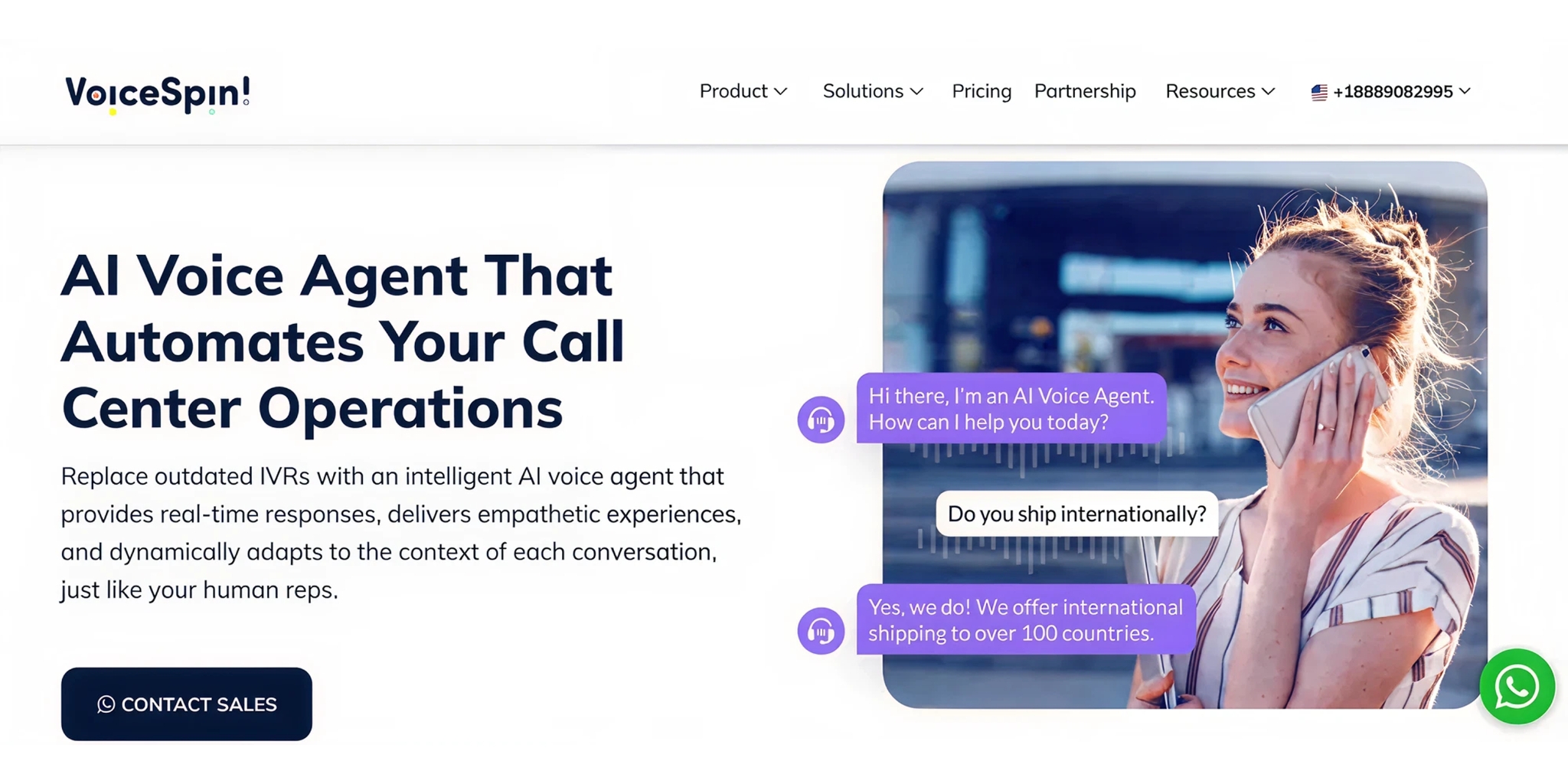
VoiceSpin is typically positioned for outbound sales teams looking for automation for dialing, follow-ups, and revenue-focused workflows. It can be effective for high-volume outbound use cases where speed and sales activity matter most. However, it is less suited for deeper service-oriented CX environments that require complex conversational handling or escalation logic. It fits best in outbound performance settings rather than full-service customer support.
Best Features
- Predictive dialing
- Automation for sales calls and follow-ups
Pros
- Effective for outbound-heavy workflows
- Good fit for revenue teams
Cons
- Limited advanced conversational AI
- Less suited for complex support environments
8. Lindy
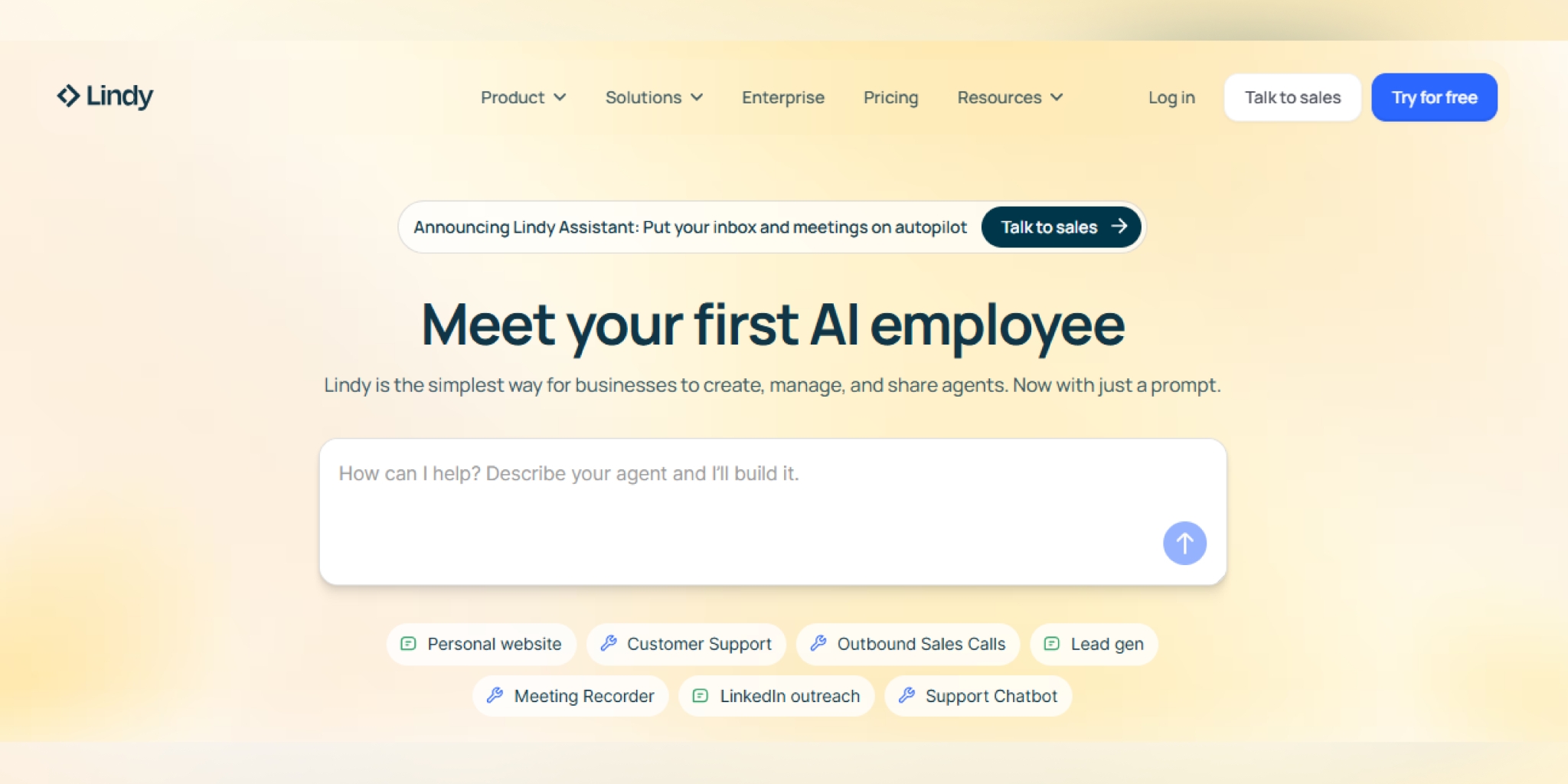
Lindy is more of a productivity automation tool than a full contact center platform. It is useful for teams that want a quick setup and lightweight task-oriented workflows without a heavy implementation process. That simplicity makes it accessible, especially for smaller teams or early-stage use cases. But it is not designed for enterprise-scale CX operations with advanced analytics, telephony logic, or structured escalation paths.
Best Features
- Fast setup
- Task-oriented automation
Pros
- Startup-friendly
- Easy to deploy
Cons
- Not designed for enterprise-scale CX
- Limited analytics and escalation logic
9. Synthflow
Synthflow is aimed at teams looking to launch voice agents (opens in a new tab) quickly with a no-code approach. Its visual builder and lower technical barrier make it attractive for fast pilots and simple automation flows. It is a practical option for getting started, especially when speed matters more than workflow complexity. For larger contact centers or more demanding CX use cases, though, its depth can feel limited over time.
Best Features
- No code agent builder
- Visual flow design
Pros
- Fast to launch
- Minimal technical requirements
Cons
- Struggles with complex queries
- Limited depth for large contact centers
10. VAPI
VAPI is a developer-first platform designed for teams that want full control over how voice automation is built. It offers flexible APIs and a high degree of configurability, which makes it appealing for technical experimentation and custom implementations. The trade-off is that much of the CX logic, orchestration, and analytics must be built separately. It is best suited for engineering-led teams rather than for operations teams seeking ready-made contact center functionality.
Best Features
- Flexible APIs
- Custom voice automation
Pros
- Highly configurable
- Strong for experimentation
Cons
- Requires significant dev resources
- No built-in CX logic or analytics
Comparison Table: Best AI Voice Assistants 2026
| Platform | Best For | CX Depth | Setup Effort |
|---|---|---|---|
| Orvera AI | Contact centers, Enterprise organizations | High | Low |
| PolyAI | Voice realism | High | Medium–High |
| Cognigy | Enterprise orchestration | Medium | High |
| Dialogflow | Enterprise orchestration | Medium | High |
| Talkdesk AI | Talkdesk users | Medium | Medium |
| Vonage AI | Programmable voice | Medium | High |
| VoiceSpin | Outbound sales | Low–Medium | Medium |
| Lindy | Productivity | Low | Low |
| Synthflow | Simple pilots | Medium | Low |
| VAPI | Developers | Medium | High |
Why Orvera Stands Out in 2026
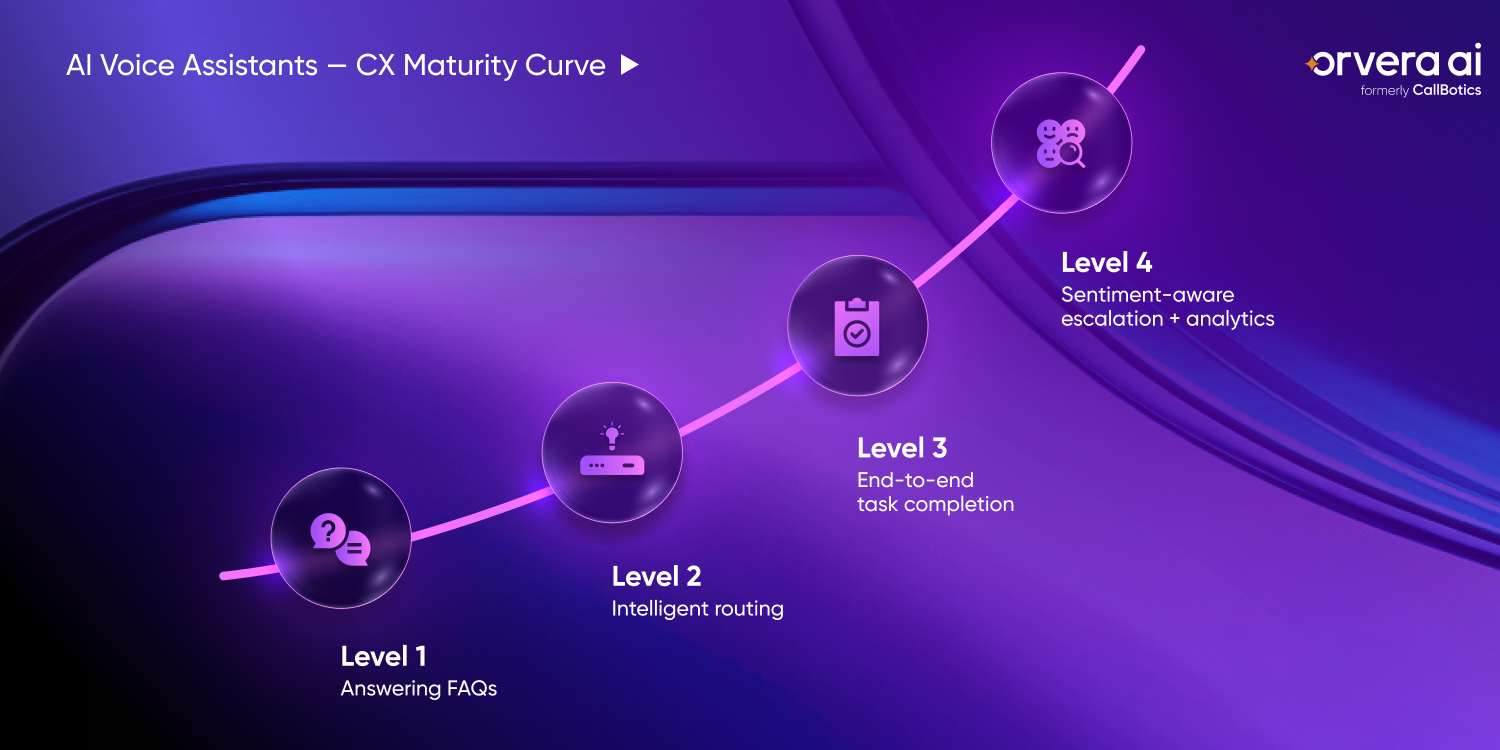
Many AI voice platforms can automate part of a conversation, but fewer are designed to carry customer interactions through to a real outcome. Orvera stands out (opens in a new tab) because it was shaped by more than 18 years of contact center operations experience, giving it a much stronger grounding in how live customer conversations actually unfold at scale. Built around real-world conditions such as high call volumes, escalation pressure, operational visibility, and resolution quality, it is especially relevant for teams evaluating platforms based on CX performance rather than just voice quality.
Orvera stands out because it:
- Resolves structured customer conversations end-to-end, with the action taken before the call closes
- Ready to deploy in 3 to 6 weeks
- Uses real-time sentiment analysis to adjust tone and escalation paths
- Handles inbound and outbound calls using the same conversation logic
- Scales across concurrent calls without degrading performance
- Makes performance visible through built-in real-time analytics
For customers, this means fewer transfers, shorter wait times, and clearer resolution. For teams, it means predictable performance, faster deployment, and lower operational complexity.
Orvera strengthens how teams operate by removing friction from routine interactions and preserving human judgment where it matters most.
Conclusion
The best AI voice assistants in 2026 are those that can do more than just answer a question or route a call. They need to handle real customer conversations reliably, connect with existing systems, and support faster, smoother resolution at scale. As this comparison shows, the right platform depends on what matters most to your team: voice quality, orchestration, deployment speed, developer control, or overall customer experience.
Frequently asked questions
An AI voice assistant is a system that uses speech recognition and natural language understanding to manage customer conversations and perform tasks over phone calls.
They reduce wait times, limit transfers, provide consistent responses, and resolve routine issues quickly, which leads to smoother customer interactions.
Industries with high call volumes, such as customer support, healthcare scheduling, insurance, financial services, and sales operations, see the strongest benefits.
Orvera is designed specifically for contact centers, focusing on end-to-end resolution, fast deployment, real-time analytics, and a strong balance between automation and human escalation.