11 Best Conversational AI Platforms for Enterprise Operations in 2026
Eleven conversational AI platforms enterprises evaluate in 2026, grouped by operating model, with what each is built for, how to choose between them, and where Orvera fits.

Key highlights
TL;DR — What Enterprise Leaders Should Take Away
- Conversational AI has become core operational infrastructure for contact centers in 2026, not an experimental add-on.
- Modern platforms manage multi-step conversations, adapt to changing intent, and complete actions across enterprise systems.
- Enterprises evaluate platforms based on execution quality, ownership clarity, and performance under real operating conditions.
- Voice remains the strongest indicator of platform maturity because it tests context handling, sentiment awareness, and escalation reliability.
- Leading platforms differ by operating model: voice-first execution, digital self-service, orchestration layers, or developer toolkits.
- Orvera stands out for outcome-driven automation across voice and digital channels, deployment in 3 to 6 weeks, consistent performance at scale, and built-in visibility.
- The most successful deployments focus on completing workflows end to end while preserving human judgment where it adds value.
Customer engagement is entering a more intentional and experience-driven phase. Voice, chat, and messaging now work together as part of a single service journey, and enterprises are using AI to deliver consistency, speed, and clarity across every interaction. In 2026, conversational AI is no longer experimental. It is becoming a foundational layer in how modern contact centers operate.
This guide explores the platforms enterprises are actively evaluating as part of that shift. It is written for operations leaders, CX teams, and digital transformation stakeholders who want to understand how modern conversational AI platforms support real business workflows and how to evaluate them with confidence.
What a Conversational AI Platform Represents in 2026
A conversational AI platform is software that enables automated agents to manage multi-step conversations, adapt as intent evolves, and complete actions across enterprise systems. Today, this means the platform is expected to do more than understand a question and return an answer. It must recognize context, guide the conversation toward resolution, and take the right action inside connected tools. For enterprises, it acts as a service layer between customers, agents, workflows, and business systems. Its value depends on how reliably it can support real customer journeys, not just isolated interactions.
The category has advanced steadily over the past few years. Early solutions focused on scripted responses or basic intent recognition. Today’s platforms support full workflows such as appointment scheduling, eligibility verification, order updates, billing inquiries, and service resolution across voice and digital channels.
At a structural level, mature conversational AI platforms bring together four essential capabilities:
- Language understanding that works with natural speech and phrasing
- Conversation orchestration that adjusts as interactions progress
- Execution layers that connect with CRMs and internal systems
- Analytics that provide visibility into outcomes and performance
How Enterprises Use Conversational AI Platforms Today
Enterprises are applying conversational AI in areas where consistency, availability, and scale matter most. These platforms now handle a wide range of interactions that benefit from structured logic combined with natural conversation. They are commonly used to reduce pressure on live teams, shorten response times, and keep service available beyond standard staffing capacity. In contact centers, they help manage predictable customer needs without forcing every interaction into a live-agent queue. Their role is most valuable when the conversation has a clear process, required data, and defined next steps.
Common enterprise use cases include:
- Inbound service and support calls
- Outbound reminders, confirmations, and follow-ups
- Lead qualification and intelligent routing
- Self-service resolution for repeatable workflows
- Volume management during planned or seasonal peaks
What distinguishes effective AI conversation platforms is their ability to maintain continuity and tone while completing tasks. The intent is to support human teams by handling routine interactions reliably and escalating only when human judgment adds value.
How to Choose the Right Conversational AI Platform
Selecting a platform requires understanding how it behaves in real operational environments. Enterprise teams increasingly evaluate platforms based on execution quality rather than feature volume. The right platform should match the complexity of the workflows it is expected to handle, the channels customers use most, and the level of control operations teams need after launch. Buyers should look closely at how the platform manages context, escalations, integrations, analytics, and workflow changes under live conditions.
A strong evaluation should also test whether the platform can support business outcomes such as faster resolution, lower service load, better visibility, and consistent customer experience at scale.
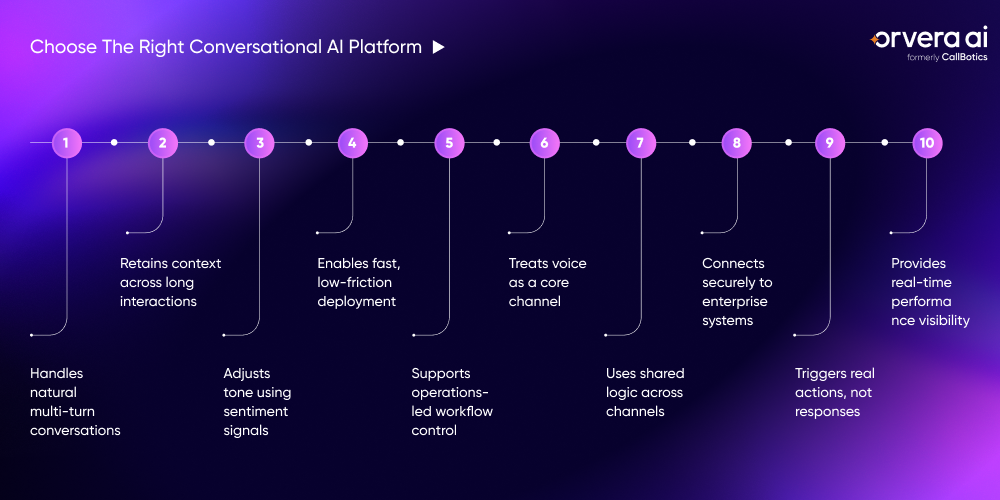
Conversation intelligence and flow design
Enterprise conversations often include clarifications, follow-up questions, and natural pauses.
Reliable platforms support:
- Multi-turn conversations with adaptive logic
- Context retention across extended interactions
- Tone alignment informed by sentiment signals
These capabilities are especially important for voice interactions, where natural dialogue is essential.
Setup speed and operational ownership
Time to value plays a critical role in adoption. Platforms that enable quick deployment allow teams to test, learn, and refine faster.
Enterprise teams favor platforms that:
- Go live using existing documentation and workflows
- Minimize dependency on engineering resources
- Enable operations teams to manage and adjust flows
Faster setup supports earlier insights and continuous improvement.
Omnichannel execution with voice at the core
Customers move comfortably between voice and digital channels. Platforms must support this continuity without duplicating effort.
Enterprise buyers look for platforms that:
- Treat voice as a core interaction channel
- Apply the same conversation logic across inbound and outbound calls
- Extend workflows into chat and messaging seamlessly
Voice remains a strong signal of platform readiness and execution quality.
Integrations that enable action
Automation delivers value when AI can complete tasks, not just respond.
Key integration considerations include:
- CRM and ticketing system connectivity
- Secure access to customer and account data
- Ability to trigger workflows and updates
These capabilities define true enterprise conversational AI platforms.
Observability and performance insight
Enterprises benefit from clear visibility into how AI is performing.
Leading platforms offer:
- Real-time sentiment awareness
- Conversation-level analytics
- Process-level performance reporting (opens in a new tab)
- Compliance and audit readiness
How Enterprises Categorize Conversational AI Platforms
During evaluation, enterprises typically group platforms based on operating focus rather than positioning language. This makes it easier to compare vendors by how they are actually used, who owns them internally, and what level of workflow complexity they can support. A voice-first platform may be better suited for high-volume call resolution, while a developer toolkit may work better for teams building custom assistants from scratch. The right category depends on the enterprise’s service model, channel mix, technical resources, and need for operational control.
| Platform Category | Core Strength | Typical Use Case | Enterprise Fit |
|---|---|---|---|
| Voice-first platforms | Deep conversation handling | Call-centric workflows | High |
| Digital-first platforms | Messaging automation | Chat and social channels | Medium |
| Developer toolkits | Custom workflows | Engineering-led initiatives | Variable |
| Contact center extensions | Native routing | Basic automation | Limited |
11 Conversational AI Platforms Enterprises Actively Evaluate in 2026
Once enterprises move from category research to vendor evaluation, clarity matters. Platforms are assessed not only on capability, but on how reliably they support real operational workflows at scale. At this stage, teams are no longer comparing features in isolation. They are evaluating how each platform performs across real conversations, integrates with existing systems, and handles variability in customer behavior. The focus shifts to execution under pressure, consistency across channels, and the ability to support measurable outcomes across service operations.
The sections below cover 11 platforms, each evaluated on architecture, execution depth, and enterprise fit:
1. Orvera
Orvera is built specifically for contact center environments where conversations across voice and digital channels drive both cost and experience. The platform is designed around structured, outcome-oriented interactions.
Platform depth and capabilities:
- Designed to resolve structured customer conversations end to end, with the action taken before the call closes
- Ready for deployment in 3 to 6 weeks using existing operational documentation
- Real-time sentiment analysis that dynamically adjusts tone and escalation paths
- Shared conversation logic across inbound and outbound calls
- Stable performance across high concurrency without degradation
- Built-in real-time analytics that provide visibility into outcomes, escalation rates, and resolution patterns
Best fit:
- Enterprises where voice is the primary service channel
- Operations teams focused on predictability, fast rollout, and measurable outcomes
2. Dialpad Support
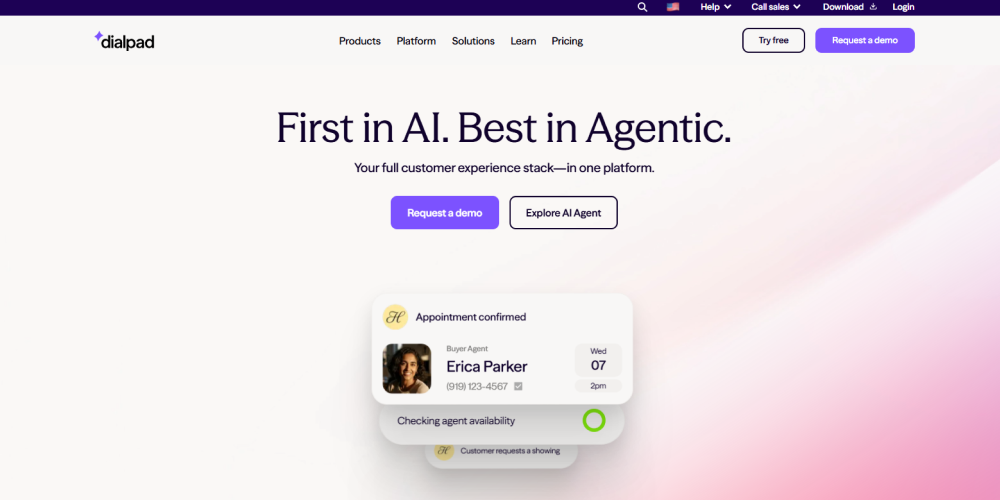
Dialpad combines cloud telephony with embedded AI features that focus on agent productivity and conversation intelligence. Its strength is that AI is built directly into the communications layer, so teams can use transcription, summaries, sentiment signals, and coaching without managing a separate conversational AI stack. Dialpad is especially relevant for support teams that want better visibility into live calls, agent performance, and follow-up quality while keeping humans central to resolution.
Platform depth and capabilities:
- Native telephony with real-time transcription and call summaries
- Live sentiment indicators for supervisors and quality teams
- AI-assisted coaching and performance insights
- Integrated contact center reporting and workforce tools
Best fit:
- Teams modernizing call center infrastructure with strong agent visibility
- Organizations prioritizing AI-assisted agents rather than autonomous resolution
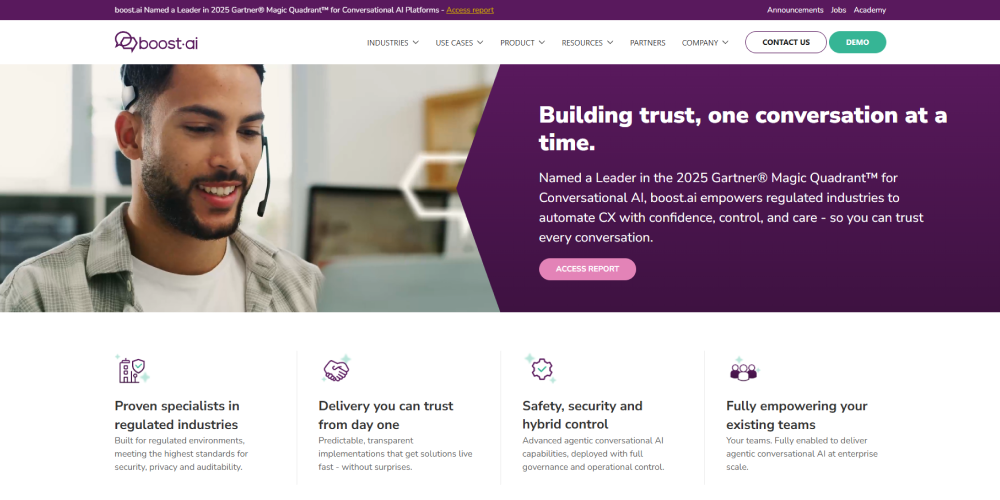
3. Boost.ai
Boost.ai focuses on enterprise self-service automation with an emphasis on structured customer journeys. The platform is known for virtual agents that help enterprises build and manage self-service experiences across chat and voice. Its no-code builder, industry modules, and enterprise guardrails make it a practical fit for organizations that want internal teams to own defined customer journeys without heavy developer dependency.
Platform depth and capabilities:
- Virtual agents designed for high containment and resolution in support workflows
- Strong governance and compliance controls
- Intent recognition optimized for repeatable service scenarios
- Emphasis on customer satisfaction and predictable automation
Best fit:
- Enterprises investing heavily in digital self-service programs
- Regulated environments with defined support journeys
4. OneReach.ai
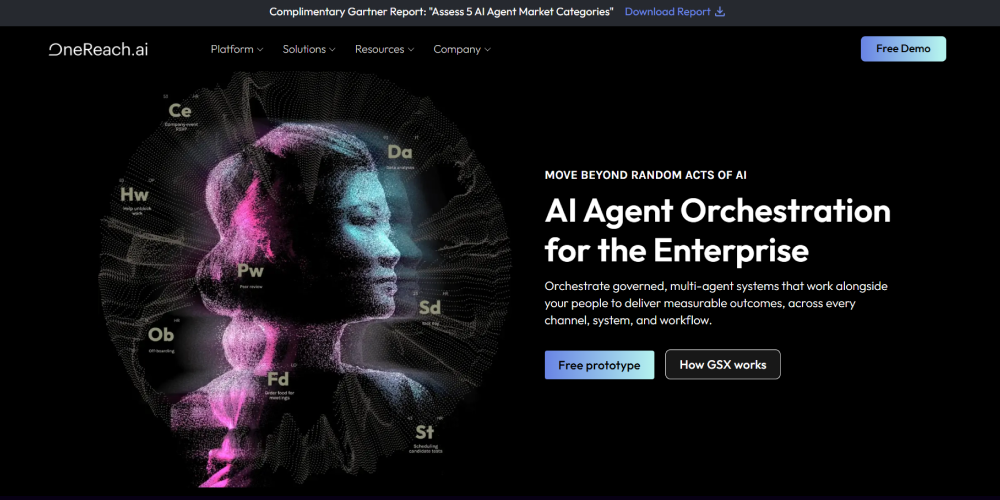
OneReach.ai positions itself as an orchestration layer for building and managing AI agents across channels and systems. Its GSX platform is built around multi-agent orchestration, which makes it relevant for enterprises trying to coordinate AI across people, systems, workflows, and departments. OneReach.ai is less about single-use automation and more about giving teams a controlled environment to design, reuse, and manage AI agents at scale.
Platform depth and capabilities:
- Low-code environment for designing complex conversational workflows
- Agent lifecycle tooling covering design, testing, deployment, and optimization
- Multi-channel orchestration across messaging and voice
- Strong focus on reuse and scalability across departments
Best fit:
- Enterprises with mature automation roadmaps
- Teams managing multiple agents across functions
5. Cognigy
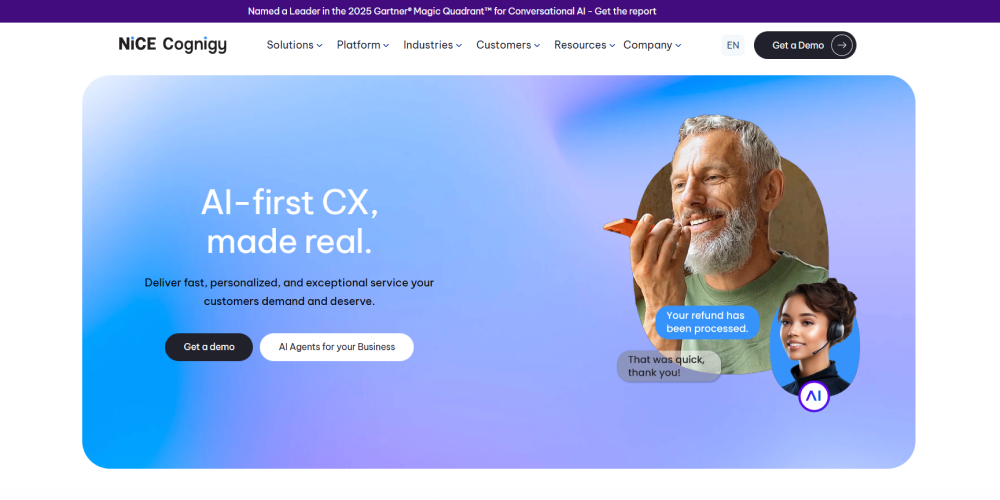
Cognigy is a widely adopted enterprise platform for conversational automation across voice and digital channels. Cognigy is often used by large organizations that need structured conversation design, broad integrations, and long-term automation governance. It is a strong fit for teams building conversational AI programs across multiple markets, business units, or service lines where consistency and centralized control matter.
Platform depth and capabilities:
- Advanced dialog management and orchestration
- Support for large-scale, multi-region deployments
- Enterprise integrations and tool connectivity
- Structured governance for long-term automation programs
Best fit:
- Global enterprises with complex service operations
- Organizations running multi-year AI automation initiatives
6. Kore.ai
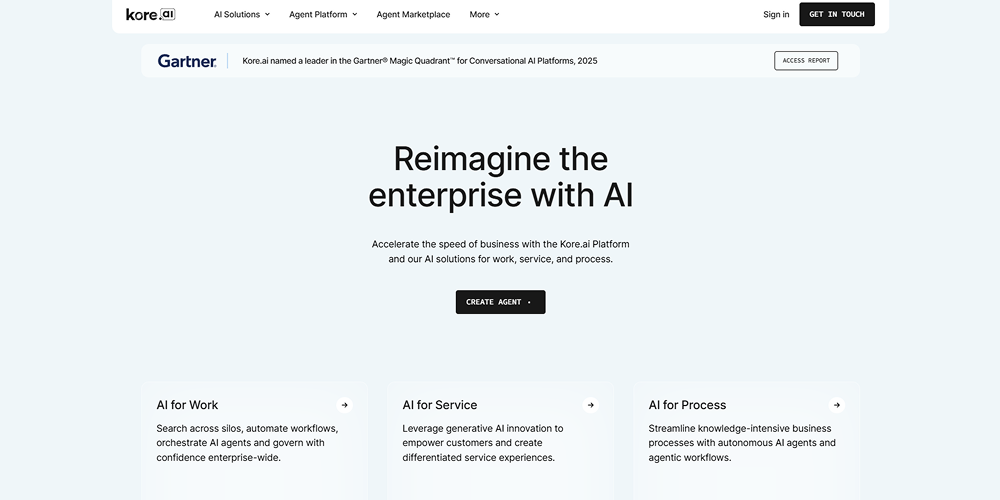
Kore.ai offers a broad enterprise platform designed to support customer service, IT support, and internal workflows. Kore.ai stands out for its wide enterprise coverage, with agentic AI applications across customer service, employee productivity, banking, healthcare, retail, HR, IT, and recruiting. It is especially relevant for organizations that want one platform to support multiple departments while maintaining governance, integrations, and observability from a shared AI foundation.
Platform depth and capabilities:
- Omnichannel conversational automation across voice and digital
- Pre-built connectors and SDKs for enterprise systems
- Flexibility to support multiple use cases from a single platform
- Strong internal and external automation coverage
Best fit:
- Enterprises standardizing conversational AI across departments
- Teams looking for one platform to support many workflows
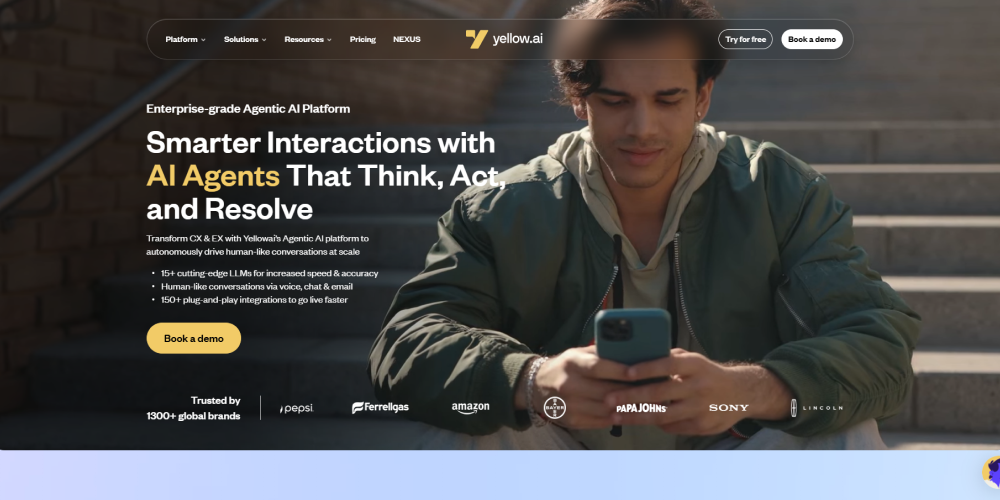
7. Yellow.ai
Yellow.ai emphasizes agentic AI with global scale and multilingual support. Yellow.ai is positioned around customer and employee experience automation across voice, chat, email, and messaging. Its global focus, large conversation data foundation, and broad enterprise connector ecosystem make it relevant for companies that need multilingual, multi-region automation across several service channels.
Platform depth and capabilities:
- Multi-LLM support and agent lifecycle tooling
- Broad channel coverage across voice, chat, and messaging
- Large connector ecosystem for enterprise systems
- Strong focus on global and multilingual deployments
Best fit:
- Enterprises operating across regions and languages
- Teams balancing digital and voice engagement globally
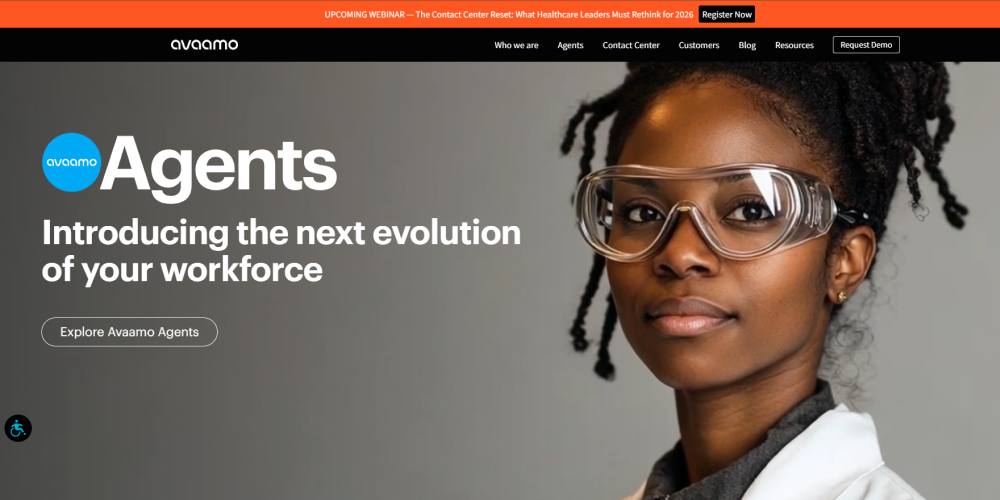
8. Avaamo
Avaamo focuses on verticalized conversational AI for regulated industries. Avaamo is especially relevant in industries such as healthcare, insurance, banking, telecom, retail, and manufacturing, where conversational AI needs domain-specific models and tighter compliance controls. Its strength lies in using pre-built vertical AI models and security-focused architecture to support sensitive, process-heavy service environments.
Platform depth and capabilities:
- Pre-built domain models for industries such as healthcare, banking, and insurance
- Strong security and compliance posture
- Structured workflow automation aligned to regulated processes
Best fit:
- Enterprises in highly regulated sectors
- Teams prioritizing governance and domain alignment
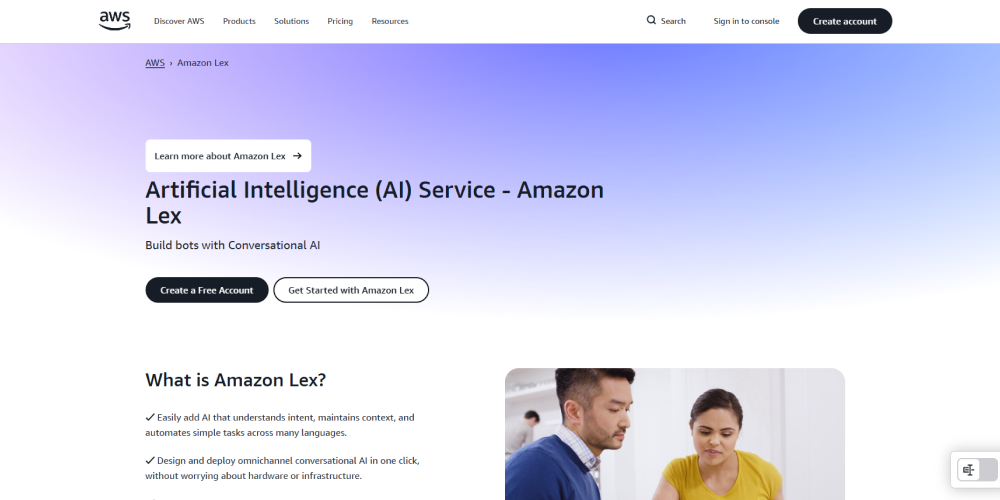
9. Amazon Lex
Amazon Lex is a developer-centric service for building conversational interfaces within the AWS ecosystem. Amazon Lex is best understood as a building block rather than a ready-made contact center platform. It gives engineering teams access to the same speech recognition and language understanding technology associated with Alexa, making it useful for teams that want to design custom voice or chat experiences inside AWS-native applications.
Platform depth and capabilities:
- Pay-as-you-go pricing for text and speech interactions
- Deep integration with AWS services
- Full control over architecture and customization
Best fit:
- Engineering-led organizations
- Enterprises building custom assistants on AWS
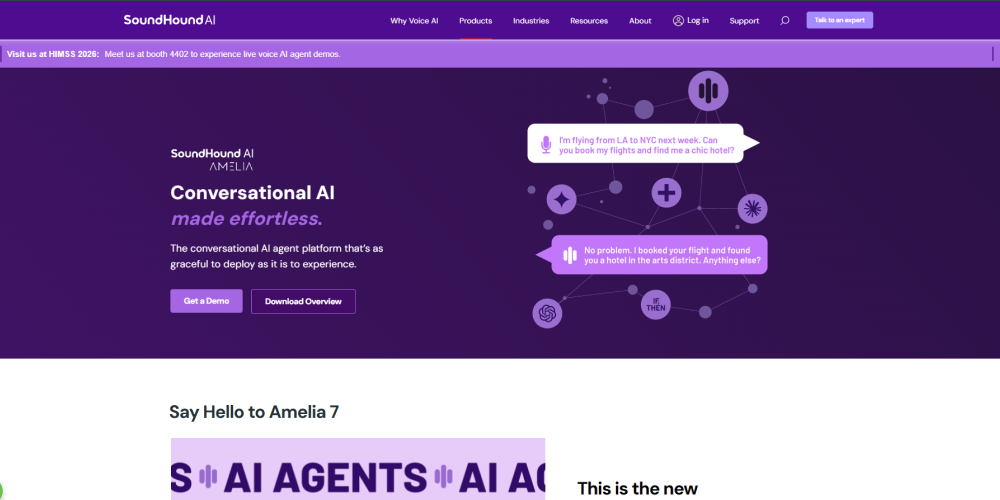
10. Amelia by SoundHound AI
Amelia is positioned as a conversational AI platform for both customer and employee interactions. Amelia brings together conversational AI, voice AI, and agentic capabilities for service environments that need front-end automation and employee support. Its relevance is strongest in enterprises looking to automate customer or internal interactions while still supporting live agents with real-time assistance during complex conversations.
Platform depth and capabilities:
- Voice-centric conversational agents
- Automation for IT service desks and employee support
- Enterprise deployments across multiple verticals
- Emphasis on natural dialogue and task completion
Best fit:
- Enterprises automating internal service workflows
- Organizations with strong voice interaction needs
11. Google Dialogflow CX
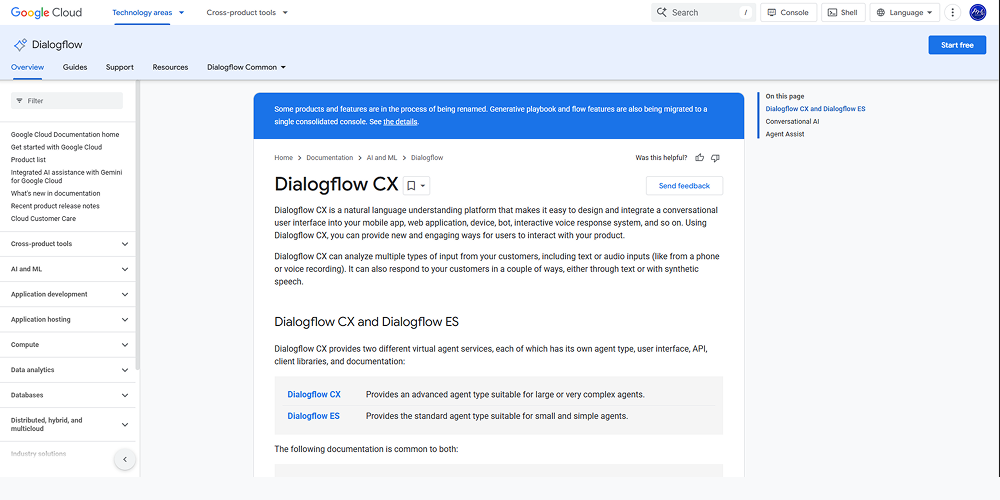
Dialogflow CX is Google’s enterprise conversational platform designed for complex conversation flows. Dialogflow CX is useful for teams that want visual control over stateful, multi-turn conversation design within the Google Cloud ecosystem. It works well when enterprises have technical teams that can build, test, and refine structured flows for customer support, booking, routing, and other defined service journeys.
Platform depth and capabilities:
- Visual flow builder for multi-turn conversations
- Strong natural language understanding backed by Google Cloud
- Integration with Google ecosystem services
- Designed for complex, stateful interactions
Best fit:
- Enterprises building sophisticated conversational journeys
- Teams already invested in Google Cloud infrastructure
Enterprise Comparison Snapshot for Platform Shortlisting
Once enterprises reach shortlisting, the conversation shifts from features to operational alignment. The table below reflects how CX and operations leaders typically align platforms to execution models after detailed evaluation. At this stage, the focus is on how each platform fits into existing workflows, ownership structures, and service expectations. Teams are comparing how well platforms handle real call patterns, escalation paths, and integration depth rather than surface-level capabilities. The goal is to identify which platforms can deliver consistent performance under pressure while aligning with how the organization already operates.
| Platform | Core Design Focus | Conversation Depth | Operational Ownership | Ideal Enterprise Use Case |
|---|---|---|---|---|
| Orvera | Outcome-driven CX automation across voice and digital | Very high | Operations-led | High-volume voice service and support |
| Dialpad Support | Agent intelligence and insights | Medium | Supervisor-led | Agent productivity and call quality |
| Boost.ai | Structured self-service | Medium | Program-led | Digital-first service journeys |
| OneReach.ai | Workflow orchestration | High | Platform-led | Multi-agent enterprise automation |
| Cognigy | Enterprise dialog orchestration | High | Center-of-excellence | Global service operations |
| Kore.ai | Broad enterprise automation | Medium to high | IT and ops shared | Cross-department AI standardization |
| Yellow.ai | Global agentic deployment | Medium to high | Regional teams | Multilingual CX programs |
| Avaamo | Regulated workflow automation | Medium | Governance-led | Healthcare and financial services |
| Amazon Lex | Developer-built assistants | Variable | Engineering-led | Custom AWS-native solutions |
| Amelia | Employee and service automation | Medium | Program-led | Internal service desks |
| Dialogflow CX | Stateful conversation design | Medium | Cloud-led | Complex conversational journeys |
How Platform Choice Shapes Operational Maturity
Conversational AI platforms influence far more than automation rates. They shape how teams plan capacity, measure quality, and respond to demand changes over time. The choice of platform directly affects (opens in a new tab) how stable operations remain during peak volumes and how quickly teams can adapt to changing customer needs. It also determines how clearly performance can be tracked across automated and human interactions. Over time, this impacts not just efficiency, but how confidently teams can scale and improve service delivery without constant rework.
Enterprises that choose well-aligned platforms typically experience:
- Faster stabilization after deployment
- Lower variance in customer experience across peak periods
- Clearer accountability between AI and human teams
- More predictable scaling without operational rework
Where Orvera Fits for Enterprise Customer Experience
Orvera is built for organizations where customer experience across voice, chat and digital channels drives both service quality and operational cost. Built on 18+ years of contact center operational experience, the platform is designed around real-world conditions from the start, including fluctuating volumes, changing intent, and the need for dependable escalation. Orvera is built to complete structured conversations end to end, creating clearer resolution paths for customers while giving operations teams faster rollout, more predictable performance, and less operational complexity, with human judgment kept where it matters.
- Resolve structured customer interactions fully, in one conversation
- Deploy in 3 to 6 weeks using existing call flows and documentation
- Adjust tone and escalation dynamically using real-time sentiment analysis
- Apply a single conversation logic across inbound and outbound calls
- Maintain consistent performance during high concurrency periods
- Monitor outcomes through built-in real-time analytics without external tooling
Final Perspective for Enterprise Buyers
Conversational AI platforms are no longer evaluated as experiments. They are now assessed as operational systems that influence customer experience, service efficiency, workforce planning, and long-term trust. The strongest platforms are not simply the ones with the longest feature lists, but the ones that can manage complete conversations, connect with enterprise systems, support clear escalation paths, and make performance visible to the teams responsible for outcomes.
For enterprise buyers, the decision should come down to how each platform performs in real service conditions. That means looking at conversation depth, integration readiness, governance, analytics, and operational ownership after launch. Buyers who evaluate platforms through this lens will be better positioned to adopt conversational AI confidently, scale it responsibly, and improve service performance over time.
Frequently asked questions
By testing real service scenarios, measuring conversation completion, and reviewing how escalation and analytics work under realistic conditions.
Voice exposes complexity quickly and reveals how well a platform manages context, sentiment, and conversation continuity.
Platforms that provide built-in analytics, workflow ownership, and adjustment tools allow operations teams to manage performance directly.
Yes. Many platforms support governance, auditability, and compliance requirements for healthcare, finance, and insurance environments.
Early value often appears within weeks through faster response times, reduced call volume, and clearer workflow visibility.