Vapi Pricing 2026: Plans, Usage Rates and the Lines That Grow With Volume
VAPI is a developer-friendly voice-AI platform that enables teams to build, configure, and deploy AI voice agents for inbound and outbound calls.

Key highlights
Key takeaways
- VAPI is a developer-centric voice AI platform that offers deep customization and API-first control, but relies on a layered, usage-based pricing model.
- VAPI costs extend beyond per-minute rates to include telephony, concurrency, speech services, language models, and optional enterprise add-ons.
- Usage-based pricing provides flexibility at low volumes but becomes harder to predict and manage as call volume and complexity increase.
- Orvera builds, deploys and runs the operation for the enterprise, across concurrency, automation, analytics and support.
- Deployment and ongoing management differ significantly: VAPI requires more technical setup, while Orvera AI offers faster, white-glove implementation.
- The comparison clarifies how platform choice depends on pricing predictability, operational scale, and the level of technical involvement required.
VAPI AI provides a voice AI platform that enables developers to build and launch advanced voice agents. The platform integrates with tools such as GPT-4, supports multiple voice providers, and allows developers to design custom call flows. While the platform is flexible, its pricing structure can be complex.
Certain features may incur additional fees or setup costs, which can affect the final cost based on usage and configuration.
This article explains VAPI AI's pricing structure, outlines what each plan includes, highlights features that increase costs, describes the setup process, and compares the platform with Orvera.
VAPI Overview
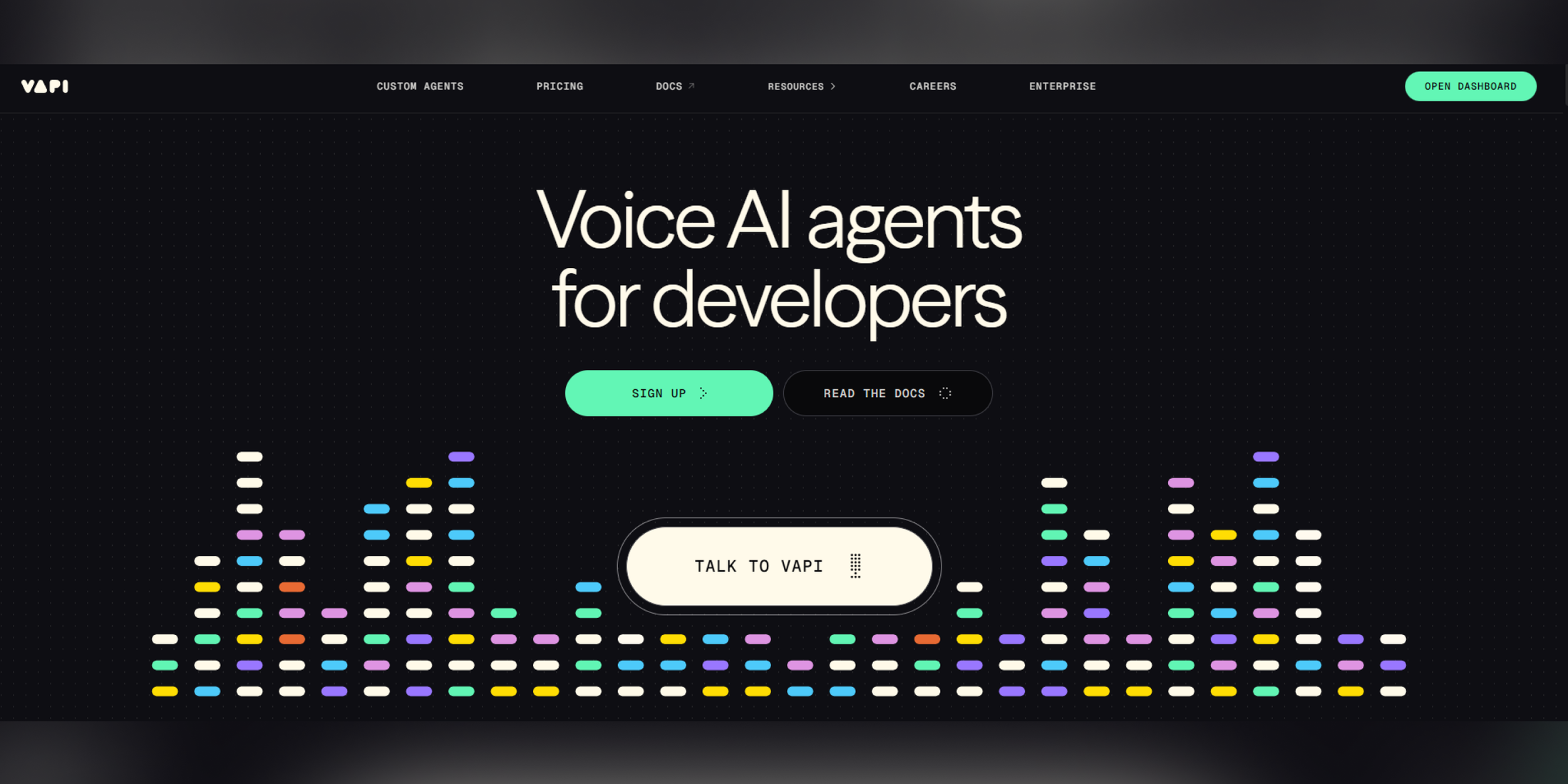
Caption: Deploy Voice AI agents designed specifically for developers
VAPI is a developer-friendly voice-AI platform that enables teams to build, configure, and deploy AI voice agents for inbound and outbound calls. Compared to packaged solutions with fixed pricing tiers, VAPI’s model is open and modular, allowing developers to mix and match telephony, speech, and language model providers to fit their use case.
This flexibility is useful. However, as mentioned earlier, the pricing can be difficult to understand initially. You do not get one simple bill. Instead, costs come from several separate sources:
- The VAPI platform
- Telephony providers like Twilio, Vonage, or Telnyx
- Speech-to-text and text-to-speech services
- Large language model token usage
That means you’re really paying for a stack of services, not just a single per-minute number.
Orvera Overview
Caption: Automate calls with AI agents built on 18+ years of contact-center experience
Orvera is an agentic AI platform for enterprise customer experience that Orvera builds, deploys and runs for mid-sized to large teams that need both usability and advanced call automation. It combines enterprise-grade capabilities with a workflow-flexible design, making it suitable for high-volume contact centers, BPOs and regulated industries.
Some of its key features (opens in a new tab) include:
- Enterprise automation: Supports multi-step workflows, intelligent call routing, retries, and exception handling for complex operations.
- Built, deployed and run by Orvera.
- Fast deployment: Production-ready AI agents can go live in 3 to 6 weeks with white-glove onboarding.
- Human-like conversations: AI voices are trained for natural intonation and maintain context across multi-turn dialogues.
- Built-in quality & analytics: Includes sentiment analysis, call scoring, workflow KPIs, and reporting dashboards, so teams can track performance without additional setup.
VAPI Pricing Plans & Rates
VAPI has a usage-based pricing model designed for developers. It offers flexibility, but requires close monitoring of usage to keep costs predictable.
Plan package breakdown
VAPI does not offer simple bundled plans. However, you pay based on how much you use the platform and which features you enable.
The table below shows VAPI’s usage-based costs and optional add-ons, including where extra fees may apply.
| Pricing Component | Cost | Notes |
|---|---|---|
| Call Minutes | $0.05 per-minute | Pay-as-you-go pricing. Enterprise contracts available for high volume |
| Call Concurrency | 10 included, then $10 per line per month | Costs increase as you add more concurrent call lines |
| SMS and Chat | $0.005 per message | Volume-based pricing |
| Model Provider Costs | At cost | STT, TTS, and LLM usage is billed separately by providers |
| Data Retention | 14 to 30 days | Custom retention options available for enterprise customers |
| Security and Compliance | $1,000 per month add-on | Optional SOC 2 or HIPAA compliance with zero data retention |
| Support | Included/Enterprise upgrade | Community support by default. Private support and named contacts for enterprise users |
Table Caption: VAPI pricing components, rates, and notes
This structure works best for developers and teams that want control and are comfortable managing multiple cost components.
Usage & add-on fees
VAPI charges scale directly with usage. As call volume, concurrency, and messaging increase, so do costs. Text-to-speech, speech-to-text, and LLM usage often add significant extra costs depending on the providers you choose.
Enterprise contracts can help stabilize pricing and reduce unpredictability, but they require custom negotiation and are usually aimed at higher-volume businesses.
How Orvera Compares
Orvera is built for enterprises and high-volume teams that want one accountable owner for the whole operation.
Orvera builds, deploys and runs the operation for the enterprise, starting from the workflows and the volume they carry.
What Orvera runs
Orvera builds, deploys and runs the operation for the enterprise. The platform is built for enterprise contact centers, with automation, concurrency and analytics matched to the deployment.
Implementation, support & deployment speed
Orvera provides rapid deployment, often in 3 to 6 weeks, with white-glove onboarding. The Orvera team sets up workflows, integrations, and quality assurance during the deployment, and stays on for ongoing support so teams maintain high concurrency and manage complex workflows.
Orvera builds, deploys and runs automation, analytics and support on one platform. Teams get consistent performance, deep workflow capabilities and high call resolution.
📌Interesting Read: AI Voice Agent Cost & Pricing Guide: What to Budget for in 2026 (opens in a new tab)
Side-by-Side Overview of Pricing & Features
This table summarizes the main pricing options, usage limits, concurrency, voice capabilities, and other key features of VAPI and Orvera. It provides a clear snapshot that helps teams quickly see which platform best fits their workflow, call volume, and feature needs.
| Feature/ Plan | VAPI Pay-As-You-Go | VAPI Enterprise | Orvera |
|---|---|---|---|
| Price | $0.05/min + add-ons | Custom negotiated | Not published |
| Daily Call Cap | None (based on usage) | Negotiable | Customizable |
| Hourly Call Cap | None (usage-based) | Negotiable | Customizable |
| Concurrency | 10 included + $10/line/month | Scales with contract | High, sized to the workflow |
| Voice Clones/ TTS | At cost/per provider | At cost | Customizable |
| Warm Transfer Billing | Optional/setup needed | Included | Warm transfer to a human agent on every channel |
| SMS/Chat Billing | $0.005/message | At cost | SMS and chat run as channels inside the platform |
| Automation Depth | Custom workflows. Manual setup | Custom | High, multi-step |
| Deployment Time | Depends on setup | Custom | 3 to 6 weeks |
| Analytics & QA | Limited/add-ons | Enterprise-grade | Advanced |
| Support | Community or enterprise upgrade | Named engineer/account manager | White-glove implementation and ongoing support run by Orvera's team |
| Ideal For | Developers and small teams managing usage-based costs | High-volume teams seeking flexibility | Mid-market and enterprise teams |
Table Caption: Side-by-side comparison of VAPI and Orvera plans
📌Bonus Read: Best AI Voice Agents for Business in 2026 (opens in a new tab)
VAPI and Orvera: How They Compare
VAPI delivers deep customization, flexible API‑first control, and developer‑centric configurations, which are valuable when you need full technical control and have skilled engineering resources. However, its layered pricing and technical setup require active cost monitoring and dedicated engineering resources as usage scales.
On the other hand, Orvera focuses on fast deployment and built-in automation and support. It is often better suited for teams seeking enterprise readiness and strong support as call volume grows.
Let’s see how Orvera vs VAPI compare in terms of value and functionalities.
Direct pricing comparison
Pricing transparency and cost structure are key when choosing a platform. Teams need predictable spend without unexpected overages.
| Platform | Pricing Model | Base Rate / Fee | Notes |
|---|---|---|---|
| VAPI | Usage-based, pay-as-you-go | $0.05 per-minute + add-ons | Third-party costs for telephony, STT, TTS, and LLM tokens can increase overall spend |
| Orvera | Built, deployed and run by Orvera | Not published | Concurrency, automation and analytics are run by the Orvera team |
Table Caption: Orvera vs VAPI pricing comparison
VAPI
VAPI uses a usage‑based pricing model, where you pay for minutes, concurrency, telephony, language models, and text‑to‑speech separately. The base platform fee starts around $0.05 per-minute, but the actual cost often rises once you add third‑party charges for telephony and model usage.
This structure offers flexibility but can make costs unpredictable as your usage scales.
Orvera
Orvera does the build, the deployment and the integration, and runs the operation from there.
Orvera runs concurrency, workflow automation and analytics on one platform.
Support & service levels
Orvera typically offers more hands-on service by default, while VAPI leaves more of the support burden to the customer unless you negotiate enhanced SLA terms.
| Platform | Standard Support | Enterprise/ Premium Support | Notes |
|---|---|---|---|
| VAPI | Community forums & docs | SLA-based email/Slack support | Enterprise support is optional and may require additional contracts |
| Orvera | White-glove onboarding run by Orvera | Dedicated solution architect & 24/7 support | Support run by the Orvera team, with proactive assistance that reduces deployment risk |
Table Caption: Comparison of VAPI vs Orvera support and service options
VAPI
With VAPI, support leans toward community and developer channels (Discord, email). More comprehensive enterprise support can be added, but it’s often tied to higher‑tier contracts or SLAs.
Orvera
Dedicated onboarding support and solution architects work alongside your team. Deployment assistance, real-time troubleshooting, and proactive support are run by Orvera, making setup and ongoing maintenance simpler.
Usage capacity & concurrent calls
Orvera builds, deploys and runs the operation itself, while VAPI’s minute-based pricing means costs vary based on usage levels.
| Platform | Daily Call Volume | Hourly Call Volume | Concurrency Notes |
|---|---|---|---|
| VAPI | Unlimited (usage-based) | Usage-based | 10 included. Additional lines at $10/month |
| Orvera | Customizable/ Unlimited | Customizable/ Unlimited | High concurrency, with scaling handled by the Orvera team |
Table Caption: Daily, hourly, and concurrent call capacity comparison between VAPI and Orvera
VAPI
VAPI scales based on usage, and you can add concurrent call lines at an additional cost. High volumes require manual configuration and monitoring of usage costs.
Orvera
Concurrency is matched to the deployment, so large call volumes are planned for from the start.
The platform is built to support enterprise‑grade load without usage‑based spikes.
Voice agent quality & automation depth
The voice agent quality and conversational logic impact resolution rates, efficiency, and customer satisfaction.
While Orvera tends to deliver richer built-in automation and more natural call handling out of the box, VAPI gives you the building blocks to implement your own advanced logic.
| Platform | Voice Agent Quality | Context Handling | Automation Depth/Workflow Control |
|---|---|---|---|
| VAPI | Depends on TTS/LLM configuration | Manual tuning required | Full API-driven flexibility. Developer sets triggers, loops, multi-step logic |
| Orvera | Human-like enterprise voices | Strong multi-turn memory | No-code builder with complex branching, retries, sentiment analysis, and workflow intelligence |
Table Caption: VAPI vs Orvera comparison with respect to voice quality and automation capabilities
VAPI
VAPI offers deep automation logic through APIs and SDKs, enabling developers to craft highly customized multi‑step flows and context‑aware triggers.
However, voice quality and natural conversation depend heavily on the models and configurations chosen.
Orvera
Orvera custom-trains contextualization models on de-identified data on top of third-party models in a governed layer, with built-in features such as sentiment analysis and real-time call scoring.
Its workflow builder supports complex branching logic and multi‑turn dialogue without requiring heavy coding.
Implementation effort & user experience
Ease of setup and day-to-day usability affect time-to-production and operational efficiency. Orvera's user experience is more accessible for non‑technical teams, while VAPI’s technical depth benefits engineering‑led workflows.
| Platform | Setup Time | User Experience Notes |
|---|---|---|
| VAPI | Days to weeks (complex workflows) | Developer-focused. Technical UI and API-first experience |
| Orvera | Around 3 to 6 weeks with white-glove deployment | Visual no-code interface. Friendly for non-technical teams |
Table Caption: Set up time and user experience comparison between VAPI and Orvera
VAPI
VAPI is geared toward technical users. Teams comfortable with APIs and backend integration get full control, but setup and iteration cycles can take days or weeks for complex workflows.
Orvera
Orvera combines a visual no-code workflow builder with white-glove implementation, enabling teams to go live in 3 to 6 weeks with full integration and QA support.
This generally reduces deployment risk and internal engineering burden.
Hidden or usage-based fees
Unexpected costs can impact budgeting and ROI. Here’s how VAPI’s plans compare with an Orvera deployment:
| Platform | Fee Transparency | Notes |
|---|---|---|
| VAPI | Medium | Per-minute, concurrency, STT/TTS/LLM costs can add up. Enterprise support extra |
| Orvera | Not published | Onboarding, analytics and concurrency are run by the Orvera team |
Table Caption: Comparison of pricing transparency and hidden fees between VAPI and Orvera
VAPI
Because pricing layers include third‑party telephony, STT, LLM tokens, and TTS services, the real effective cost often ends up higher than the base per‑minute rate.
This falls commonly between $0.07 and $0.25 per-minute once all charges are included.
Orvera
With Orvera, the Orvera team runs onboarding and analytics.
For teams that want one accountable owner for the whole operation, Orvera does the build, the deployment and the integration and then runs it.
📌Suggested Read: Discover the ROI of AI in Your Contact Center (opens in a new tab)
Choosing the Right Platform: VAPI or Orvera?
Selecting the right AI voice platform depends on team skills, workflow complexity, budget predictability, and the desired deployment speed. Here’s a breakdown to help guide your decision.
When VAPI makes sense
VAPI works best for technically skilled teams that want full control over AI voice workflows. Its API-first design lets developers build custom multi-step flows, integrate with CRMs, ERPs, or telephony systems, and scale operations across multiple agents.
Here’s why VAPI fits developer-led teams:
- Provides complete API access for highly customized conversational logic
- Integrates smoothly with existing enterprise systems
- Supports scalable architecture for multiple agents and complex workflows
- Offers pay-as-you-go pricing, enabling a low initial investment
VAPI requires technical expertise to implement and maintain. However, teams must monitor usage-based costs and other VAPI per-minute rates, which can rise at scale. Out-of-the-box analytics, call monitoring, and quality assurance features are limited compared to those of more enterprise-focused platforms.
So, choose VAPI if your team has developer resources, needs fine-grained control, and wants maximum flexibility to design tailored, complex AI voice interactions.
When Orvera is the better choice
Orvera suits businesses that want enterprise-grade reliability with minimal technical overhead. The platform manages multi-step, conditional, and nested workflows, handles hundreds of simultaneous calls, and provides built-in analytics and QA.
Here’s why Orvera stands out:
- A build, a deployment and an integration run by Orvera
- Rapid deployment lets teams go live in 3 to 6 weeks, including full onboarding and white-glove support
- Built-in dashboards deliver call transcripts, sentiment analysis, and workflow performance metrics
- First-contact resolution around 80 percent and 65 to 90 percent cost reduction, both Orvera customer averages
Orvera offers a strong ROI thanks to reduced operational complexity and faster deployment.
Hence, choose Orvera if your organization needs rapid setup, scalable multi-agent operations, and built-in analytics with minimal technical effort.
Finding the Best Voice AI Platform
The choice of Orvera vs VAPI depends on your team’s skill set, workflow complexity, and budget priorities.
If you want full developer flexibility and can manage usage-based costs, VAPI provides powerful tools to create tailored voice agents. If you need fast deployment and built-in enterprise features, Orvera offers a complete solution that scales with your operations.
If pricing predictability, deployment speed, and operational control are critical to your contact center, explore how Orvera supports enterprise voice automation at scale.
Assess your team’s technical skills, call volume, and workflow needs. Get started todayAnd discover how Orvera can simplify and raise your contact center operations.
Frequently asked questions
Written by
Urza Dey
Urza Dey (She/They) is a content/copywriter who has been working in the industry for over 5 years now. They have strategized content for multiple brands in marketing, B2B SaaS, HealthTech, EdTech, and more. They like reading, metal music, watching horror films, and talking about magical occult practices.