11 Best Auto-Attendant Phone Systems for Enterprises in 2026
Learn which auto-attendant phone systems help enterprises route calls efficiently in 2026.

Key highlights
TL;DR: What Enterprise Buyers Need to Know
- Establishes voice routing as core operational infrastructure for enterprises, directly impacting revenue, service quality, compliance exposure, and customer experience.
- Defines what an auto-attendant is, how it answers calls, delivers greetings, and routes callers using structured menu logic across departments, regions, and business units.
- Explains how enterprise routing extends beyond basic menus into multi-level flows, overflow handling, language options, compliance messaging, after-hours controls, and failover paths.
- Clarifies the distinction between auto-attendants (routing-focused), IVR systems (interaction and self-service), and AI voice agents (intent detection and intelligent orchestration).
- Breaks down how enterprise auto-attendants operate in practice, including greeting management, routing logic, queue distribution, escalation rules, and time-based scheduling across locations.
- Analyzes why routing performance matters at scale, including its effect on abandonment rates, transfer frequency, workload distribution, first-contact resolution, and lost revenue from misrouting.
- Details the enterprise features required for scale: multi-level conditional routing, centralized multi-site governance, regional scheduling automation, CRM and helpdesk integrations, exportable analytics, SLA-backed uptime, encryption, and access controls.
- Provides a structured framework for selecting the right system by mapping call intent, designing call flows before purchase, evaluating the total cost of ownership, and aligning routing depth with integration and reporting needs.
- Identifies operational signals that traditional routing may be insufficient, such as high transfer rates, overflow abandonment, inconsistent handling across locations, limited visibility into caller intent, and growing compliance monitoring needs.
- Compares 11 leading enterprise platforms by routing depth, integration strength, scalability, governance capabilities, deployment complexity, and ideal operational fit, positioning AI-enhanced solutions like Orvera AI as the next evolution of routing with automated QA, sentiment analysis, churn intelligence, real-time monitoring, and performance analytics layered on top of structured call distribution.
For enterprises, voice is not just a communication channel. It is an operational infrastructure.
Every inbound call represents a potential sale, service request, escalation, compliance moment, or retention risk. Before an agent answers, before a workflow begins, routing determines what happens next.
This is where auto-attendant systems play a foundational role.
Modern enterprises use auto-attendants to:
- Direct calls across departments and regions
- Manage overflow during peak volume
- Route by business hours and geography
- Support multi-location operations
- Standardize inbound call handling
But in 2026, buyers are no longer evaluating routing systems in isolation. Traditional menu-based routing is being compared with IVR systems, AI-assisted routing, and analytics-enabled call orchestration.
Enterprise teams should ask:
- How deep can routing logic go?
- Can we manage multiple locations centrally?
- What happens during overflow or outages?
- Do we have visibility into missed calls and routing performance?
- Can routing integrate with CRM and helpdesk systems?
- Is this system built for scale or for small teams?
This guide evaluates the best enterprise auto-attendant platforms based on operational depth, scalability, integrations, governance, analytics, and reliability. It is designed for organizations managing high call volumes across multiple teams, locations, or business units.
What Is an Auto-Attendant Phone System?
An auto-attendant is a phone system feature that automatically answers inbound calls and routes them based on predefined menu options.
When a caller hears:
“Press 1 for Sales. Press 2 for Support. Press 3 for Billing.”
They are interacting with an auto-attendant.
At its core, the system performs three functions:
- Answers calls automatically
- Plays greeting and menu prompts
- Routes the caller to the appropriate extension, queue, or voicemail
In enterprise environments, this routing logic may include:
- Department-based distribution
- Regional or location-based routing
- Direct extension dialing
- Language selection
- Overflow to backup teams
- After-hours voicemail
Auto-attendants are primarily routing engines. They ensure calls are distributed correctly and consistently without manual intervention.
For enterprises managing thousands of inbound calls daily, this routing layer prevents missed calls, reduces transfer friction, and improves first-touch handling efficiency.
Auto-Attendant vs IVR: What’s the Difference?
The terms are often used interchangeably, but they serve different operational roles.
An auto-attendant routes calls. An IVR system can interact with callers.
Understanding the difference is important when evaluating enterprise requirements.
Where Auto-Attendants Fit Best
Auto-attendants are well-suited for:
- Department-based routing
- Direct extension dialing
- Multi-location distribution
- Business hours and holiday routing
- Basic overflow handling
If the primary goal is to direct callers to the correct team efficiently, an auto-attendant is sufficient.
For example:
- A prospect calling Sales
- A customer needing Billing
- A partner calling a specific department
In these cases, structured menu routing is effective and predictable.
Where IVR Goes Further
IVR systems extend beyond routing. They enable:
- Account authentication
- Data collection
- Balance inquiries
- Appointment scheduling
- Payment processing
- Multi-step interaction flows
Instead of transferring immediately to a live agent, IVR systems allow callers to complete tasks independently.
For enterprises with high call volumes related to repetitive actions, IVR reduces agent workload and improves operational efficiency.
In practice, many enterprises deploy layered systems:
- Auto-attendant for primary routing
- IVR for self-service actions
- AI systems for intelligent intent detection
For a deeper look at how conversational systems analyze interactions at scale, see how to use AI agents to analyze phone calls and unlock insights. (opens in a new tab)
How an Auto-Attendant Works in an Enterprise Environment
Enterprise auto-attendants follow a structured flow: greeting, routing, and time-based controls.
1. Greeting and Menu
The system answers calls and plays branded greetings, language options, and department menus. Enterprises may manage different greetings by location or campaign.
2. Routing Logic
Based on caller input, calls are sent to queues, extensions, submenus, or voicemail. Advanced setups may include regional or overflow routing.
3. Time-Based Controls
The system applies business hours, holiday rules, after-hours handling, and failover logic to maintain continuity across locations.
Why Enterprises Still Invest in Auto-Attendant Infrastructure
Routing is not a cosmetic feature. It directly impacts:
- Call abandonment rates
- Transfer frequency
- Agent workload distribution
- Customer wait times
- First contact resolution
Even small inefficiencies at the routing layer scale dramatically at enterprise volume.
For example:
- A 3 percent misrouting rate in a high-volume environment can generate thousands of unnecessary transfers per week.
- Poor overflow logic during peak traffic can increase abandonment and lost revenue.
- Inconsistent business hour routing across regions can lead to missed opportunities.
Auto-attendants provide predictability. But predictability alone is not enough. Enterprises increasingly evaluate routing systems alongside analytics and visibility.
For insight into how voice data drives operational improvements, read AI Voice Analytics: How It Works & Key Features. (opens in a new tab)
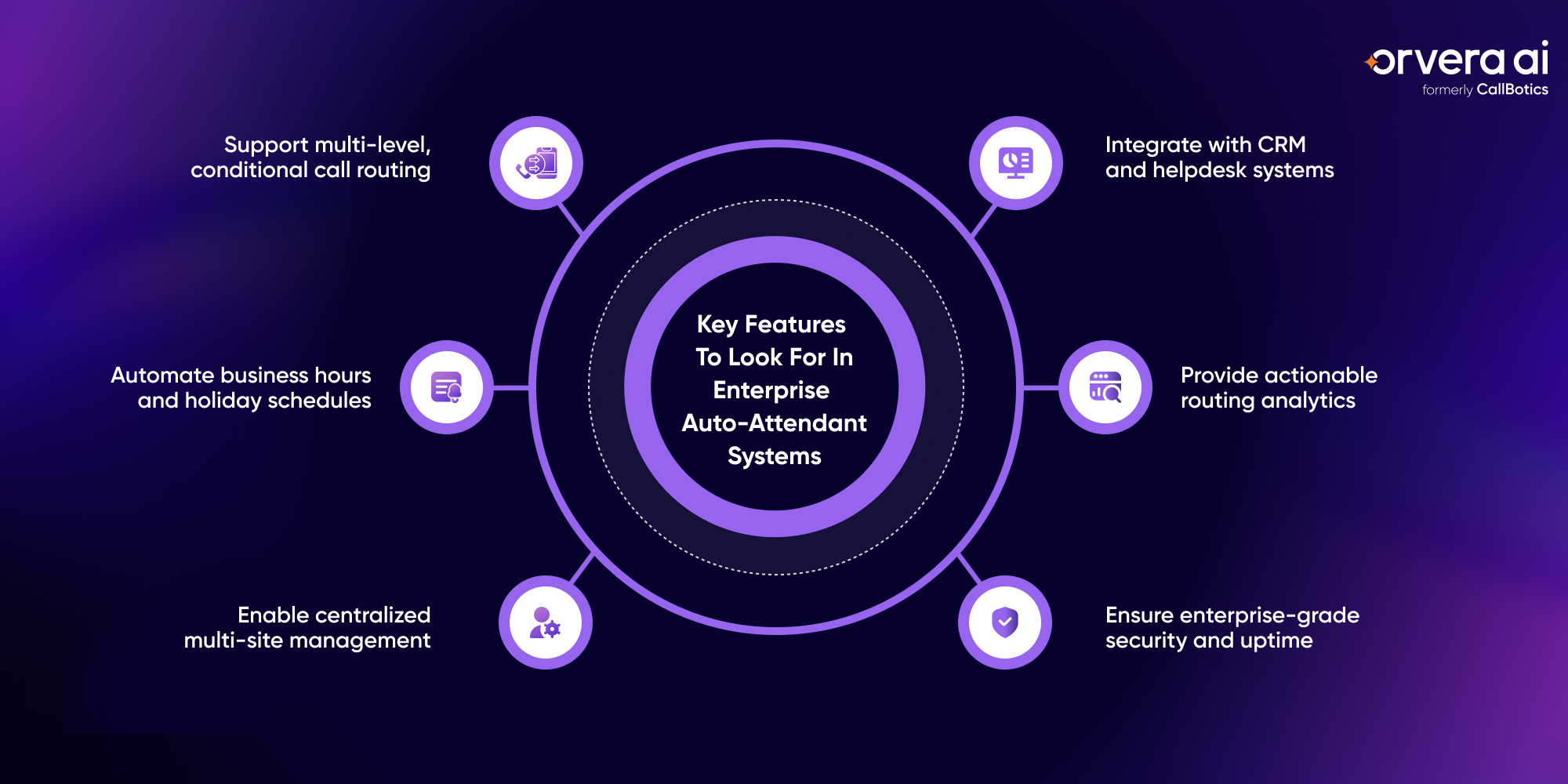
Key Features to Look for in Enterprise Auto-Attendant Systems
Enterprise routing quickly moves beyond basic menus. What starts as a simple department selection often expands into regional rules, overflow logic, language options, compliance messaging, and failover paths. The right platform must support this scale without becoming difficult to manage.
Multi-Level Routing
Look for:
- Nested menus
- Conditional branching
- Queue prioritization
- Escalation paths
Routing should be flexible, easy to edit, and clearly visualized.
Time-Based and Regional Scheduling
The system should support:
- Business hours automation
- Location-specific schedules
- Holiday overrides
- After-hours routing
Central control with regional flexibility is essential.
Multi-Site Management
Enterprises need:
- Central governance
- Site-level customization
- Role-based admin access
- Cross-location visibility
This is especially important in regulated industries like healthcare and financial services.
Integrations and Analytics
Routing should connect to CRM, helpdesk, and contact center systems. Leaders must track:
- Abandonment rates
- Transfer volume
- Queue performance
Basic logs are not enough for enterprise oversight.
Security and Reliability
Evaluate:
- SLA-backed uptime
- Redundancy
- Encryption
- Access controls
Routing infrastructure must meet enterprise standards.
Pros and Cons
Pros: Faster routing, 24/7 availability, fewer missed calls, consistent intake.Cons: Menu fatigue, misrouting, limited resolution without IVR or AI.
Auto-attendants improve distribution. More complex environments may require layered capabilities beyond routing.
How to Choose the Right Auto-Attendant Phone System for Enterprise
Enterprise selection decisions should begin with operational clarity, not vendor comparison.
Why Customers Call Before Comparing Tools
Analyze call intent across departments:
- Sales inquiries
- Technical support
- Billing questions
- Appointment scheduling
- Escalations
If most calls require only routing, a structured auto-attendant may suffice.
If a significant portion requires data collection or account interaction, deeper systems may be needed.
Understanding intent prevents overinvestment in features that will go unused.
Design Your Call Flow Before You Buy
Before evaluating platforms, sketch your routing map:
- Primary menu
- Submenus
- Overflow logic
- After-hours routing
- Failover paths
- Escalation triggers
Complexity becomes visible quickly.
This exercise reveals:
- Required routing depth
- Admin management needs
- Integration dependencies
- Governance considerations
Selecting a platform before designing your flow often results in constraint discovery after implementation.
Compare Budget vs Total Cost of Ownership
Enterprise cost includes more than per-user pricing.
Consider:
- Licensing tiers
- Add-on modules
- Advanced routing features
- International calling charges
- Implementation services
- Ongoing admin management
- Integration costs
Low seat pricing can mask higher operational overhead.
Check Integrations and Analytics Requirements
If leadership depends on reporting, ensure the platform supports exportable analytics.
If your organization relies heavily on CRM systems, integration quality directly affects usability.
Routing should enhance visibility, not fragment it.
When Traditional Routing Is Not Enough
Many enterprises begin with auto-attendants. Over time, operational demands expand.
Signs that routing-only systems may be insufficient:
- High transfer rates
- Escalation spikes
- Call abandonment during overflow
- Inconsistent handling across locations
- Limited insight into caller intent
- Growing compliance monitoring requirements
In these scenarios, enterprises often explore:
- IVR expansion
- AI-assisted routing
- Conversation analytics
- Automated QA monitoring
For example, in retail environments with seasonal volume spikes, layered routing and analytics can significantly improve performance. See how voice systems operate in large-scale retail environments. (opens in a new tab)
11 Best Auto-Attendant Phone Systems for Enterprises in 2026
Enterprise buyers don’t just need a list of platforms. They need context, how these systems perform in real routing workflows, how they integrate, how they scale, and when they fit (or don’t fit) real enterprise requirements.
Each evaluation below explains:
- What kinds of enterprise call operations are it’s best for
- Key strengths and differentiators
- Operational considerations
- Typical deployment or integration scenarios
- Pricing or tier implications (at a high level)
1) Orvera: Intelligent Call Routing and AI Voice Agents for Enterprise
Best for: Enterprises that want intelligent routing plus actionable insights, resolution metrics, and real-time quality control.
Overview: Orvera treats the auto-attendant as an AI-enhanced routing layer capable of understanding caller intent, capturing nuanced signals, and integrating deeply with enterprise workflows.
Why Enterprises Choose It:
- AI Voice Agents: Callers speak naturally, and the AI identifies intent and routes or resolves accordingly.
- Intent-Based Routing: The system interprets what the caller needs and selects the right path automatically, reducing menu steps and misroutes.
- Robust Integration Ecosystem: Seamlessly connects with CRM, ticketing, UC/CCaaS tools, and workforce systems for deeper operational alignment.
- Enterprise Governance: Role-based access control, compliance flags, audit logs, and SLA awareness built in.
- Real-Time Monitoring and Intervention: Supervisors can listen, guide, or intervene mid-interaction.
Enterprise Operational Strengths:
- 100% Automated QA: Every interaction, human-handled and AI-handled, evaluated for correctness, compliance and policy adherence.
- Sentiment & Escalation Detection: Emotional or escalation signals trigger automated alerts or routing adjustments.
- Custom Dashboards & Reports: Track conversion rates, queue performance, handling patterns, and outcome quality at enterprise scale.
- Churn Intelligence: Behavioral and sentiment signals identify at-risk callers or accounts before human review.
- Multi-Tenancy Architecture: Supports large enterprises managing multiple divisions, regional teams, or client accounts.
- Latency Tracking: Identifies delays in call flows, enabling performance optimization across workflows.
Enterprise Fit Scenario: Large service organizations with high inbound volumes, compliance requirements, and complex routing, where traditional menus fail to capture intent and context.Example: A multinational retailer routing calls for support, returns, sales, and franchise operations, with SLA compliance and analytics as a must-have.
Considerations: Deployment includes workflow scoping and training data alignment, which can be a strategic advantage but requires upfront planning.
Enterprise Signal: Best choice when traditional auto-attendants must evolve into actionable routing + insight.
2) RingCentral — Best for Centralized Enterprise Communications + Routing
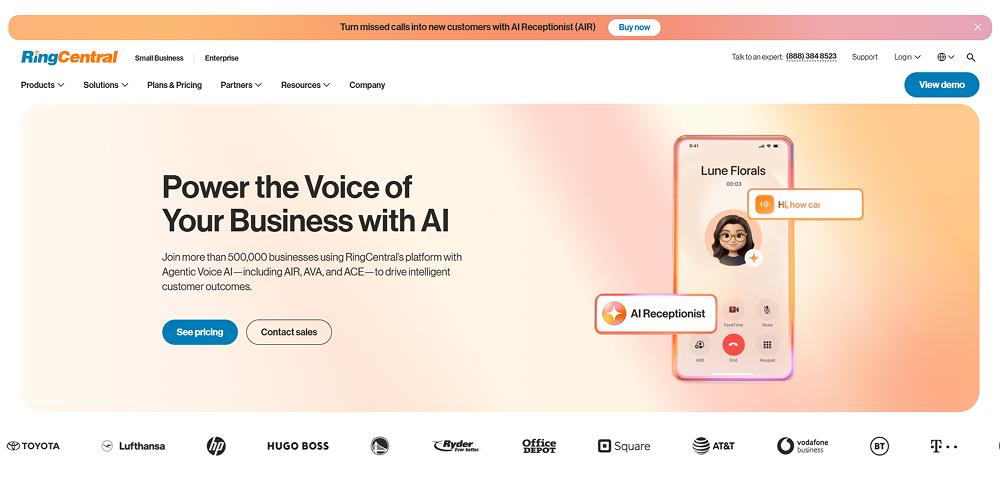
Best for: Enterprises that want unified communications (voice, video, messaging) under one administrative umbrella.
Why it Ranks High:
- Sophisticated Routing Logic: Multi-layer menus, language selection, time-based routing, holiday schedules.
- Centralized Governance: Single admin console for user, extension, and routing controls across business units.
- UCaaS Integration: Deep ties to unified messaging, conferencing, presence, and collaboration.
- Global Number Support: Enterprise numbers and routing across regions.
Enterprise Strengths:
- Role-based access for admins
- Detailed call logs and analytics
- Strong carrier reliability and SLA coverage
Operational Fit: Large distributed enterprises standardizing voice, messaging, and meetings together — especially where centralized governance matters.
Considerations: Advanced routing logic can require higher-tier subscriptions. IVR depth may lag behind specialist contact center platforms without add-ons.
3) Nextiva — Best for Integrated Business Phone + Customer Experience Focus
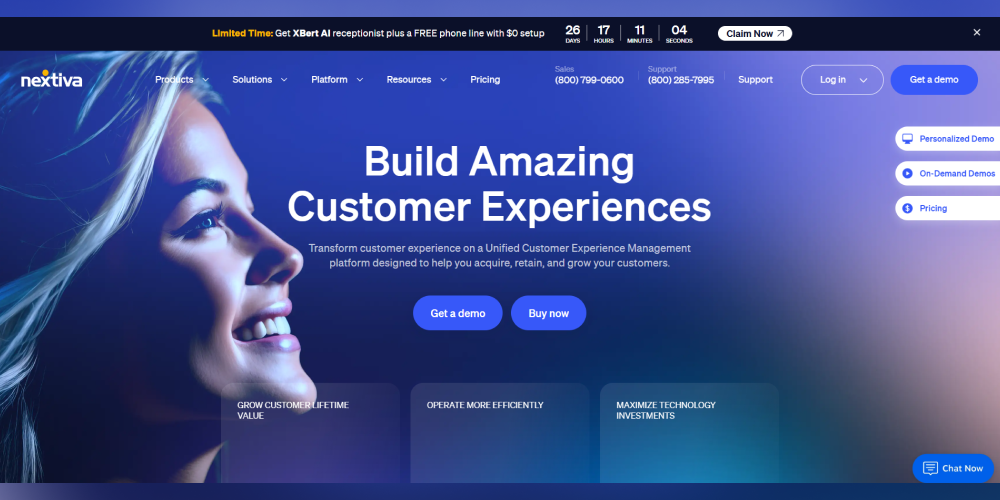
Best for: Teams that want robust phone routing combined with customer communication tracking.
Why It Works for Enterprises:
- Customer Experience Centric: Routing is tied to CRM data and interaction context.
- Unified Dashboard: Voice, messaging, and contact history in one interface.
- Voicemail to Email/CRM: Immediate visibility across systems.
Enterprise Strengths:
- Elastic menus
- Simple location-based routing
- CRM and ticketing context
Operational Fit: Operational teams that want phone systems integrated with customer context — especially in support and service desks.
Considerations: Routing depth is strong but not as flexible as specialist auto-attendant systems with advanced decision logic.
4) Dialpad — Best for AI-Powered Calling + Simple Admin UX
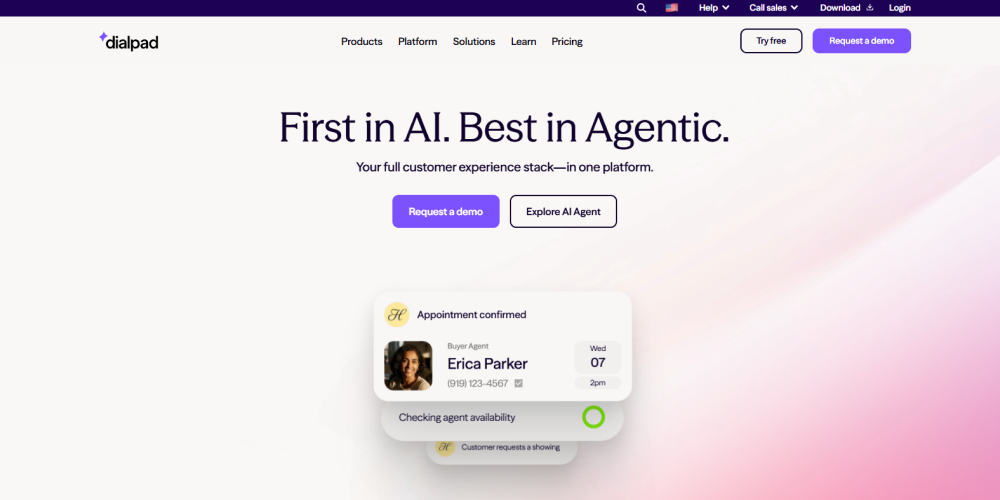
Best for: Technology-forward enterprises looking for AI features that enhance routing and visibility.
Why It’s Notable:
- AI Transcription & Insights: Real-time and post-call intelligence.
- Intent Highlights: Identifies key phrases that correlate with call outcomes.
- Smart Assist Features: Help agents with context flagging mid-call.
Enterprise Strengths:
- Rapid deployment
- Real-time AI visibility
- Simple menu configuration
Operational Fit: Tech organizations or digital-first enterprises that value AI cues alongside routing structures.
Considerations: Custom routing beyond standard menus may require configuration expertise.
5) 8x8 — Best for Global Enterprises with International Routing Needs
Best for: Organizations with multi-region, multi-country operations.
Why It Excels:
- International Number Support: Local presence in multiple countries.
- Region-Aware Routing: Time zones, local holidays, and regulatory requirements factored into routing.
- Security & Compliance: Regional data residency and compliance awareness.
Enterprise Strengths:
- Global administration
- Multi-currency billing
- Cross-regional failover logic
Operational Fit: Global enterprises managing localized routing across continents — especially in regulated sectors.
Considerations: Costs scale with international numbers and compliance packages.
6) Zoom Phone — Best for Enterprises Standardizing on the Zoom Platform
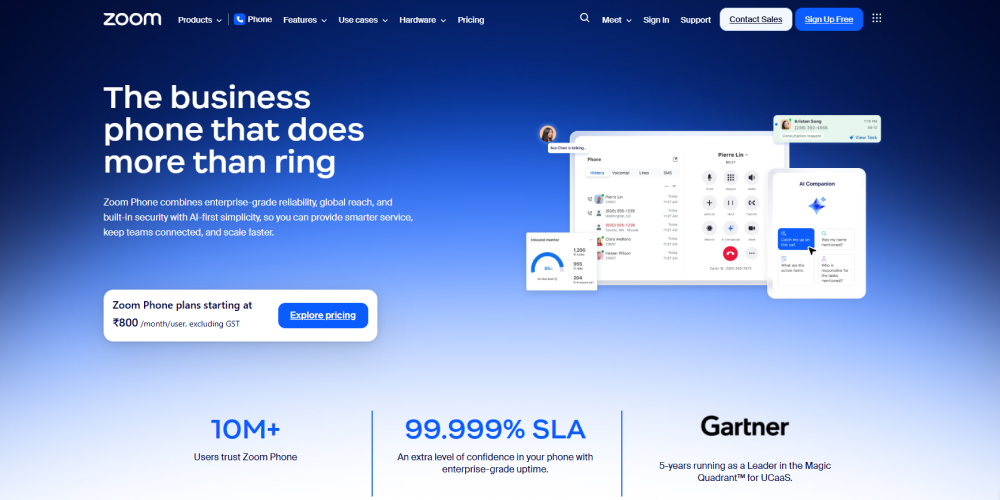
Best for: Organizations already invested in Zoom for meetings and collaboration.
Why It Works:
- Unified Interface: Calls, meetings, chat in one ecosystem.
- Simplified Routing Setup: Quick menus and dial plans.
- Single SSO & Admin Panel: Central identity management.
Enterprise Strengths:
- Seamless meeting integration
- Business hour routing
- Extensions management
Operational Fit: Enterprises that value one-vendor simplicity and have lighter routing complexity.
Considerations: Routing depth and analytics are functional but not as advanced as specialist systems.
7) Vonage — Best for Programmable Routing + API Integration
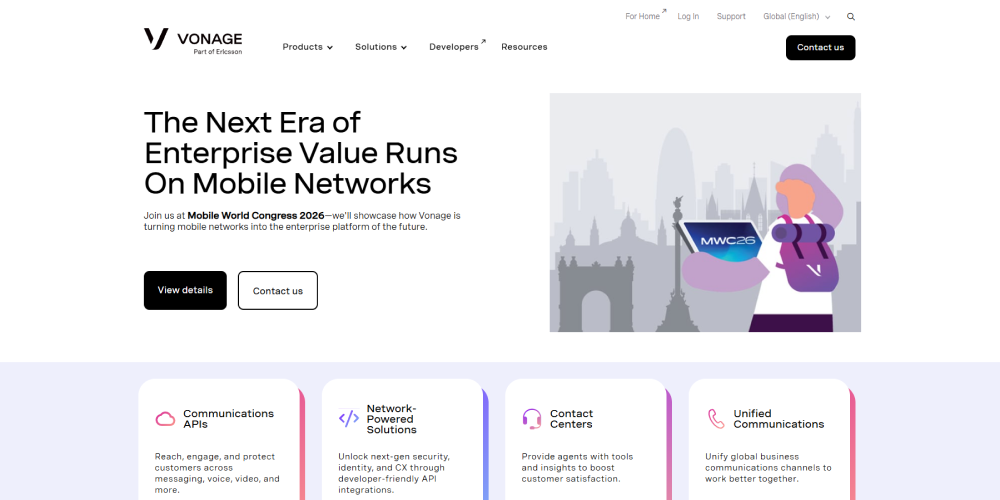
Best for: Enterprises with development teams who want custom telephony workflows.
Why It’s Attractive:
- Rich APIs: Build custom routing logic, CTI workflows, and event triggers.
- Integration Flexibility: Connect to CRM, ERPs, and support tools via code.
- Trigger-Based Routing: Contextual decisions based on metadata.
Enterprise Strengths:
- Custom IVR/routing paths
- Developer extension options
- Event hooks for workflows
Operational Fit: Technical enterprise teams that want tailored integrations and routing logic embedded in broader systems.
Considerations: Requires in-house development or integration partners.
8) GoTo Connect — Best for Mid-to-Large Teams Seeking Unified Simplicity
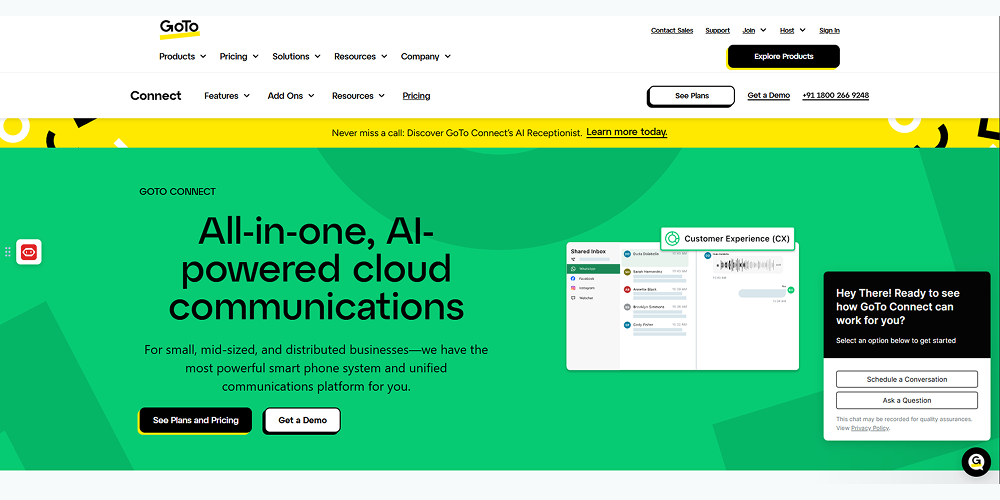
Best for: Enterprises wanting consolidated phone + meeting systems.
Why It’s Compelling:
- Straightforward Routing Setup: Clear menus without unnecessary complexity.
- Easy Admin Experience: Role controls, queue rules, reporting.
Enterprise Strengths:
- Clean UI
- Reliable uptime
- Basic analytics
Operational Fit: Operational teams that want one system for voice and meetings without high admin overhead.
Considerations: Routing logic may be less flexible for advanced use cases.
9) 3CX — Best for Enterprises Needing Deep Telephony Control
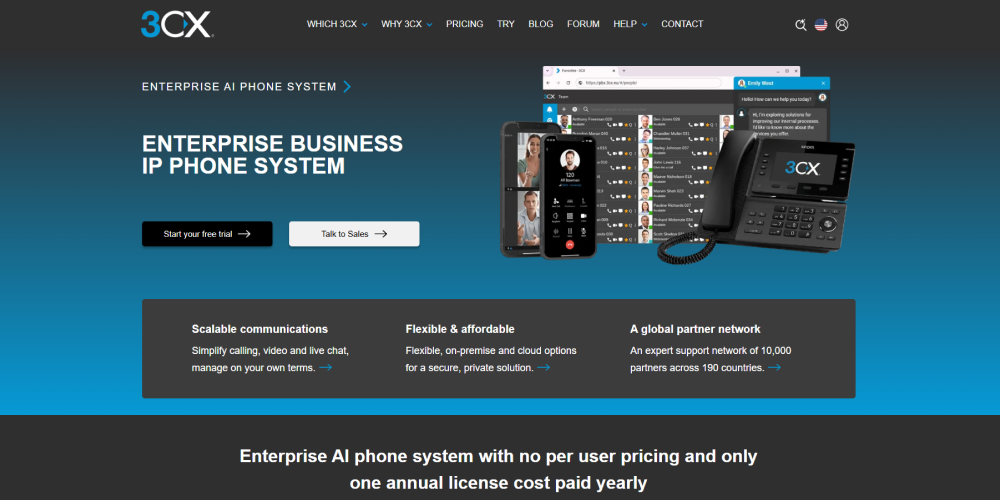
Best for: Organizations that want deployment flexibility and configuration control.
Why It’s Relevant:
- On-Premise or Cloud: Choose an architecture.
- Advanced Telephony Options: SIP trunking, custom dial plans.
Enterprise Strengths:
- Complete routing control
- Telephony customization
- Internal IT governance
Operational Fit: IT-centric enterprises with telephony staff and customization needs.
Considerations: More technical setup and maintenance responsibility.
10) Ooma Office — Best for Direct, Easy Routing with Minimal Complexity
Best for: Departments within larger enterprises with straightforward call routing needs.
Why It Works:
- Quick Setup: Rapid deployment
- Basic Multi-Level Menus: Extensions and menu layers
- Affordable Plans: Cost-effective for smaller units
Enterprise Strengths:
- Simple admin console
- Basic analytics
Operational Fit: Subsidiaries or business units that want effective, no-friction routing.
Considerations: Scaling and analytics are not suited for highly complex operations.
11) Phone.com — Best for Budget-Focused Multi-Extension Routing
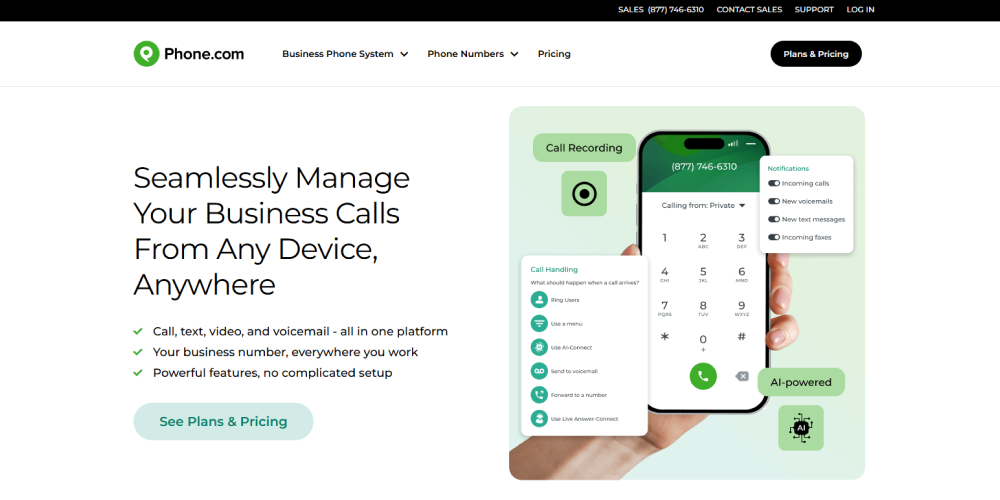
Best for: Cost-sensitive enterprise divisions needing straightforward routing.
Why It’s Used:
- Affordable Licensing
- Extension Management
- Basic Menu Hierarchies
Enterprise Strengths:
- Simple menus
- Affordable numbers
Operational Fit: Enterprises that want to standardize basic call routing without advanced analytics.
Considerations: It lacks deeper enterprise governance and integration strength.
How Orvera Helps Enterprises Go Beyond Traditional Auto-Attendants
Routing is foundational. Modern enterprise communication requires intent understanding, action automation, and insight at scale.
Orvera adds a new dimension to enterprise call routing:
Key Capabilities
- 100% Automated QA: Every interaction can be evaluated for correctness, compliance, and adherence to internal policies.
- Sentiment Analysis: Emotional tone, escalation triggers, and conversational shifts are detected in real time.
- Custom Dashboards & Reports: Track conversion rates, routing performance, queue outcomes, and handling patterns.
- Churn Intelligence: Identify at-risk customers based on interaction signals and metadata patterns.
- Live Monitoring & Intervention: Supervisors can listen and guide in real time.
- Latency Tracking: Detects performance bottlenecks at each decision point in the routing pipeline.
- Multi-Tenancy Architecture: Support for large enterprises managing multiple teams, brands, or geographies independently.
By combining structured routing, AI voice agents, and enterprise analytics, Orvera moves beyond traditional menu systems, transforming routing from a static decision tree to a data-driven operational force.
Which Way Should Enterprise Teams Lean?
Auto-attendant systems remain a foundational layer in enterprise voice operations. They provide structure, consistency, and scalable call routing across departments, locations, and time zones.
But the right platform depends on operational clarity.
Enterprises should evaluate:
- How complex their routing logic needs to be
- Whether routing alone is sufficient
- How integrations impact workflow efficiency
- What level of reporting and oversight is required
- How the system will scale across regions and teams
For some organizations, structured multi-level routing is enough. For others, high call volumes, compliance requirements, and performance oversight demand more than menu-based systems can provide.
The most effective deployments treat routing as part of a broader operational strategy that connects call distribution to visibility, quality control, and measurable outcomes.
When selecting an auto-attendant platform in 2026 (opens in a new tab), the question is not just “Where will the call go?” It is also “What insight and control do we gain from every interaction?”
The answer to that question determines long-term impact.
Frequently asked questions
An auto-attendant is a phone system feature that automatically answers inbound calls and routes them to the correct department, extension, or voicemail using predefined menu options.
No. An auto-attendant focuses on routing calls through menu selections, while IVR systems can collect information, authenticate users, and complete actions without human agents.
The best platform depends on routing complexity, integration needs, analytics requirements, and scale. Enterprises with layered workflows often benefit from systems like Orvera that combine structured routing with deeper visibility and intelligent automation.
Costs vary based on user volume, routing depth, integrations, international coverage, and analytics features. Enterprise pricing typically includes licensing tiers, add-ons, and implementation considerations.
Many enterprises use both. Auto-attendants provide structured routing, while AI voice agents add intent recognition, automation, analytics, and quality oversight to improve resolution and performance.

Written by
Alex Penn
Alex Penn is a B2B SaaS writer with 3 years of experience turning complex AI topics into clear, practical content for modern businesses. She specializes in AI, automation, and emerging tech, with a knack for making technical ideas accessible without watering them down. Outside of work, Alex bakes cookies for friends and unwinds with a steady diet of indie music.