CAHPS Driver Mining From Member Service Conversations at Health Plans
CAHPS results arrive months after the member experience that generated them, leaving health plans with a measurement of a problem they can no longer change.


Key highlights
- CAHPS results arrive months after the member experience that generated them, leaving health plans with a measurement of a problem they can no longer change.
- Member service conversations deliver the reason behind the rating in the member's own words, while a survey can only capture what its questions permit a member to say.
- You map call drivers to CAHPS measures by building a cross-walk that assigns each of your plan's recorded call topics to the rated experience domain it most directly reflects.
- Agentic AI analyzes every member conversation by processing full transcripts, which is how to identify CAHPS score drivers from call recordings without the blind spots that a scored sample creates.
- Reading member intent from the whole conversation
- Orvera AI is SOC 2 Type II certified, HIPAA compliant, and GDPR compliant, with full auditability across every channel.
- A hidden CAHPS driver looks like a pattern that structured data never named, visible only once you read what members actually said across hundreds of conversations.
- A Stars leader should stop treating rated experience measures as an annual report and start reading them from what members say on every call.
Why Do CAHPS Results Arrive Too Late to Fix Anything?
CAHPS results arrive months after the member experience that generated them, leaving health plans with a measurement of a problem they can no longer change.
The standard CAHPS survey cycle runs on a fixed calendar. A member calls about a prior authorization in February. The CAHPS survey that will score that experience is fielded from March to May, results reach the plan's compliance officer in August, and the Star Rating posts in October. By the time the plan can read the number, the field period has closed and nothing done after May can change it. The authorization process that drove the rating has either been corrected by accident or is still broken at exactly the same point.
What a plan can actually change once the field period has closed is narrow. Targeted training, process redesign, vendor remediation, and staffing decisions all require lead time that a lagging score cannot provide. CAHPS driver analysis run against last year's survey tells you where the floor gave out, not where it is cracking today.
Managing member experience is a different discipline from measuring it. Member service conversations, every authorization call, every coverage question, every complaint that resolves or does not, produce a running record of the experience the survey will later attempt to score. That record is available now. The score is not.
What can member service conversations tell you that a CAHPS survey cannot?
Member service conversations deliver the reason behind the rating in the member's own words, while a survey can only capture what its questions permit a member to say.
A survey is bounded by its design. A member who rated their health plan a six out of ten because a specialist referral sat in a queue for eleven days will mark a box, but the box will not carry that detail forward. The conversation recording will. Every call to the authorization line, every transferred referral inquiry, every re-opened ticket on a pending prior auth is a standing record of Getting Needed Care friction. That record exists whether or not the member ever completes a CAHPS questionnaire.
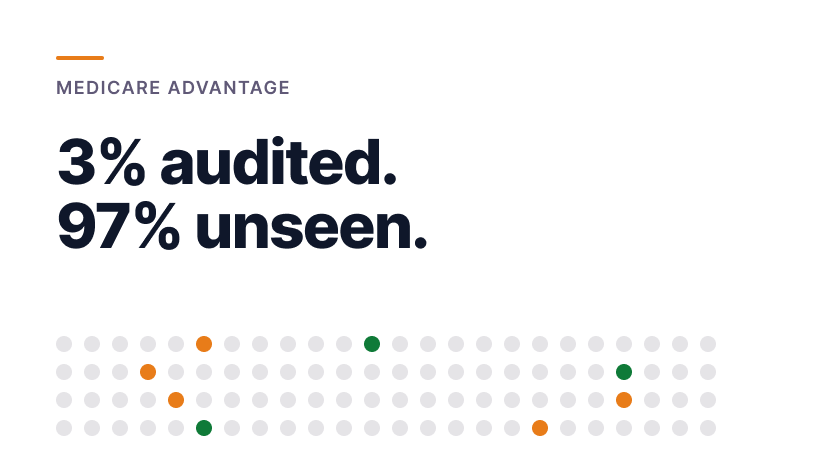
The sampling problem compounds every gap above. A hand-scored sample is a narrow aperture on a high-volume operation. Moving to review of every conversation, human-handled and AI-handled alike, turns a periodic audit into a continuous data asset.

How do you map call drivers to specific CAHPS measures?
You map call drivers to CAHPS measures by building a cross-walk that assigns each of your plan's recorded call topics to the rated experience domain it most directly reflects.
The cross-walk is not a complex document. It is a structured alignment between the conversation categories your contact center already tracks and the survey composites your plan is scored on. Health plan member satisfaction drivers cluster tightly when you look at them this way. Specialist referral questions and prior authorization friction feed Getting Needed Care, measure C22. Pharmacy access calls feed the Part D measure Getting Needed Prescription Drugs, D06. Care Coordination, measure C27, is driven by whether a member's own doctor had their records, followed up on test results, and knew about the care they received from specialists, so the conversation evidence there is members reporting those failures. A member who repeats the same referral question across two contacts is generating an effort signal that belongs against Getting Needed Care.
Billing and coverage friction maps to Rating of Health Plan. When a member calls to dispute a premium charge or asks a rep to explain what a benefit actually covers, that conversation carries the same frustration a low plan rating reflects. The call topic and the rated measure are describing the same experience from two different angles.
Appointment access lines up with Getting Appointments and Care Quickly, measure C23. Members describing delayed appointments and same-day access failures on a plan call are reporting the experience that measure scores, which makes those calls an early signal of it. Those calls carry member effort signals: how many times a member restates the request, how long resolution takes, whether the member sounds resigned rather than satisfied. Reading those signals on every access call, rather than a scored sample, gives your quality team a continuous view of a measure that CAHPS only photographs once a year.
The practical step is aligning your existing call taxonomy to the rated composites before any analysis begins. That alignment is what makes conversation data actionable rather than descriptive.
How does agentic AI analyze every member conversation instead of a sample?
Agentic AI analyzes every member conversation by processing full transcripts, which is how to identify CAHPS score drivers from call recordings without the blind spots that a scored sample creates.
Keyword spotting and sampled scoring leave the majority of your call volume unexamined. A keyword rule fires when a member says "prior authorization." It does not fire when a member says "I cannot get the procedure approved" or "my doctor keeps getting denied." Those three phrases describe the same friction. A hand-scored sample statistically misses low-frequency themes that still affect enough members to move a rated experience measure.
The Voice of Customer layer inside Orvera AI mines every conversation across every channel. It surfaces themes, call drivers, sentiment signals, and CX indicators across the full population of contacts. The output is a view of the themes, drivers and sentiment signals generating member effort, which your team aligns to the rated composites using the cross-walk above.
Reading member intent rather than transcript keywords is what holds a theme together across the different words members use for it. Members do not use a consistent vocabulary. The contextualization models Orvera AI runs on de-identified data learn the meaning behind varied phrasing and group it into coherent drivers. The governed model layer above third-party models keeps that classification consistent and auditable. And because every conversation contributes to the analysis, the themes that emerge reflect the real distribution of member experience.
Identifying a named driver this way is a necessary first step. Feeding that driver back into an operational change is the work that follows.
How do you turn a named CAHPS driver into an operational change?
You turn a named CAHPS driver into an operational change by routing the identified friction point back to the floor as a live assist cue, then tracing the systemic cause and presenting conversation evidence to Stars leaders who can authorize a fix.
Surfacing a theme is only half the work. Unstructured data analysis for CAHPS scores tells you that members are calling because a portal step is failing, but the operational change is what follows. Naming the driver without resolving the friction produces another quarter of the same scores.
Finding the systemic cause is the second move. Repeat call volume on a single topic is evidence that the problem sits upstream. A portal step that members consistently cannot complete without calling is a product or clinical operations issue, not a contact center issue. The conversation data identifies where the break lives.
Giving Stars leaders named evidence is what moves a finding through governance. A theme with supporting conversation data behind it is a durable artifact. It gives the Stars committee something specific to act on, whether the fix is a form revision, a clinical outreach step, or a change in how your reps resolve a benefits inquiry across channels (opens in a new tab). A vague report of member dissatisfaction does not survive that conversation. Conversation evidence does.

Is it safe for a health plan to run AI over member conversations?
Orvera AI is SOC 2 Type II certified, HIPAA compliant, and GDPR compliant, with full auditability across every channel.
Compliance alone is not governance. What matters operationally is whether the AI agent stays inside the boundaries the plan approved, conversation after conversation. Orvera AI addresses this through approved-knowledge grounding. Explicit controls sit alongside that grounding. And because contact center analytics for HEDIS and CAHPS programs require that every data point be defensible, full auditability means a quality committee can inspect the report log, the conversation summary, and the transcript for any interaction.
AI Auto QA audits 100% of conversations, covering both AI-handled and human-handled interactions across every channel. That coverage closes the gap that sampled review leaves open. A plan running a quality improvement initiative cannot afford a blind spot in the conversations that traditional QA never reaches.
Orvera AI operates as a managed service, building, deploying, and running the program on the plan's existing technology stack. You can see how member interaction data becomes actionable (opens in a new tab) when the governance layer is already in place. The result is a program the plan's compliance team can defend and the quality committee can report against before the survey goes out.
What does a hidden CAHPS driver look like when you find it?
A hidden CAHPS driver looks like a pattern that structured data never named, visible only once you read what members actually said across hundreds of conversations.
Consider a plan carrying strong clinical measures but a weak Rating of Health Plan score. Nothing in the claims data, the authorization records, or the call disposition codes points to a cause. The structured data is clean. The score is not. That gap is where conversation mining earns its place in a quality program.
When analysis runs across the full conversation record, a specific theme surfaces. Members are not describing dissatisfaction with care. They are expressing confusion about explanation-of-benefits language. They do not recognize the terms. They call back to ask what the document means. That confusion is countable, it is named, and it is traceable to a contact pattern the quality committee never saw, because those calls were coded as billing calls and their volume never landed against Rating of Health Plan.
Understanding how to correlate member service interactions with CAHPS scores is the step that turns that finding into an action. Live Agent Assist surfaces approved plain-language explanations the moment a rep enters an EOB-related call, and the same wording moves into chat so the message is consistent across every channel. The plan can then report to its quality committee, before the survey goes out, that a specific friction point was identified, a response was deployed, and callback volume on that topic is declining. That is a reportable operational change.
What should a Stars leader do first?
A Stars leader should stop treating rated experience measures as an annual report and start reading them from what members say on every call.
The shift sounds procedural. In practice it changes what a Stars program actually produces. An annual read tells you what happened. A continuous read tells you what is happening, before the survey goes out and while corrective action still counts.
Go to the conversations. Members state the reason behind a score plainly when they call. They do not say "I rated you low on getting needed care." They say the referral took three weeks and nobody followed up. That plain language, captured across every call rather than a hand-scored sample, is where the friction lives. A small but real theme, affecting 4% of callers, disappears inside a sampled audit. It is visible when every conversation is read.
And that distinction matters for how you judge the program. AI for health plan quality improvement is not complete when a complaint is categorized. It is complete when the friction that caused the complaint is resolved. A categorized theme that stays in a report has not moved a Star. A named driver handed to the clinical operations team with a clear count behind it has a chance to.
How Do You Build a Member Experience Program That Reports In-Year?
A member experience program reports in-year when it reads member service conversations continuously, not when it waits for survey data to close.
The operational shift is concrete. When driver reporting reads every conversation instead of a sample, a Stars leader works from named themes in the call record rather than a post-survey retrospective. QA analysts stop spending the quarter on sampling and start reading signal. The mechanism behind a score drop is visible in the call record before the survey goes out.
Regulated health plans tend to want this built and run for them rather than assembled in-house. The compliance surface is wide, the vendor selection process is long, and the internal analytics team is already carrying HEDIS workload. Assembling a pipeline from unstructured call data into a reportable driver framework is months of integration work. Orvera AI, headquartered in San Francisco with 18+ years of contact center operating experience, builds and runs the Voice of Customer program on the stack the plan already runs, live in three to six weeks.
If you are a VP of Member Experience or a Stars leader who wants named drivers before this year's survey goes out, the window is now. Orvera AI does the build and deploys on your existing infrastructure. Your team reads results. Talk to the team and name the call drivers you need answered before the survey window closes.
Frequently asked questions
Correlating contact center metrics with CAHPS Star Ratings means mapping what members experience on a call to the specific rated domains on the survey, not tracking handle time and hoping scores follow. Average handle time tells you how fast a conversation ended. It does not tell you whether a member got the answer they needed. First-contact resolution is the sturdier number. When a member calls back within seven days on the same issue, that repeat contact is a signal the first conversation failed, and that failure lands on a rated domain. Mining CAHPS drivers from member call recordings means tagging conversation themes against survey categories. A call where a member repeatedly asks about a specialist referral maps to Getting Needed Care. A call where a member reads back contradictory information from two previous plan contacts maps to Customer Service. Identifying root causes of low CAHPS scores starts there, before a survey result arrives. Members who do not escalate rarely complain to you. They work hard, accept a partial answer, and mark the survey accordingly.
Call sentiment correlates with CAHPS survey outcomes, but it is a proxy rather than a guarantee, and member effort is the sturdier signal to track. Sentiment tells you how a conversation felt. Effort tells you what a member had to do to reach resolution. A call scored positive by a sentiment model can still produce a poor survey response if the member contacted you multiple times to settle the same issue. That gap matters when you are deciding how to improve CAHPS scores with speech analytics, because a pleasant interaction that leaves the problem open does not move a Star Rating. Two patterns to monitor: - Frustration in Getting Needed Care conversations. Repeated phrases around referral denials or specialist access are an early signal in that domain, visible before a survey ever reaches the member. - Resolution versus satisfaction. Flag calls that close with high sentiment but no confirmed next step.
Care coordination failures, claims friction, and pharmacy access problems are the call categories that surface most often against rated experience domains. In practice, these drivers surface in recognizable call patterns. Each one maps to a specific member experience domain that CAHPS survey items measure directly. - Care coordination. Members call when records fail to move between providers, or when their own doctor's office has not followed up on test results. Those calls signal a gap the survey will capture weeks later. - Claims friction. Confusion over explanation-of-benefits language and prior authorization status generates repeat contacts. The member who calls twice about the same denial is a low-score signal before the survey ever mails. - Pharmacy access. Wait times, refill failures, and mail-order delivery problems generate sustained repeat contact. Identifying which of these drivers is costing your plan the most requires more than counting call types.
Member call recordings can be mined for CAHPS drivers on a platform that is SOC 2 Type II certified and HIPAA compliant with full auditability, and that keeps conversation insight separate from survey administration. Orvera AI, headquartered in San Francisco, is SOC 2 Type II certified and HIPAA compliant. Orvera AI custom-trains its own contextualization models on de-identified data. That distinction matters when your team is predicting CAHPS survey outcomes from call sentiment. Ask any analytics vendor how it handles protected health information and what contractual terms govern the engagement. Two controls make the analysis auditable: - Approved-knowledge grounding. The platform is governance-first by design, with approved-knowledge grounding and explicit controls. - Full auditability. Report logs, conversation summaries and transcripts for every single interaction give your compliance team a clear line of sight.
Mining member calls for CAHPS drivers does not bias survey administration when conversation insight feeds operational improvement only, never survey targeting. CMS selects the survey sample and an approved survey vendor administers it, so a plan does not choose who receives a CAHPS survey. What a plan controls is what it does with what members say on a call. HIPAA compliant speech analytics for Stars leaders belongs to the operation, analyzing conversations to fix the process members are calling about. Two rules keep that boundary intact: - Operational use only. Conversation insights go to quality committees and operations teams. They identify process failures. - Separate teams, separate systems. The group reading call analysis and the survey vendor work from independent data sources with no shared access. The goal of mining calls is to address care coordination failures, claims friction, and access gaps before a member reaches a survey response. Fixing the problem is the only appropriate response to what conversations reveal. Any new outbound member messaging should be reviewed against the CMS rules that bar a plan and its agents from influencing survey responses.
Conversation-based CAHPS driver reporting is live in three to six weeks when Orvera AI builds, deploys, and runs the Voice of Customer program on the plan's existing technology stack. Orvera AI, headquartered in San Francisco with 18+ years of contact center experience, builds the program, deploys it on the plan's existing stack, and runs it on the plan's behalf. Orvera AI runs onboarding, knowledge-base setup, agent training, and change management. That window matters for CAHPS customer service domain improvement strategies, because named drivers reach the quality committee while there is still time to act on them. The CAHPS field period runs March through May. A program standing up in the fall reads named drivers through the winter and has a corrected operation in place before the survey goes out, rather than reading the result in August.

Written by
Anindita Majumder
Anindita Majumder is a communications professional with nearly four years of experience in public relations, corporate communications, and journalism. She creates content that helps brands communicate their vision, products, and expertise through press releases, thought leadership, and editorial pieces. Outside of work, she is a vocalist, which keeps her creativity flowing.