Claim Status and EOB Explanation Calls in Health Plan Member Services
Claim status and explanation of benefits calls dominate health plan member services volume because the documents members receive are written for payers, not for the people who have to pay.


Key highlights
- Claim status and explanation of benefits calls dominate health plan member services volume because the documents members receive are written for payers, not for the people who have to pay.
- A member services representative may explain how a determination was reached and what the plan documents say. Changing that determination is a separate, governed process with its own record.
- A grievance trigger is the moment a member expresses dissatisfaction with how the plan handled them, as distinct from disagreement with the determination itself, which is an appeal.
- Members ask for a live agent because older automated systems return a status, not an explanation, and those are two different things.
- An agentic AI voice agent retrieves health insurance claim status, reads the plan's own determination against the member's benefit rules, and explains it in plain language a member can act on.
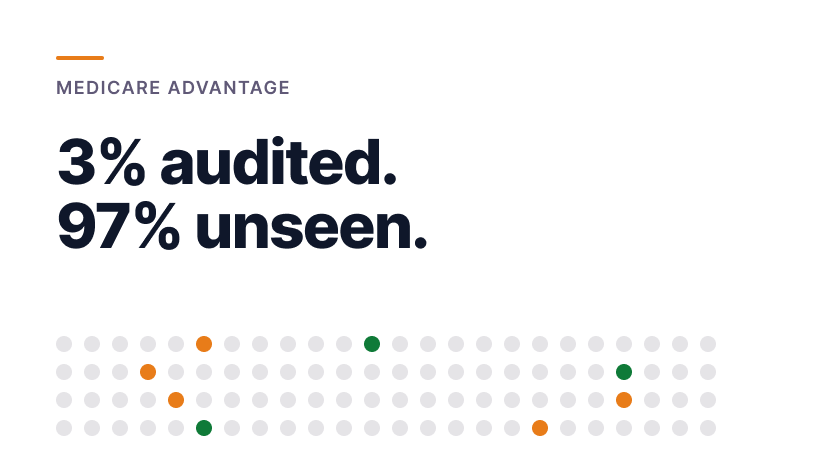
- A health plan can review every claim conversation by deploying automated quality management that audits 100% of conversations, human-handled and AI-handled, instead of the handful a supervisor pulls by hand each week.
- Most health plans get there fastest when an operator who has run a member services floor builds and runs it for them.
- The first step is mapping the call types whose shape you already know against your current escalation policy: claim status, EOB explanation, and denial reasoning.
Why do claim status and EOB calls dominate health plan member services volume?
Claim status and explanation of benefits calls dominate health plan member services volume because the documents members receive are written for payers, not for the people who have to pay.
An EOB arrives after the fact, dense with remark codes and adjudication language that makes perfect sense inside a claims system and very little sense to a member sitting at the kitchen table with a bill that does not match what they expected. The call that follows is not a simple status lookup. It is a conversation about money the member believes they already paid, money they did not know they owed, or a denial they cannot interpret. That emotional weight lands on the queue whether the member is checking claim status for the first time or calling back because the first answer did not resolve the question.
These contacts cluster at predictable peaks: the week after explanation of benefits documents mail, the first days of a new plan year when deductibles reset, and the days following a major procedure when multiple claims adjudicate at once. Volume spikes are not random. They follow the plan calendar, which means a member services floor can anticipate them and still find itself short when the calls arrive.
And the gap that IVR menus leave open makes the problem worse. A member who works through an automated menu, hears a status code, and still cannot answer the question they called with lands in the queue anyway. The code was delivered. The contact was not resolved. That distinction is what a health plan's quality process has to account for, and it is why every conversation gets scored (opens in a new tab) rather than a sample.
Where is the line between explaining a claim determination and making a new one?
A member services representative may explain how a determination was reached and what the plan documents say. Changing that determination is a separate, governed process with its own record.
In practice, representatives cross that line while trying to be helpful. A member is upset, the rep wants to resolve the call, and a personal read on coverage feels like the fastest path to a calmer conversation. It is not. That improvised opinion now lives in the member's memory and, in some cases, in a recorded transcript, without the plan's formal review process attached to it.
When different reps offer different informal reads on similar denials, the floor produces conflicting signals. Those signals surface as provider disputes and appeals, which carry administrative costs that dwarf the time spent on the original denial call.
A governed response protocol, grounded in approved plan knowledge and applied consistently on every attempt, is what keeps explanation from becoming an unauthorized change to the determination.

What is a grievance trigger on an EOB call, and why do so many get missed?
A grievance trigger is the moment a member expresses dissatisfaction with how the plan handled them, as distinct from disagreement with the determination itself, which is an appeal.
The distinction matters legally. Under 42 CFR 422.561 a Medicare Advantage grievance is dissatisfaction with the plan's operations, activities or behavior, and it expressly excludes organization determinations, which run the appeal track instead. A member who calls to check claim status and asks why a charge appeared may just need an explanation. That same member who then says "I asked about this three weeks ago and nobody helped me" has crossed into grievance territory. The plan is obligated to recognize that and act on it.
The cues are quiet. A repeated complaint about a prior call, a mention of care delayed while the claim sat unresolved, a flat statement that the member feels unheard. None of those phrases contain the word "grievance." A representative managing a queue and watching handle time will often hear them as background frustration rather than as a regulatory signal that requires a formal log and routing step.
Missed grievances do not disappear. In Medicare Advantage the plan has 30 days from receipt to resolve a grievance, and 24 hours when it is expedited (42 CFR 422.564(e)(1) and (f)). A grievance nobody logged resurfaces later as a complaint the member files with CMS through the Complaints Tracking Module, or as a CAHPS answer. A plan that scores well on claim status resolution but misses the embedded grievance has not actually resolved the contact.
Catching that pattern consistently requires reviewing enough conversations to see it. A sampled quality process covers a fraction of volume, which means the plan is inferring from a thin slice. What happens in the rest of those calls stays invisible until a regulator asks.
Why do members still ask for a live agent after an automated system gives them the claim status?
Members ask for a live agent because older automated systems return a status where the member needs an explanation, and those are two different things.
The distinction matters on every EOB call. A system that says "your claim is processing" or "your claim was finalized" has technically answered the status question. It has not told the member why the plan paid $140 on a $400 bill, which deductible bucket absorbed the rest, or why the allowed amount differs from the billed charge. That gap is where the callback comes from.
A scripted automated layer cannot reason across benefit rules, procedure codes, and accumulator balances in combination. Explaining what a member owes requires holding the plan design, the claim adjudication logic, and the member's year-to-date accumulators in the same context at the same time. A fixed decision tree does not do that. It routes.
And the handoff compounds the problem. When the automated layer drops a caller into the human queue without passing context, the member repeats the account number, the date of service, and the claim number from the beginning. That repetition is the loudest signal that the first interaction resolved nothing.
Judging a system by how many calls it deflected tells you nothing about resolution. Deflection and genuine resolution are not the same thing.
What does an agentic AI voice agent actually do on a claim status or EOB call?
An agentic AI voice agent retrieves health insurance claim status, reads the plan's own determination against the member's benefit rules, and explains it in plain language a member can act on.
Orvera AI is an agentic customer experience platform with deep specialization in Voice AI, headquartered in San Francisco and built on 18+ years of contact center experience. The agent reads back why the plan paid at a reduced rate, why a prior authorization was flagged, or why a balance remains. That explanation is specific to the member's plan and history, so the caller hears the reason their own claim paid the way it did, in the terms of their own benefit.
Voice, chat and digital channels are handled by the same agent on one unified architecture.
The architecture is model-agnostic. A governed layer sits above the underlying voice and language models, and Orvera AI custom-trains its own contextualization models on de-identified data.
Escalation logic is where the design earns its keep. The agent routes the call to a human representative, passing the full conversation context.
How can a health plan review every claim conversation for quality instead of a sample?
A health plan can review every claim conversation by deploying automated quality management that audits 100% of conversations, human-handled and AI-handled, instead of the handful a supervisor pulls by hand each week.
Sampling works until it does not. A grievance surfaces in a conversation no reviewer touched. A denial reason gets described three different ways across three different representatives, and a member filing an appeal quotes the version that contradicts the plan's approved language. Those gaps are invisible when quality management runs on a fraction of volume. Medical claim status calls carry real regulatory exposure, and a missed pattern in a Monday morning sample stays missed until a complaint lands.
Orvera AI Quality Management audits every conversation, whether a human representative handled it or an AI agent did. Each explanation is checked against the approved knowledge the plan supplied during configuration, so the same denial reason reads the same way on every call. Auditing every conversation against one approved answer is what makes the answer consistent.
And when a medical necessity escalation reaches a human representative, Agent Assist surfaces approved knowledge and flags escalation cues in real time, before the call ends, not after a supervisor reviews it the following week.
Who should build and run this?
Most health plans get there fastest when an operator who has run a member services floor builds and runs it for them.
Building the system is only part of the work. Writing the escalation rules for a conversation that shifts from claim status to "why was my claim denied" requires someone who has managed that floor before. Orvera AI brings 18+ years of contact center operating experience to every deployment. The people configuring the resolution logic have staffed queues of their own. That background shapes decisions that a software project alone cannot replicate.
Orvera AI builds, deploys, integrates, and runs the operation as a managed service on the technology stack the plan already uses. Full enterprise deployment lands in three to six weeks. Orvera AI runs onboarding, knowledge-base setup, agent training, and change management.
And the internal member services team does not disappear from the picture. Agentic AI resolves routine claim status and EOB explanation calls. Your people stay on the advocacy work, the complex denials, and the escalations where human judgment changes the outcome. That division of labor is where a member services team earns its Star Rating, not in reading a standard claim summary that an AI voice agent can deliver accurately and consistently on every call.

What should a VP of member services take away from this?
A VP of member services should take away one clear principle: claim status and EOB explanation calls are the highest-leverage place to improve member experience, because they drive more member services call volume than any other single reason a member reaches for the phone.
Resolving those calls at the first contact, with accurate benefit and eligibility information personalized to the caller's history, is where cost per contact falls and CSAT rises together. Agentic AI handles the routine explanation and escalates the rest to a human rep with full context already surfaced. Every conversation, on the AI side and the human side, is audited by automated quality management. Nothing waits for a sample review.
Compliance is the point most often underestimated. A grievance does not announce itself. Dissatisfaction with how the plan handled the member, a delay or an unreturned prior call, is a grievance. Disagreement with the determination itself is an appeal. One call can carry both, and the work on the floor is telling them apart while the member is still on the line. That signal gets caught on the call and again in the audit of every conversation.
Orvera AI is SOC 2 Type II certified and HIPAA compliant, and it connects to 500+ systems including your CCaaS platform, CRM, and healthcare systems such as Epic. The architecture your team already runs does not need to change.
What is the first step to putting agentic AI on claim status calls?
The first step is mapping the call types whose shape you already know against your current escalation policy: claim status, EOB explanation, and denial reasoning.
That mapping exists in your conversation record today. You know which calls route to a specialist, which ones resolve on first contact, and which ones generate a grievance when they do not. Start there.
From that map, three things become clear: where containment is realistic, where a member needs a human representative on the line, and which escalation rules cannot flex. Agentic AI for health plans runs inside those rules, surfacing the claim state, the denial reason, or the EOB line item, and escalating with a full summary when the call needs a person.
The number to read first is claim-driven grievance volume, because it reads cleanly from the conversation record. Containment tells you the call stayed in the system. Resolution tells you the member got an answer, and grievance volume is where that shows up.
Orvera AI builds, deploys, and runs the whole operation, so the first conversation is about your plan architecture and your grievance rules. It arrives with that context already in frame. Full deployment lands in three to six weeks, on the stack you already run.
Frequently asked questions
Agentic AI built for health plan member services can explain an Explanation of Benefits to a member without making a medical determination, because those are two different tasks. Reading back what the plan decided and why it landed the way it did is an informational act. Adjudicating the claim is a governed clinical and administrative process. The agent works inside the member's own plan documents and claim record. Every response is grounded in the approved knowledge the plan supplied, so the explanation matches the determination on file rather than describing coverage that does not exist. That boundary is what makes AI for health plan member services operationally safe. The next question is how the same platform handles PHI.
Orvera AI handles PHI in a health plan contact center as a SOC 2 Type II certified and HIPAA compliant platform running on the plan's own existing technology stack. The platform is governance-first by design, with approved-knowledge grounding, explicit controls, and full auditability across the whole conversation. That applies to automated claim status inquiries and to every other interaction type the platform handles. The compliance case does not rest on controls alone. Orvera AI Quality Management audits 100% of conversations, human-handled and AI-handled, so every interaction leaves a reviewable record. That complete audit trail answers the question regulators and compliance teams ask first: can you show us what the system said, to whom, and when? With full coverage, the answer is yes.
Orvera AI runs Voice AI on one architecture unifying multilingual NLU, agentic planning, workflow execution and governance across every channel. The AI agent pulls live claim data directly from the core claims system. It reads that data against the member's benefit rules and accumulators in real time, then explains the processed amount, the applied deductible, and the remaining out-of-pocket balance in plain language the member can follow. What keeps CSAT intact on these calls is whether the explanation matches the member's own claim. When the explanation tracks the member's actual history, the member stays in the conversation instead of pressing zero. A member who hears a reading of the same document they already have presses zero, and the resolution opportunity is gone.
The AI agent hands an unresolved claim inquiry to a human representative, with the full call context delivered at the point of transfer. The member does not re-explain the situation from the beginning. The rep receives a complete summary of everything discussed, every document referenced, and every step already taken. Agent Assist then supports that rep live. It surfaces approved knowledge, flags escalation cues in real time, and generates the post-call summary when the conversation closes. You can read more about how Agent Assist supports reps during live calls and why that live layer matters for compliance-sensitive interactions. Planning how to automate EOB calls with AI works best when the handoff path is as well-governed as the containment path.
Orvera AI builds, deploys, and runs a HIPAA compliant conversational AI operation on the stack your contact center already operates, with no rip-and-replace required. Deployment follows a managed service model. Orvera AI runs onboarding, knowledge-base setup, agent training, and change management. Full enterprise deployment lands in three to six weeks. The foundation behind that timeline is 18+ years of contact center experience and 500+ integrations spanning CCaaS platforms, CRM systems, helpdesk tools, and healthcare systems including Epic. Your telephony layer, your routing rules, and your existing workflows stay in place. What changes is what the member hears and what your reps see on screen.
After automating claim status calls, the first metric to read is claim-driven grievances, because that count drops straight off the conversation record and reflects whether members actually got an answer. Repetitive claim status and where-is-my-payment inquiries are the right place to start, because their shape is already known. The member ID arrives, the claim record pulls, and Orvera AI builds the response from that member's own claim history. Whether AI can explain medical benefits to members resolves in the data: grievance volume, repeat contacts on the same claim, and handle time on the calls that do reach a representative. Those three numbers tell you whether the operation moved.

Written by
Anindita Majumder
Anindita Majumder is a communications professional with nearly four years of experience in public relations, corporate communications, and journalism. She creates content that helps brands communicate their vision, products, and expertise through press releases, thought leadership, and editorial pieces. Outside of work, she is a vocalist, which keeps her creativity flowing.