Orvera vs Vapi: Which AI Platform Is Better in 2026?
Orvera AI and Vapi compared on rollout ownership, workflow depth, pricing behavior, telephony, integrations, analytics and enterprise governance, to help CX teams choose between a platform run for them and a developer-led voice stack.


Key highlights
Comparison at a glance
- Choose Orvera AI for omnichannel AI agents across voice, chat, email and messaging, with deep Voice AI specialization and Agent Assist and Auto QA on one platform.
- Choose Vapi if you want a configurable voice AI platform, in-house technical ownership, and direct control over telephony, models, and orchestration.
- Orvera is best suited to teams that want structured workflows and operational visibility, with the platform built, deployed and run for them.
- Vapi is best suited to teams prioritizing modular voice-stack control and developer-led deployment.
- Across Orvera customer engagements, full deployment averages 3 to 6 weeks.
Both Orvera AI and Vapi help teams automate customer interactions with AI, but the better fit depends on what the buyer actually needs in the rollout. Some teams care most about channel mix, voice workflow depth and operational reporting. Others care more about developer control, modular voice-stack choices, telephony configuration, and API-led ownership. Orvera is an agentic AI platform for enterprise customer experience, with omnichannel AI agents across voice, chat, email and messaging, Agent Assist and Auto QA on one platform, and deep specialization in Voice AI. Vapi is positioned more as a developer-focused voice AI platform built for teams that want configurable voice agents and deeper control over the voice stack.
Orvera AI publishes this comparison. Competitor details come from each vendor's own website as of October 5, 2026, and are linked where they appear.
This comparison covers operating models as well as features. The real decision usually comes down to rollout ownership, workflow complexity, channel needs, pricing behavior, telephony depth, integrations, analytics and enterprise governance. This guide focuses on those criteria.
Quick Snapshot (Orvera vs Vapi)
Orvera is an agentic AI platform for enterprise customer experience. Its AI agents work across voice, chat, email and messaging, inbound and outbound, with deep specialization in Voice AI, and Agent Assist and Auto QA support human agents on the same platform. Orvera builds, deploys and runs the operation for the customer.
Vapi is best known for configurable voice AI development. Its docs and public materials frame it as an orchestration layer where teams can choose assistants or squads, plug in providers, build with APIs, and manage call behavior more directly. That makes it especially appealing to technical teams that want flexibility over the underlying voice stack.
So the quick summary is simple: Orvera fits enterprise teams that want Orvera to build, deploy and run the operation and report on outcomes, while Vapi fits teams that want modular voice infrastructure and are comfortable owning more of the technical setup themselves.
What Orvera Is Best For
Orvera is best for enterprises that want to automate customer interactions across voice, chat, email and messaging while still prioritizing structured voice execution, workflow outcomes and operational reporting. Its public positioning leans into business execution, making it a strong fit for contact centers, BPOs, scheduling workflows, support triage and other high-volume service environments.
That is important because many teams need a system that can route correctly, eliminate repetitive work, summarize interactions cleanly, and give operations leaders useful visibility into performance. Orvera is built for that need.
What Vapi Is Best For
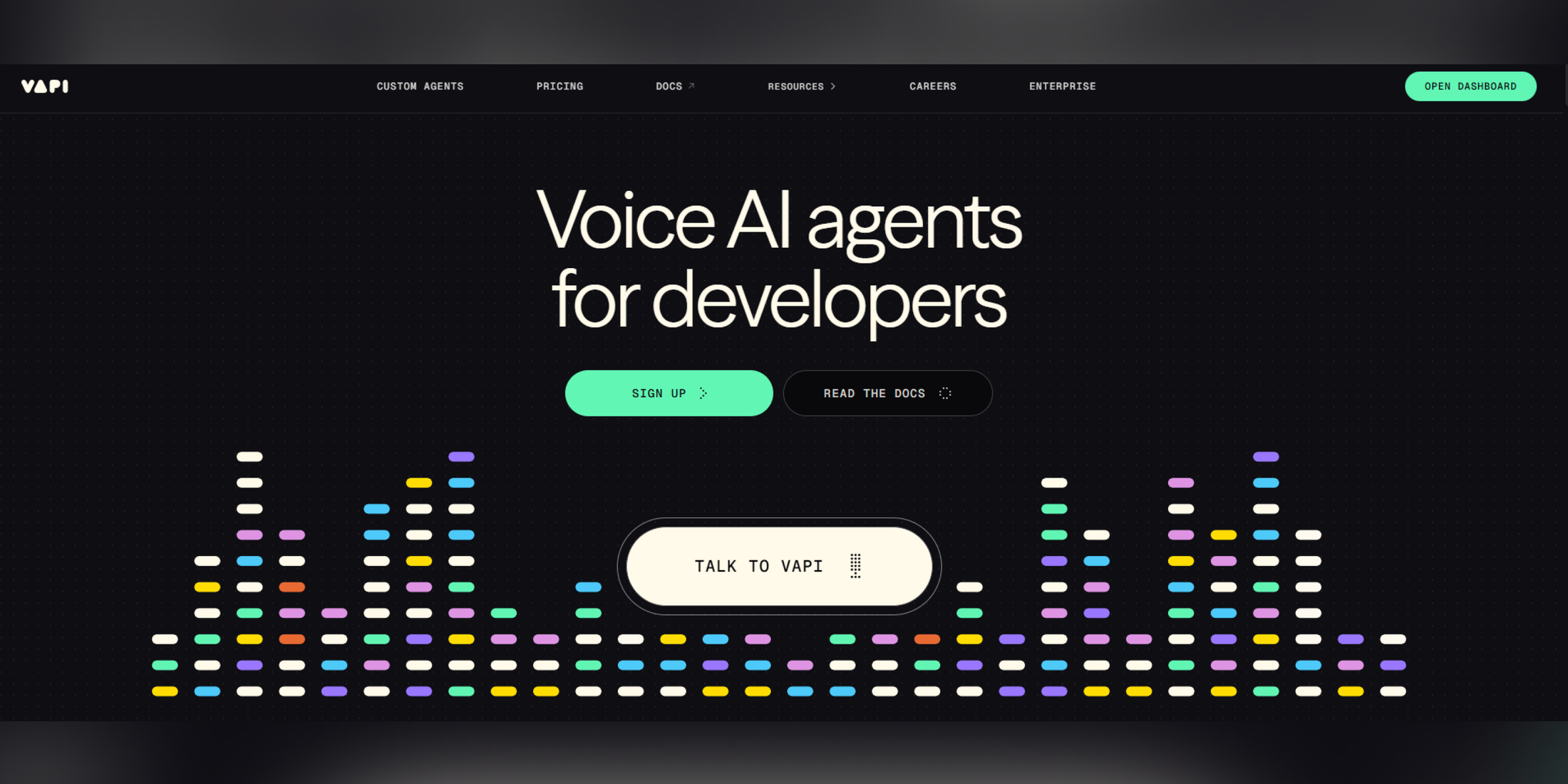
Vapi is best for teams building and deploying voice AI agents (opens in a new tab) with strong technical control. As of October 5, 2026, Vapi's docs list assistants and squads (opens in a new tab), and its pricing page pairs per-minute usage with optional Success Packages (opens in a new tab): Core at $29 a month, Pro at a $999 monthly minimum, and Premier on contact. That makes it especially relevant for builders who want direct control over telephony, model selection, orchestration, and programmatic call behavior.
In practical terms, Vapi is best suited to teams where voice is the primary channel, the team has engineering resources, and the platform is treated as a configurable voice layer. As of October 5, 2026, Vapi's pricing page states that you own and operate your agents, models and data (opens in a new tab), so the buyer should be comfortable with a technical ownership model.
How They Work (Simple Setup Flow)
In practice, both platforms follow a similar rollout flow. Teams choose a workflow, define the interaction logic, connect systems, test edge cases, go live, and then review outcomes weekly to improve performance. That setup pattern is common whether the use case is scheduling, support triage, lead qualification, reminders, or inbound service.
The difference is that Vapi usually requires more direct decisions about transcriber, model, voice provider and orchestration logic. That gives the buyer more flexibility, and it also creates more implementation responsibility. Orvera builds, deploys and runs the operation for the customer, so the buyer takes on less stack-level ownership up front.
How do Orvera AI and Vapi differ?
The most important differences are the ones that affect time-to-value, deployment ownership, and total cost over time. For most buyers, those factors are pricing style, workflow control, telephony depth, integrations, analytics, scalability, governance, and omnichannel readiness. Both are credible platforms, but they optimize for different kinds of teams.
Pricing approach
As of October 5, 2026, Vapi's pricing page lists $0.05 per minute for Vapi hosting (opens in a new tab), with models passed through at cost, carrier telephony such as Twilio billed by the provider, and extra concurrency at $10 per line per month and HIPAA at $2,000 per month charged separately.
That can be attractive for pilots and variable call programs, and it also means buyers need to price the full stack along with the base rate. The real operating cost may depend on call duration, concurrency, voice provider choice, telephony and other infrastructure layers. Orvera discusses pricing on a consultative call about your use cases, so model both options at your own expected volume.
Deployment speed and setup effort
As of October 5, 2026, Vapi's homepage describes dedicated deployment support (opens in a new tab), with an engineer embedded in your team to get you live in a week. Actual launch speed still depends on workflow scope, telephony setup, provider choices, testing and how much configuration the buyer takes on. Because it is configurable, teams can reduce vendor lock-in, and they also take on more of the implementation themselves.
Across Orvera customer engagements, full deployment averages 3 to 6 weeks, with the Orvera team building, deploying and running the workflows. In simple terms, Vapi gives more stack control, while Orvera runs the business-ready path for you.
Workflow building and control
Vapi emphasizes configurability in code and uses squads of assistants for multi-step conversational logic. That makes it attractive for teams that want to own branching, fallbacks, retries, validation, and other interaction rules at a lower level.
Orvera also supports workflow execution, and its public positioning is outcome-led. That makes it a fit for teams that want business workflows live with strong reporting and operational visibility. Both can support serious automation. Vapi is developer-owned, and Orvera is operated for the enterprise by the Orvera team.
Telephony and calling options
Telephony depth is one of Vapi's clearest strengths. As of October 5, 2026, its docs cover assistants, squads, SMS and chat (opens in a new tab), and its pricing page prices concurrent call lines, which shows that telephony is a core part of the product's design.
Orvera also runs enterprise voice execution, and its public messaging centers on the business outcomes that voice workflows produce. Vapi is best suited to teams that want deep telephony control, and Orvera to teams that want voice performance inside a broader enterprise CX operation.
Integrations and tool actions
Vapi's ecosystem supports integration patterns and modular provider connections, and its developer-first posture makes it flexible for API-driven tool actions during or after calls. This is helpful when the team wants to build its own orchestration logic across internal systems.
Orvera pairs strong workflow execution (opens in a new tab) with 500+ integrations across CCaaS, CRM, helpdesk, ITSM, payments and other enterprise systems. For teams with fewer developers, the evaluation question becomes "can it complete the workflow cleanly?"
Analytics and call insights
As of October 5, 2026, Vapi's docs list structured outputs and call analysis (opens in a new tab) for review after the call ends. Its broader tooling supports build-test-deploy cycles, which makes analytics part of a technical optimization loop.
Orvera places its emphasis on operational reporting, summaries, Voice of Customer analysis, QA-style visibility, and ongoing workflow improvement (opens in a new tab) in real service environments, with Auto QA across AI-handled and human-handled conversations. That suits teams that want analytics to support managers, QA leaders and service operations as well as developers iterating on prompts and call flows.
Explore Orvera if you want summaries, reporting and operational visibility built for enterprise customer experience workflows, with Agent Assist and Auto QA on the same platform. (opens in a new tab)Scalability and concurrency
As of October 5, 2026, Vapi's pricing page sells extra concurrent call lines (opens in a new tab), and its homepage reports 1 billion calls supported and 2.5M+ agents launched (opens in a new tab). Buyers should still validate behavior under their own peak-load and overflow conditions.
Orvera is built on 18+ years of contact-center experience and deploys AI agents across the enterprise customer-experience operation, which is directly useful for operations teams planning high-volume service automation.
Security and governance
As of October 5, 2026, Vapi's homepage lists SOC 2, HIPAA and PCI compliance plus SSO, OAuth and RBAC (opens in a new tab), and Vapi's security docs include HIPAA documentation (opens in a new tab) and broader data-handling guidance, which shows serious attention to regulated deployment scenarios. Buyers should still verify exactly which controls apply to their hosting model, provider choices, and procurement requirements.
Orvera is SOC 2 Type II certified, HIPAA compliant and GDPR compliant, and its public emphasis is balanced between governance and operational deployment (opens in a new tab). Governance sits inside an execution-oriented platform story. Validate both in a live evaluation against your own procurement requirements.
How do Orvera AI and Vapi compare side by side?
| Category | Orvera | Vapi |
|---|---|---|
| Best for | Enterprise omnichannel CX automation with deep Voice AI specialization | Configurable voice AI development and voice-led workflows |
| Pricing approach | Discussed on a consultative call | Per-minute usage plus optional Success Packages |
| Setup effort | Built, deployed and run by the Orvera team | Configurable and technically owned by the buyer |
| Workflow control | Workflow execution with a business-outcome focus | Low-level voice-stack and workflow configurability |
| Telephony depth | Managed enterprise voice execution | Explicit telephony and orchestration focus |
| Integrations | 500+ integrations | API-led modular integration flexibility |
| Analytics and QA | Operational reporting, summaries, Voice of Customer and Auto QA across AI-handled and human-handled conversations | Technical post-call evaluation loop |
| Scalability | Built for enterprise service operations | Published scale figures for voice infrastructure |
| Enterprise controls | SOC 2 Type II certified, HIPAA and GDPR compliant | Lists SOC 2, HIPAA and PCI compliance, SSO, OAuth and RBAC (vapi.ai, as of October 5, 2026), with HIPAA as a paid add-on |
| Omnichannel readiness | Omnichannel AI agents with deep Voice AI specialization | Voice-first platform, with chat and SMS in its docs |
Which use cases fit Orvera AI best?
Orvera fits best for enterprises that want coordinated customer interaction automation across channels but need voice performance to remain especially strong.
Contact center automation and queue reduction
Orvera is a strong fit for high-volume inbound environments where the goal is to answer faster, reduce hold time, automate repetitive intents, and maintain visibility into call outcomes. Its public positioning around enterprise voice execution and workflow outcomes makes this one of its clearest strengths.
Appointment scheduling and confirmations
Structured workflows with clear success outcomes, such as booked, rescheduled, canceled, or confirmed, are another natural fit. These are ideal for enterprise teams that want fast automation gains with measurable outcomes.
Omnichannel customer engagement
Orvera is also well-suited to teams that want voice, chat, email and messaging coordinated within a single operating model. That matters when the customer journey spans multiple touchpoints.
See how Orvera builds, deploys and runs AI agents, Agent Assist and Auto QA on one platform for enterprise CX teams. (opens in a new tab)Which use cases fit Vapi best?
Vapi is best suited to teams building voice experiences where configurability, modular architecture and developer control matter most.
Voice agents for inbound and outbound calling
Vapi is a strong fit for support, reminders, confirmations, outbound follow-up, lead qualification, and similar phone-based workflows where voice is the primary channel and the team wants a programmable call stack.
Teams that want modular voice-stack control
Vapi is especially relevant for teams that want to choose their transcriber, model, and voice providers themselves. That modular approach is one of its clearest differentiators.
Developers building custom voice workflows
Teams with in-house engineering resources may prefer Vapi because they can own configuration, orchestration, provider management, integrations, and iterative tuning directly. That can be powerful, but it also assumes technical capacity exists internally.
Strengths and Considerations
This is mostly a choice between enterprise operating fit and developer-first flexibility.
Orvera: Strengths and Considerations
Pros
- Omnichannel AI agents with deep Voice AI specialization
- Built on 18+ years of contact-center experience
- Built, deployed and run by the Orvera team
- Agent Assist and Auto QA across AI-handled and human-handled conversations
- 500+ integrations across enterprise systems
What to validate in a pilot
- Handoff quality in your target workflows
- Cross-channel orchestration depth for your actual use cases
- Reporting fit for your operations and QA model
- Workflow execution reliability under live conditions
Vapi: Strengths and Considerations
Pros
- Strong developer tooling and modular architecture
- Strong voice-stack flexibility and provider choice
- Per-minute usage with optional Success Packages
- Strong fit for technical teams building custom voice workflows
What to validate in a pilot
- True total cost once providers and infrastructure choices are included
- Engineering effort needed after launch
- Provider management complexity
- Edge-case handling and transfer behavior
- Channel coverage for the journeys you need to automate
Which One Should You Choose? (Simple Decision Guide)
The best decision starts with how your team works.
Choose Orvera if…
Choose Orvera if you need enterprise omnichannel automation, business-outcome reporting, governance across customer touchpoints and high-quality voice execution, with the operation built, deployed and run for you. It is best suited to teams that want visibility into business performance after launch without taking on stack ownership internally.
Choose Vapi if…
Choose Vapi if you want a configurable voice AI platform, have technical resources in-house (opens in a new tab), value modular provider choice, and prefer to build around a voice-first developer platform.
If you're unsure, run a 2-workflow pilot
Test one simple workflow and one medium-complexity workflow, then compare:
- Containment
- Task completion
- Transfer quality
- Call duration
- Cost per successful outcome
- QA visibility
- Ease of weekly optimization
That will tell you very quickly whether your team needs a more configurable voice stack or an execution model run for you by the vendor. This is a practical recommendation based on the public positioning of both platforms.
How Orvera Runs Enterprise CX Automation
Orvera combines omnichannel AI agents, Agent Assist and Auto QA on one platform, with deep specialization in Voice AI. Built on 18+ years of contact-center experience, it is designed for enterprises that want clear workflow outcomes, strong summaries and a continuous improvement loop that service teams can actually use.
What makes Orvera different:
- Omnichannel AI agents with deep Voice AI specialization
- Agent Assist and Auto QA for human agents on the same platform
- Strong workflow execution tied to measurable business outcomes
- Summaries, reporting and operational visibility
- Built, deployed and run for enterprise teams by the Orvera team
Conclusion
Both platforms are credible, and they solve different problems. Vapi is best suited to technical teams that want configurable voice infrastructure and deeper stack ownership. Orvera is best suited to enterprises that want omnichannel AI agents with deep Voice AI specialization, Agent Assist and Auto QA on one platform, built, deployed and run for them.
The best choice comes down to your channel mix, workflow complexity, rollout ownership model, governance needs and budget model. Run the two-workflow pilot above and compare cost per successful outcome before you commit.
Frequently asked questions
As of October 5, 2026, Vapi lists per-minute hosting with optional Success Packages, and the real operating cost can expand once provider, telephony, concurrency and infrastructure choices are included.
Yes, Vapi is strongly positioned as a developer-first voice AI platform with configurable workflows and API-led control.
Across Orvera customer engagements, full deployment averages 3 to 6 weeks, with the Orvera team running the implementation. As of October 5, 2026, Vapi's homepage offers a dedicated engineer to get you live in a week. Compare both against your own workflow scope.
As of October 5, 2026, Vapi's homepage lists SOC 2, HIPAA and PCI compliance plus SSO, OAuth and RBAC. Buyers should verify the exact controls for their deployment model.
You should test containment, task completion, transfer quality, call duration, reporting usefulness, and cost per successful outcome under realistic traffic conditions.

Written by
Anindita Majumder
Anindita Majumder is a communications professional with nearly four years of experience in public relations, corporate communications, and journalism. She creates content that helps brands communicate their vision, products, and expertise through press releases, thought leadership, and editorial pieces. Outside of work, she is a vocalist, which keeps her creativity flowing.
