Top 10 Retell AI Alternatives in 2026
Companies evaluating AI voice platforms rarely do so in isolation. Many begin with Retell AI, test its capabilities, and then...


Key highlights
TL;DR – 60-Second Executive Summary
- AI voice agents are now enterprise infrastructure, not experimental tools.
- Platforms differ widely in architecture, deployment model, and scalability maturity.
- Enterprises should prioritize workflow resolution, integration depth, compliance readiness, and cost predictability at scale.
- Developer-first platforms offer flexibility but often require engineering ownership.
- Voice-quality-first platforms sound impressive but may lack full workflow orchestration.
- Orvera stands out in 2026 for its structured enterprise deployment, first-contact resolution around 80 percent across its customers, 3 to 6 week go-live, and a build that Orvera runs itself.
Companies evaluating AI voice platforms rarely do so in isolation. Many begin with Retell AI, test its capabilities, and then explore alternatives before committing long-term. The reasons are practical rather than dramatic.
Buyers compare alternatives to Retell AI when they want clearer pricing predictability, deeper workflow flexibility, stronger voice accuracy, better regional language performance, and broader enterprise integrations. As conversational AI moves from pilot to production, these criteria become operational requirements rather than optional enhancements.
This guide presents a curated, neutral comparison of the best Retell AI alternatives in 2026. The goal is not to criticize any single vendor, but to help decision-makers identify platforms that align with real-world contact center workflows, cost controls, and enterprise scale.
Why Businesses Look for Retell AI Alternatives
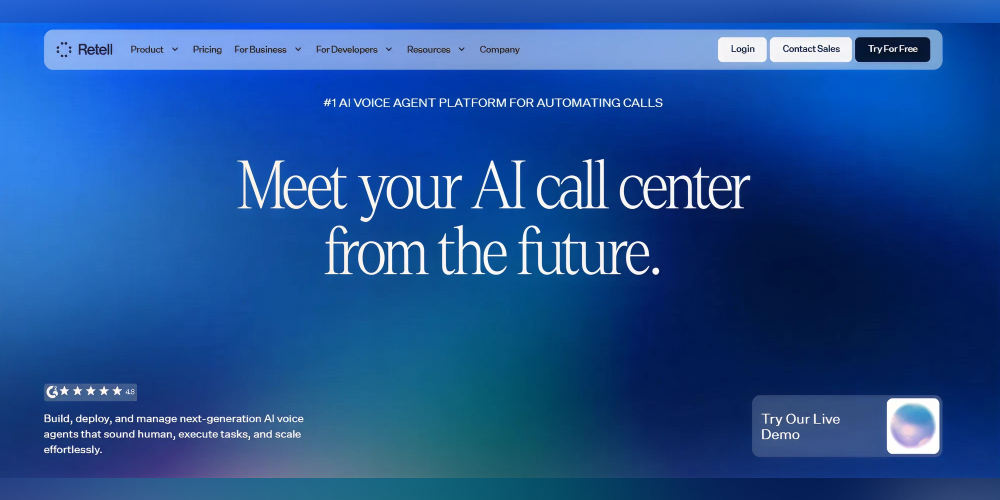
Retell AI is widely recognized for its developer-friendly architecture and modular, usage-based pricing model. For many teams, this flexibility works well during early experimentation and pilot phases. However, as organizations transition from proof-of-concept deployments to production-scale automation, additional evaluation criteria tend to emerge.
Common reasons companies explore alternatives include:
- The need for greater cost predictability as call volumes scale
- Interest in more advanced workflow branching for complex, multi-step processes
- A preference for lower setup complexity for operations-led teams
- Desire for broader out-of-the-box integrations rather than custom builds
- Close monitoring of latency performance in real-time voice environments
As use cases evolve from basic call handling to structured workflow execution across CRM, ticketing, and backend systems, buyers often reassess whether their current platform aligns with long-term governance, routing depth, and financial planning requirements.
Common Considerations
When conducting comparative research, organizations sometimes evaluate:
- The depth of workflow branching for enterprise-grade processes
- How usage-based billing behaves during seasonal or high-volume spikes
- Availability of enterprise-level onboarding and support options
- The degree of internal development effort required for scaling
- The structure and clarity of deployment frameworks
These factors do not represent universal limitations. Instead, they reflect typical evaluation criteria that influence enterprise-level decision-making when selecting a long-term AI voice automation partner.
Looking for a voice automation platform built around structured enterprise workflows? Explore how orvera approaches production-scale deployment differently. (opens in a new tab)Top 10 Retell AI Alternatives — Quick Overview Table
| Platform | Pricing | Key Features | Ideal Use Case |
|---|---|---|---|
| Orvera | Shared on a scoped call | Structured workflow logic, multilingual AI agents, 500+ enterprise integrations | Mid to large enterprise CX operations |
| Vapi | Usage-based | API-first voice infrastructure | Dev-led voice builds |
| Bland AI | Usage-based | Outbound AI calling, voice stack modularity | Outbound campaigns |
| Sierra AI | Subscription | Conversational realism | Enterprise automation |
| PolyAI | Enterprise pricing | Large-scale virtual agents | Global CX teams |
| Cognigy | Tiered | Omnichannel AI orchestration | Enterprise automation |
| Kore.ai | Enterprise pricing | Vertical AI solutions | Regulated industries |
| Yellow.ai | Subscription | Voice + chat automation | Mid-size CX teams |
| Observe.AI | Quote-based | QA + conversational intelligence | QA + conversational intelligence |
| Five9 IVA | Platform-based | Native CCaaS integration | Five9 users |
Top 10 Retell AI Alternatives in 2026: Detailed Breakdown
Retell AI is popular among developer-led teams building programmable voice agents, but many enterprises now seek alternatives that offer stronger governance, clearer pricing, deeper integrations, and faster production deployment. Below is a detailed breakdown of the top 10 Retell AI alternatives in 2026.
Orvera
Source: Orvera Homepage (opens in a new tab)
Orvera is an agentic AI platform for enterprise customer experience that Orvera builds, deploys and runs for the customer. Built on 18+ years of contact-center experience, it combines deep operational insight with advanced branching logic, reliable CRM and telephony integrations, flexible dialect and accent options and a commercial model scoped to the deployment, making it well-suited for organizations that require scalable containment, governance control and measurable performance impact beyond pilot-stage deployments.
Features Overview
- Advanced branching logic with operational control
- Multilingual AI voice agents with regional accuracy
- Seamless CRM, telephony, and webhook integrations
- Predictable cost modeling without hidden stack layers
- Built-in analytics and call performance dashboards
Orvera is designed for both operations teams and developers.
Case Study
A U.S.-based national record retrieval enterprise partnered with Orvera to automate high-volume outbound follow-ups with medical custodians. Once live, the AI system was operating as a production extension of their team, reducing manual overhead, accelerating record retrieval cycles, and lowering cost per call without compromising quality or compliance.
Pros
- Predictable billing model
- Enterprise deployment support
- Strong multilingual performance
- Workflow depth suitable for regulated industries
Considerations
- Requires structured onboarding planning
- Enterprise focus may be more than needed for small pilots
Pricing
Orvera builds, deploys and runs the operation for the enterprise, starting from the workflows and the volume they carry.
Vapi
Source: Website Screenshot
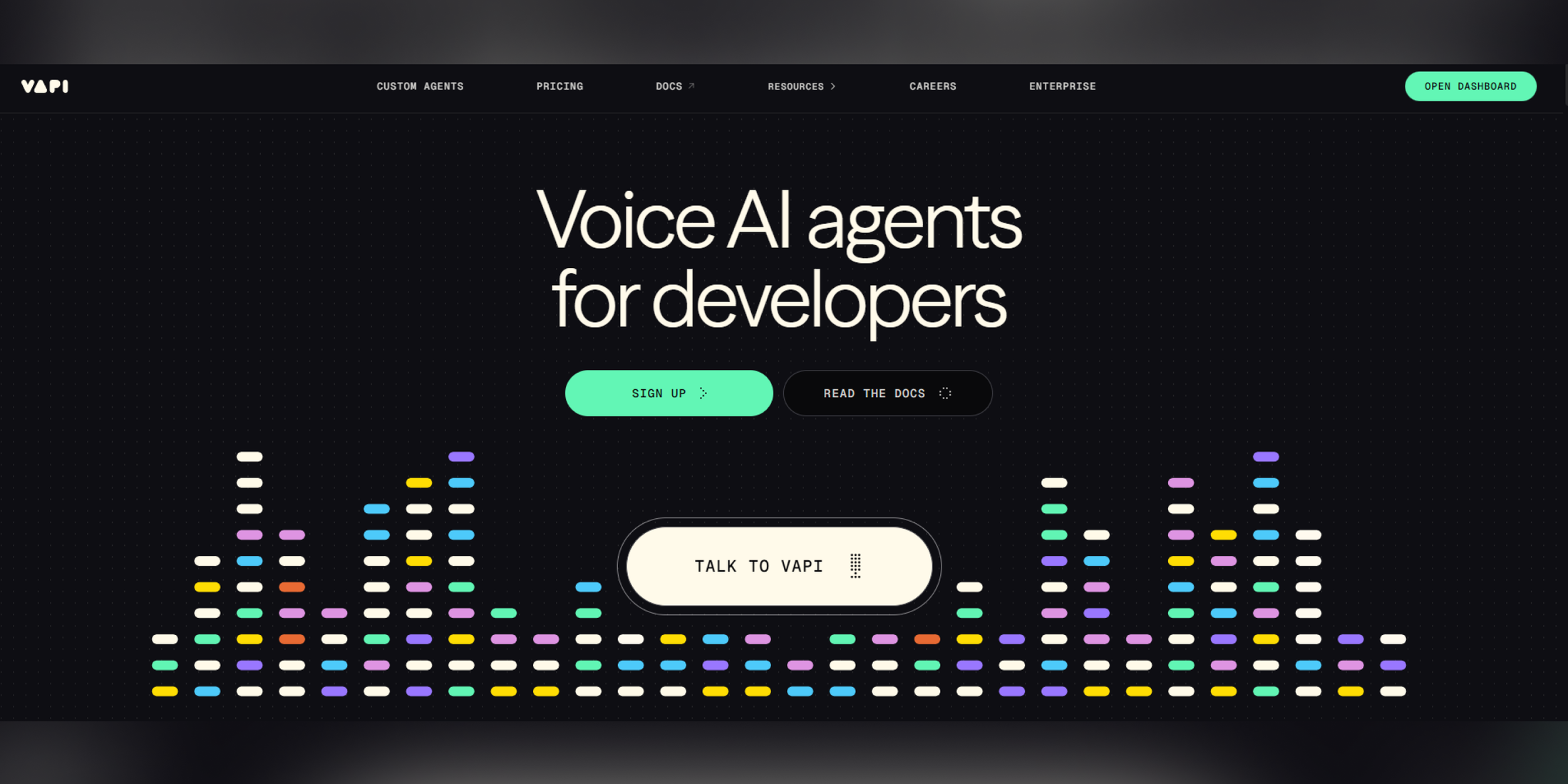
Vapi is an API-first voice infrastructure platform designed primarily for developer-led teams building real-time conversational systems. It offers flexible integration capabilities and streaming-based architecture, making it suitable for organizations that want to assemble and customize their own voice stack.
Key Features
- API-first voice stack
- Flexible real-time streaming
- Developer-friendly integration
Strengths
- API-first architecture offering high flexibility
- Real-time streaming support for custom voice applications
- Strong fit for developer-led builds
- Modular infrastructure that allows stack customization
Considerations
- Requires technical expertise for setup and scaling
- Operational teams may depend on engineering for updates
- Cost predictability depends on usage patterns
Pricing
Vapi pricing (opens in a new tab) includes a usage-based model, where customers pay for minutes, real-time streaming usage, and infrastructure consumption tied to voice processing.
Bland AI
Source: Website Screenshot
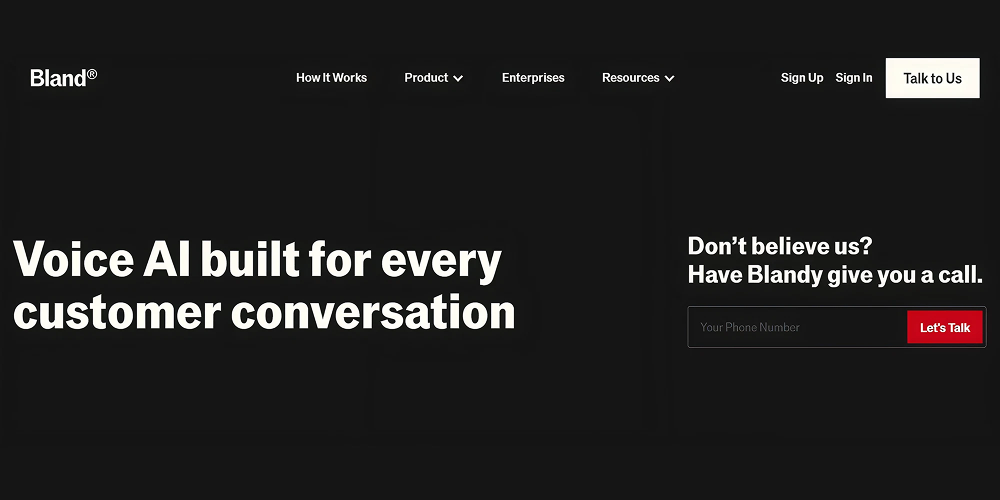
Bland AI focuses on outbound AI calling and modular voice orchestration. Its usage-based model appeals to teams running high-volume outbound campaigns or experimenting with scalable automated calling workflows.
Key Features
- Outbound AI calling
- Modular voice stack pricing
- BYOC flexibility
Strengths
- Well-suited for outbound AI calling workflows
- Modular voice stack with BYOC flexibility
- Fast deployment for campaign-based use cases
- Usage-based pricing aligns with experimental pilots
Considerations
- Forecasting costs can require volume modeling
- Advanced workflow branching may require configuration depth
- More outbound-focused than full-service inbound orchestration
Pricing
Bland AI operates on a modular, pay-as-you-go pricing structure that charges separately for voice minutes, telephony, and additional workflow components.
Sierra AI

Source: Website Screenshot
Sierra positions itself as an AI-driven customer interaction platform that delivers natural, high-quality conversational experiences. It emphasizes brand-aligned voice automation and is often evaluated by companies seeking elevated conversational realism.
Key Features
- Human-like conversational flow
- Sales-focused automation
Strengths
- Strong emphasis on conversational realism
- Brand-aligned AI interaction design
- Enterprise-grade positioning
- Designed for customer-facing engagement quality
Considerations
- May require structured onboarding for complex workflows
- Enterprise focus may exceed smaller pilot needs
- Pricing typically structured at higher tiers
Pricing
Sierra typically offers enterprise-tier, quote-based pricing structured around deployment scope, usage volume, and support requirements.
PolyAI
Source: Website Screenshot
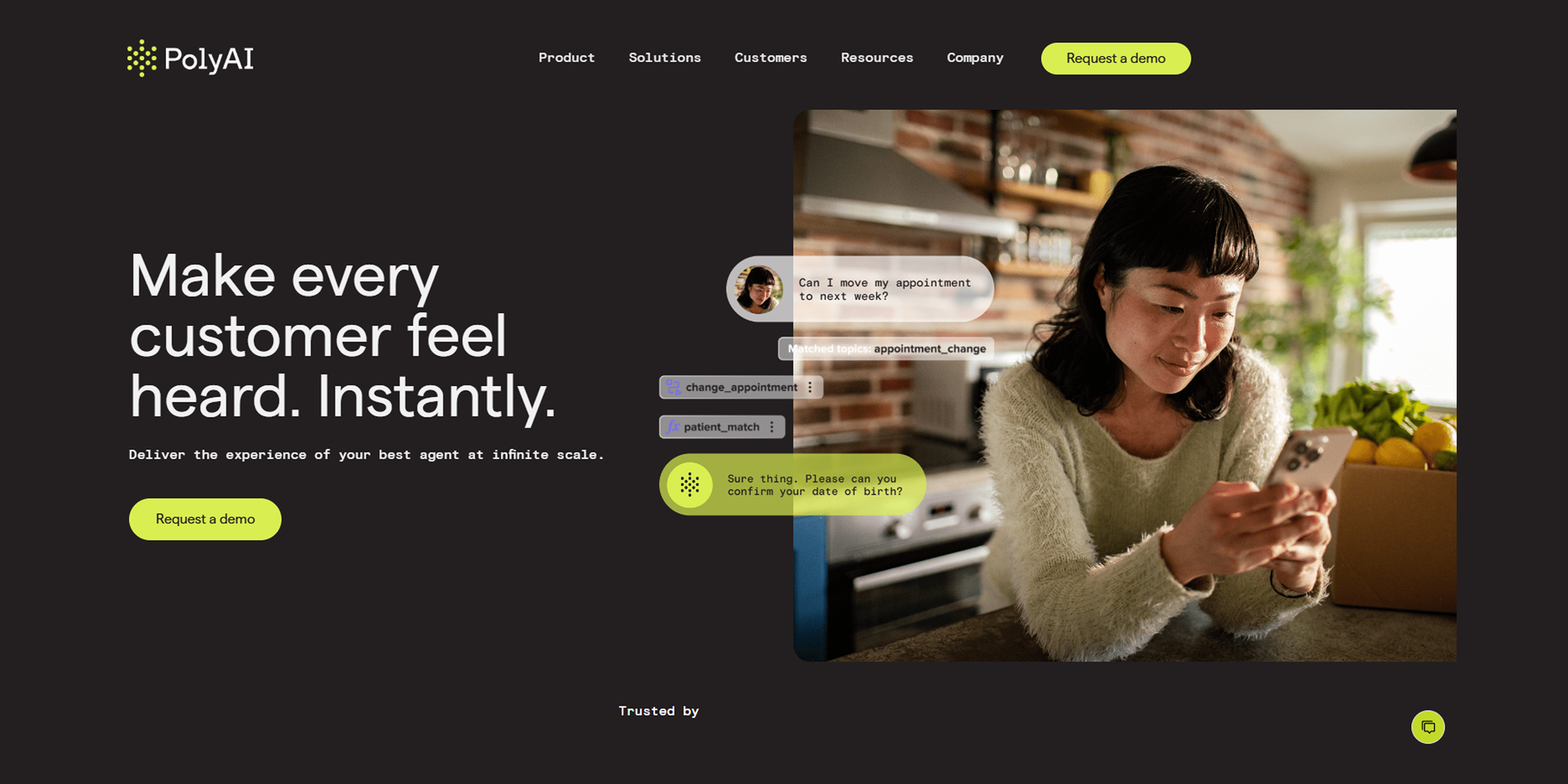
PolyAI (opens in a new tab) provides enterprise virtual assistants built specifically for large contact center environments. The platform is known for its focus on voice-first deployments and handling complex customer service interactions at scale.
Key Features
- Enterprise virtual assistants
- Large-scale CX deployment
Strengths
- Built specifically for enterprise voice deployments
- Strong handling of complex customer service interactions
- Proven large-scale implementations
- Voice-first specialization
Considerations
- Enterprise pricing model
- Implementation timelines may be structured
- Primarily focused on voice rather than deep omnichannel control
Pricing
PolyAI provides enterprise contract pricing tailored to call volume, integration complexity, and service-level commitments.
Cognigy
Source: Website Screenshot
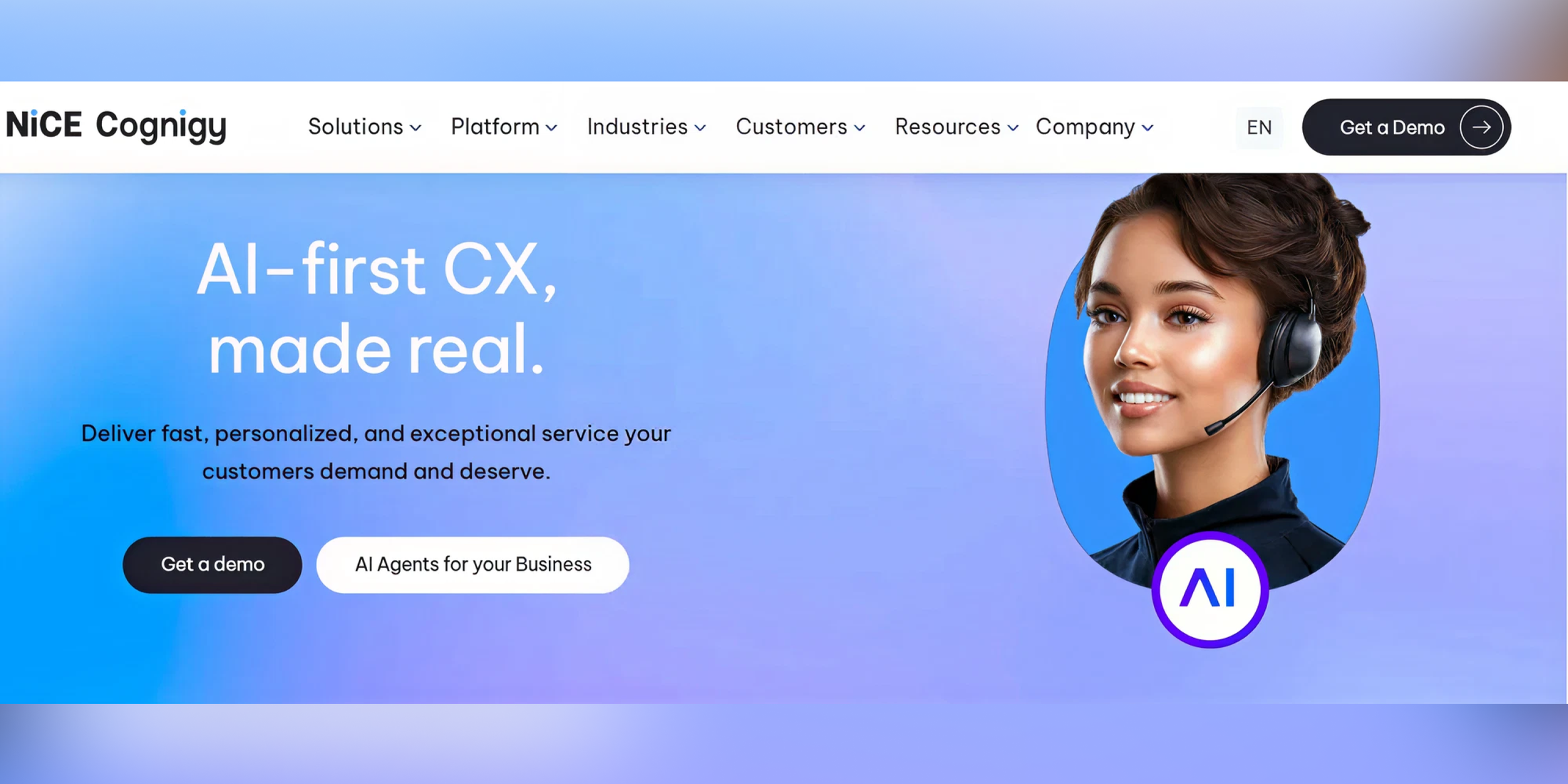
Cognigy is an omnichannel conversational automation platform that supports both voice and digital channels. It offers visual workflow design tools and enterprise governance features for structured automation deployments.
Key Features
- Omnichannel automation
- Visual flow builder
Strengths
- Omnichannel conversational automation
- Visual flow builder for workflow design
- Enterprise governance capabilities
- Strong integration ecosystem
Considerations
- Voice specialization may vary by deployment
- Configuration depth can require planning
- Pricing tiers may scale with usage
Pricing
Cognigy follows a tiered enterprise pricing model that scales based on user seats, conversation volume, and feature access.
Kore.ai
Source: Website Screenshot
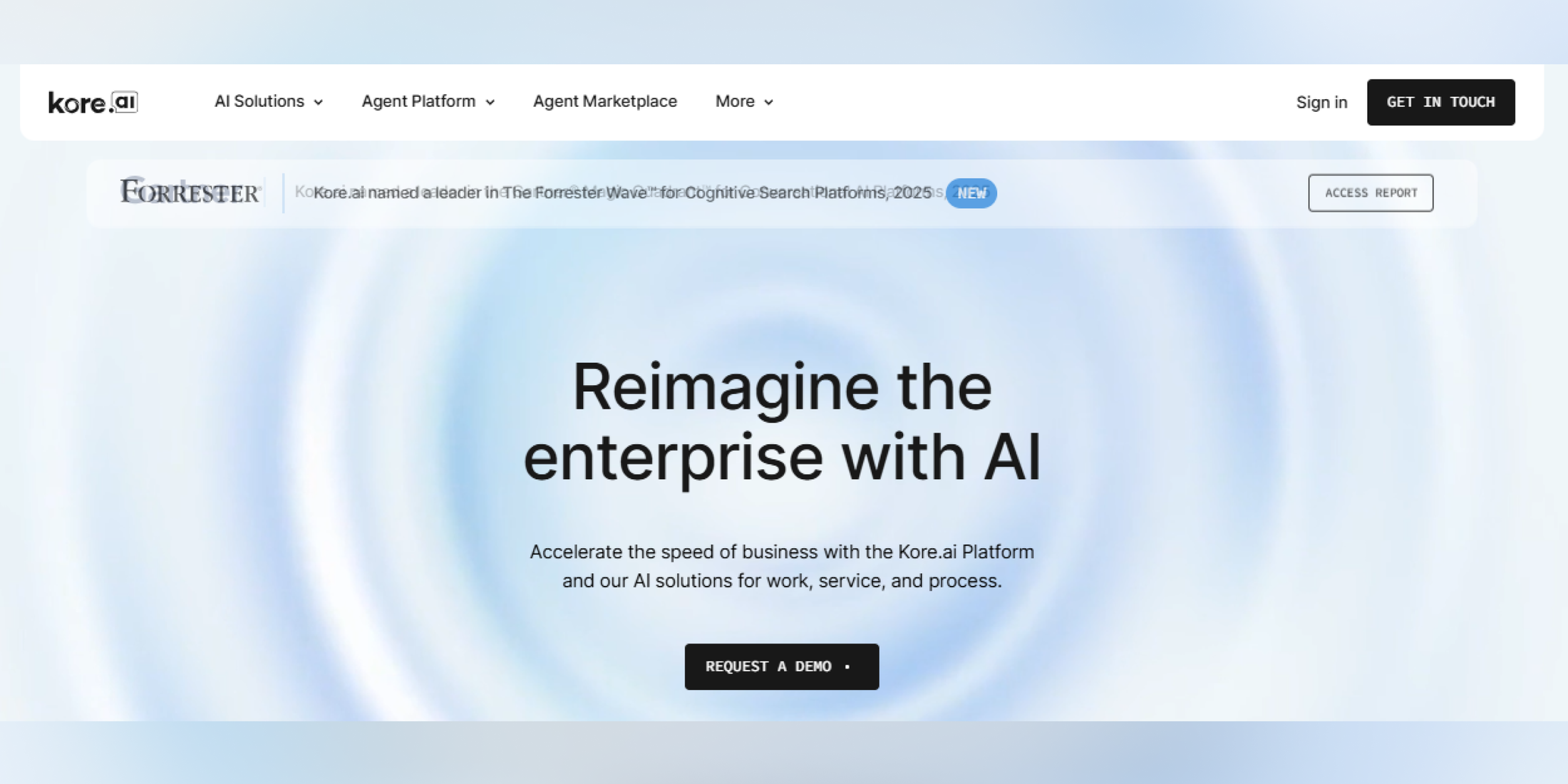
Kore.ai delivers enterprise AI solutions across industries, with strong capabilities in virtual assistants and automation governance. It is often considered by regulated sectors requiring structured control and compliance alignment.
Key Features
- Industry-focused AI
- Enterprise governance
Strengths
- Strong enterprise governance and compliance features
- Vertical-focused AI solutions
- Mature enterprise positioning
- Broad automation capabilities
Considerations
- Implementation may require structured rollout planning
- Enterprise orientation may be complex for small teams
- Customization depth can extend deployment timelines
Pricing
Kore.ai uses enterprise quote-based pricing aligned with deployment scale, channel coverage, and industry-specific requirements.
Yellow.ai
Source: Website Screenshot
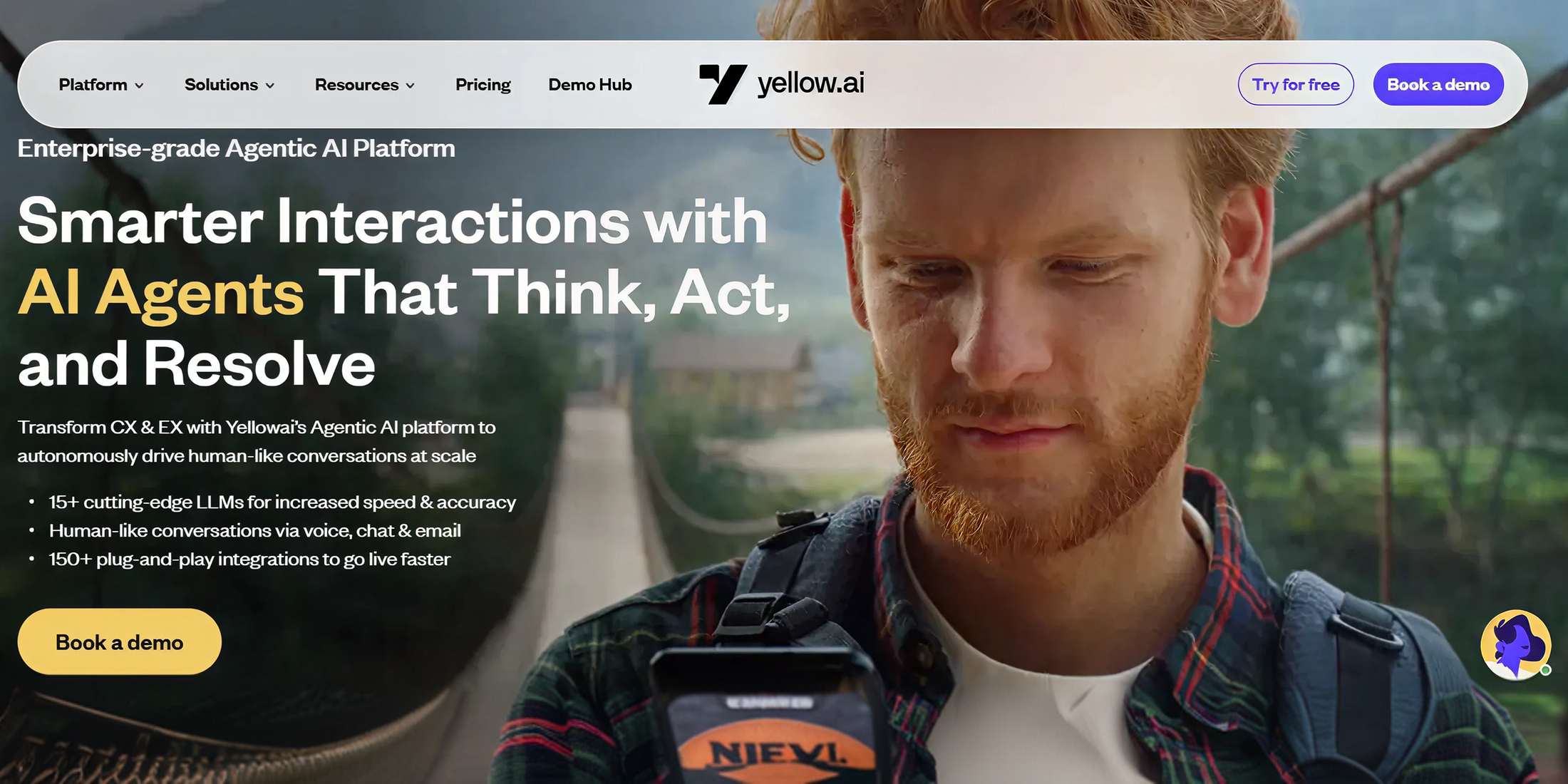
Yellow.ai offers AI automation across voice and chat channels, targeting customer support and engagement use cases. The platform supports workflow configuration and integration with common business systems.
Key Features
- Voice and chat bots
- Automation templates
Strengths
- Supports both voice and chat automation
- Workflow templates for faster configuration
- Integration with common CRM systems
- Balanced mid-market and enterprise positioning
Considerations
- Advanced branching may require customization
- Voice performance depends on use case complexity
- Pricing varies by feature tier
Pricing
Yellow.ai offers subscription-based pricing that varies by automation volume, channels enabled, and feature tier selection.
Observe.AI
Source: Website Screenshot
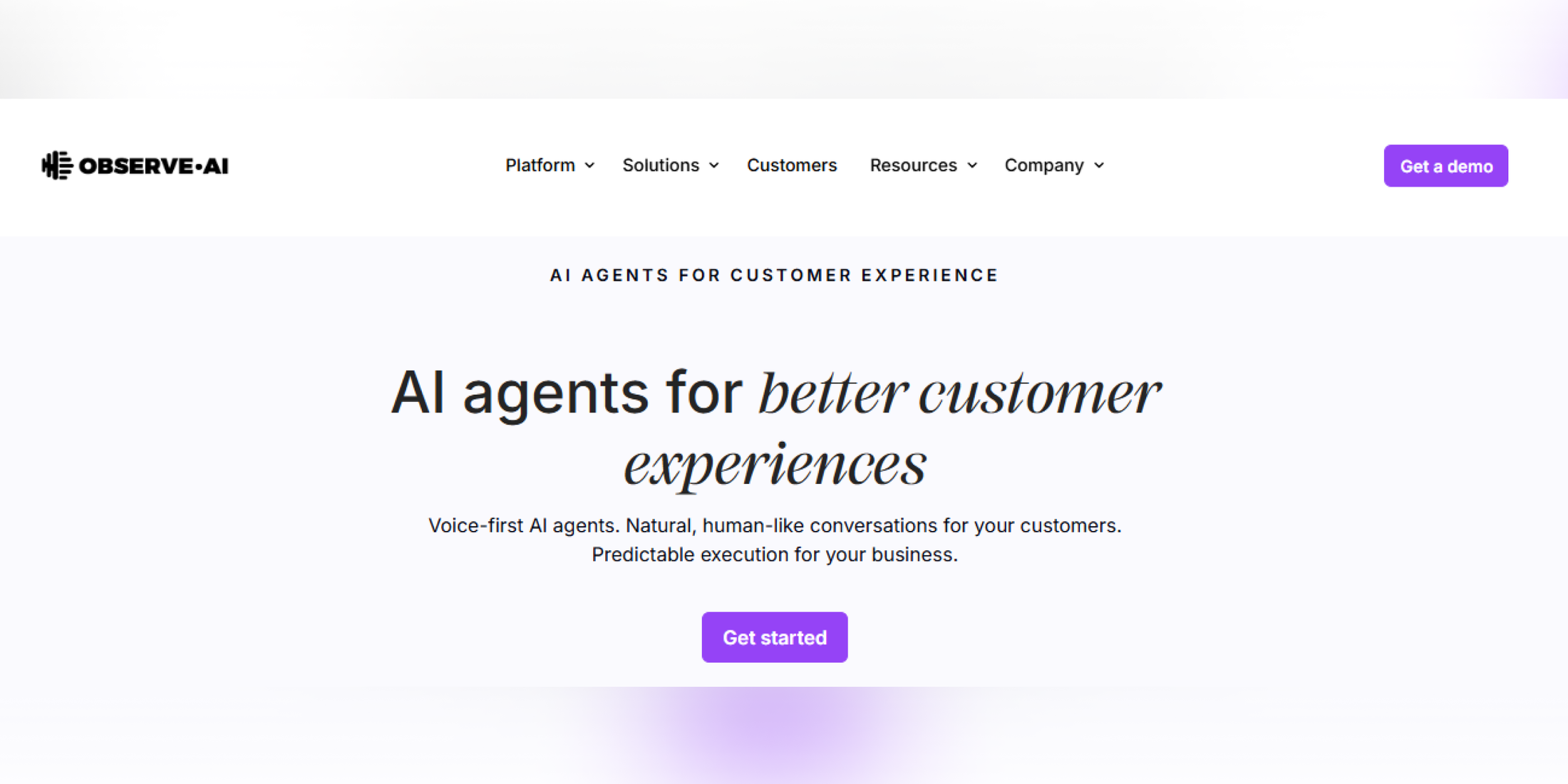
Observe.AI is primarily known for AI-powered quality assurance and conversational analytics in contact centers. While rooted in performance intelligence, it is increasingly expanding into broader conversational automation capabilities.
Key Features
- AI-driven quality assurance
- Conversational analytics
Strengths
- Strong AI-powered QA and analytics engine
- Deep conversational intelligence capabilities
- Valuable for performance monitoring
- Established presence in contact center analytics
Considerations
- Core strength remains QA rather than full automation
- Voice execution capabilities may depend on the integration stack
- May complement, rather than replace, orchestration platforms
Pricing
Observe.AI typically follows a per-seat or per-agent pricing structure combined with platform licensing for analytics capabilities.
Five9 IVA
Source: Website Screenshot
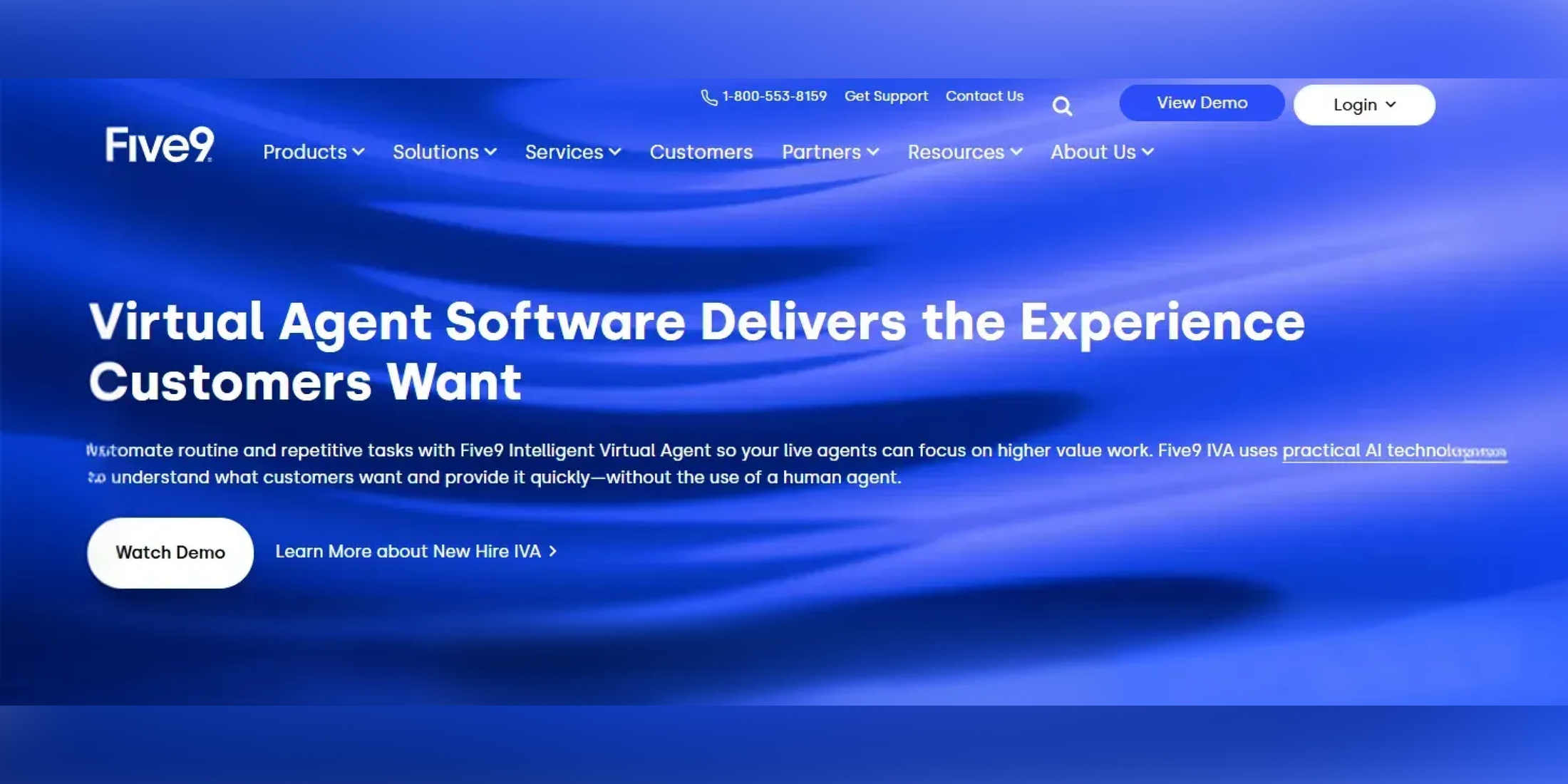
Five9 IVA is integrated within the Five9 contact center ecosystem, offering virtual agent functionality as part of its CCaaS suite. It is typically evaluated by organizations already operating within the Five9 environment.
Key Features
- Native Five9 integration
- Contact center alignment
Strengths
- Native integration within the Five9 ecosystem
- Seamless alignment for existing Five9 customers
- Contact center–focused design
- Supported within a larger CCaaS environment
Considerations
- Best suited for organizations already using Five9
- Flexibility outside the ecosystem may vary
- Feature depth tied to broader Five9 platform structure
Pricing
Five9 IVA pricing is integrated into the broader Five9 CCaaS contract, typically structured around platform licensing and usage volume.
Core Features to Look For When Switching From Retell AI
When evaluating alternatives, buyers should prioritize these core features (opens in a new tab):
- Natural conversational AI with contextual memory
- Multilingual voice coverage
- Fast API and webhook support
- No-code or low-code builder for operations teams
- Deep CRM and telephony integrations
- Fallback logic and human handoff design
- Real-time analytics dashboards
- Automated call summaries
- Predictable billing structures
Missing these elements increases business risk. Weak workflow depth can lead to containment failure. Poor latency increases abandonment rates. Unpredictable billing impacts budget planning. Lack of analytics limits operational optimization.
Voice automation is not just about answering calls. It is about executing structured actions reliably at scale.
Want an enterprise voice platform that delivers a production-ready framework? See how Orvera is built for scalable, reliable automation from day one. (opens in a new tab)Why Orvera Is a Leading Alternative to Retell AI
While Retell AI offers flexibility for engineering-led voice experimentation, many enterprises eventually require a more structured, operations-ready model to support sustained automation at scale. Orvera differentiates itself through operational maturity, predictable economics, and governance-driven deployment. Instead of leaving orchestration, pricing, forecasting, and workflow design heavily dependent on internal engineering resources, Orvera delivers a production-grade framework built around real enterprise call environments. For organizations transitioning from experimentation to a long-term automation strategy, this structured approach often delivers greater stability, clearer cost control, and faster, measurable ROI.
Competitive Differentiators
- Structured workflow branching logic designed for real business call resolution rather than open-ended prompt engineering
- Enterprise-grade multilingual voice accuracy optimized for production reliability, not just conversational realism
- Commercial model scoped to the deployment and shared on a scoped call
- Native CRM and telephony integrations, eliminating heavy custom orchestration
- Built-in QA, analytics, and compliance controls aligned with enterprise governance requirements
- White-glove deployment support that minimizes internal engineering lift and accelerates time to value
- Production-ready go-live in 3 to 6 weeks, compared to longer engineering-led build cycles
Frequently asked questions
Retell AI commonly uses modular usage-based billing. Alternatives may offer subscription or enterprise-priced plans, which improve predictability at higher call volumes.
Latency, pronunciation accuracy across regional dialects, contextual retention, and interruption handling are critical benchmarks.
Request live demos showing multi-branch routing, fallback handling, webhook triggers, and CRM write-back capabilities. Depth should extend beyond simple Q&A.
It depends on the platform. API-driven alternatives often require developer involvement. Enterprise-oriented platforms with structured onboarding typically reduce technical dependency.

Written by
Bryan Miller
Bryan is a B2B SaaS writer with a technical background who shifted into writing about technology and AI four years ago. With hands-on tech experience, he brings depth, clarity, and practical context to complex AI and SaaS topics. He’s a firm believer in an AI-driven future and focuses on content that explains not just how technology works, but why it matters. Outside of writing, Bryan enjoys watching films, listening to tech podcasts, and nurturing an unusual rookie-level interest in marine biology.