Best Speech Analytics Software in 2026 (Top 10 Tools Compared)
Ten speech analytics platforms for contact centers compared on transcription, analytics, QA, compliance and reporting, with vendor facts checked October 5, 2026.

Key highlights
Highlights
- The speech analytics platforms in this guide serve different use cases. Some are better for large contact centers, some for QA and coaching, some for CX programs, and others for sales or marketing call intelligence.
- Suite-native platforms suit teams that want speech analytics inside broader contact center, CX, workforce, or CCaaS ecosystems.
- Observe.AI suits teams focused on QA, agent coaching, performance monitoring, and consistently evaluating more customer interactions.
- Dialpad AI is useful for teams that want real-time transcription, sentiment signals, call scoring, and AI-powered insights inside live communication workflows.
- Qualtrics, Gong, and Invoca serve more specialized needs, including CX and VoC analytics, sales conversation intelligence, and marketing-driven inbound call analysis.
- Buyers should choose based on workflow fit, analytics depth, QA and compliance needs, reporting quality, integration requirements, and how the team will act on insights after implementation.
- Orvera AI (our product) fits CX operations that want AI agents, Agent Assist and Auto QA on one platform.
Manual QA reaches a small sample of calls. Speech analytics lets contact center leaders review far more of them, find customer friction faster, coach agents on evidence and monitor compliance.
The best speech analytics software in 2026 transcribes calls and helps teams detect sentiment, identify topics, monitor risk, improve coaching, and understand why customers are calling. Some platforms focus on post-call analytics, while others connect analytics with live customer interaction workflows, AI voice automation, and operational execution.
What Is Speech Analytics Software?
Speech analytics software helps teams turn voice conversations into structured insights. Contact centers use these platforms to transcribe conversations, detect topics, identify sentiment, monitor compliance, and understand performance patterns across a much larger set of interactions.
Speech analytics usually includes voice transcription, sentiment analysis, topic spotting, call categorization, and reporting. As of October 5, 2026, Genesys describes speech and text analytics (opens in a new tab) as transcription of voice interactions combined with sentiment analysis and topic spotting, while Verint describes speech analytics (opens in a new tab) as AI-driven technology that transcribes and analyzes customer interactions to improve sentiment visibility, agent performance, and operational efficiency.
For contact centers, speech analytics can answer questions such as:
- Why are customers calling?
- Which issues create frustration?
- Which agents need coaching?
- Which disclosures are being missed?
- Which calls are escalating?
- Which processes are creating repeat contacts?
- Which conversations are resolved successfully?
What Makes Great Speech Analytics Software?
The best speech analytics software (opens in a new tab) helps teams understand what customers are saying, how agents are performing, where service risks appear, and which operational issues need attention.
Great speech analytics software should help contact centers move from call review to operational improvement. Five criteria decide whether it does.
Transcription quality
Accurate transcription is the foundation of speech analytics. If transcripts are weak, sentiment analysis, topic detection, QA scoring, and compliance monitoring become unreliable.
Capable platforms should handle accents, background noise, industry terminology, silence, interruptions, and real call center audio conditions. As of October 5, 2026, Verint, for example, lists AI-powered speech recognition and automated call categorization (opens in a new tab) among the key features of speech analytics.
Sentiment and topic detection
Transcripts show what was said. Sentiment and topic detection help teams understand what the conversation means.
Contact centers need to know whether customers are frustrated, confused, satisfied, or likely to escalate. They also need to know which topics are driving volume, such as billing, refunds, claims, delivery updates, cancellations, account access, appointment scheduling, or technical support.
QA and coaching support
Speech analytics should help managers improve agent performance and act on what the data shows.
The better platforms help teams identify missed steps, poor discovery, long silences, weak objection handling, empathy gaps, process deviations, and coaching opportunities across a larger share of interactions.
Compliance and risk monitoring
Regulated industries need speech analytics that detects missing disclosures (opens in a new tab), risky language, authentication gaps, policy failures, and escalation triggers.
As of October 5, 2026, NiCE highlights monitoring of every interaction (opens in a new tab) for quality and compliance, while Verint positions speech analytics (opens in a new tab) around compliance monitoring, automated call categorization, and real-time analytics and reporting.
Reporting and business insights
Useful reporting connects conversation data to call drivers, repeat contact, escalation trends, customer effort, agent performance, compliance risk, and workflow gaps. Without that layer, teams may have transcripts but still lack clear business insight.
How We Evaluated These Speech Analytics Tools
This list focuses on tools relevant to real contact centers and customer-facing environments. Each platform was evaluated on the five criteria above and on the type of team it serves best.
A sales conversation intelligence platform, a CCaaS-native analytics module and an AI agent platform solve different problems. Each entry below states the team it fits best, so you can shortlist by fit for your own operation.
As of October 5, 2026, we reviewed each vendor's own product, documentation and pricing pages. Every vendor capability in this guide comes from those pages on that date.
Orvera AI publishes this guide. We list our own platform last and label it, so you can judge it on the same criteria as the others.
Fit for contact center speech analytics
Priority was given to tools that support customer conversations, QA, compliance, performance tracking, coaching, and customer experience visibility.
Best-fit use case
Some tools fit contact center support operations better. Others are built for sales, marketing or CX programs, or for teams that want analytics connected to AI agents across channels.
Operational value after setup
Speech analytics only creates value when teams can act on the insights. Reporting, coaching, escalation improvement, workflow visibility, and process optimization decide whether insights turn into action.
10 Best Speech Analytics Software Tools In 2026
The tools below cover different buyer needs. Some are dedicated analytics or interaction intelligence platforms, some are part of larger contact center suites, and others are better suited for sales, CX, marketing, or AI voice operations.
Each tool is compared by best-fit use case, strengths, and practical considerations. The numbering is for reference only.
1. Verint Speech Analytics
Best for: Large contact centers
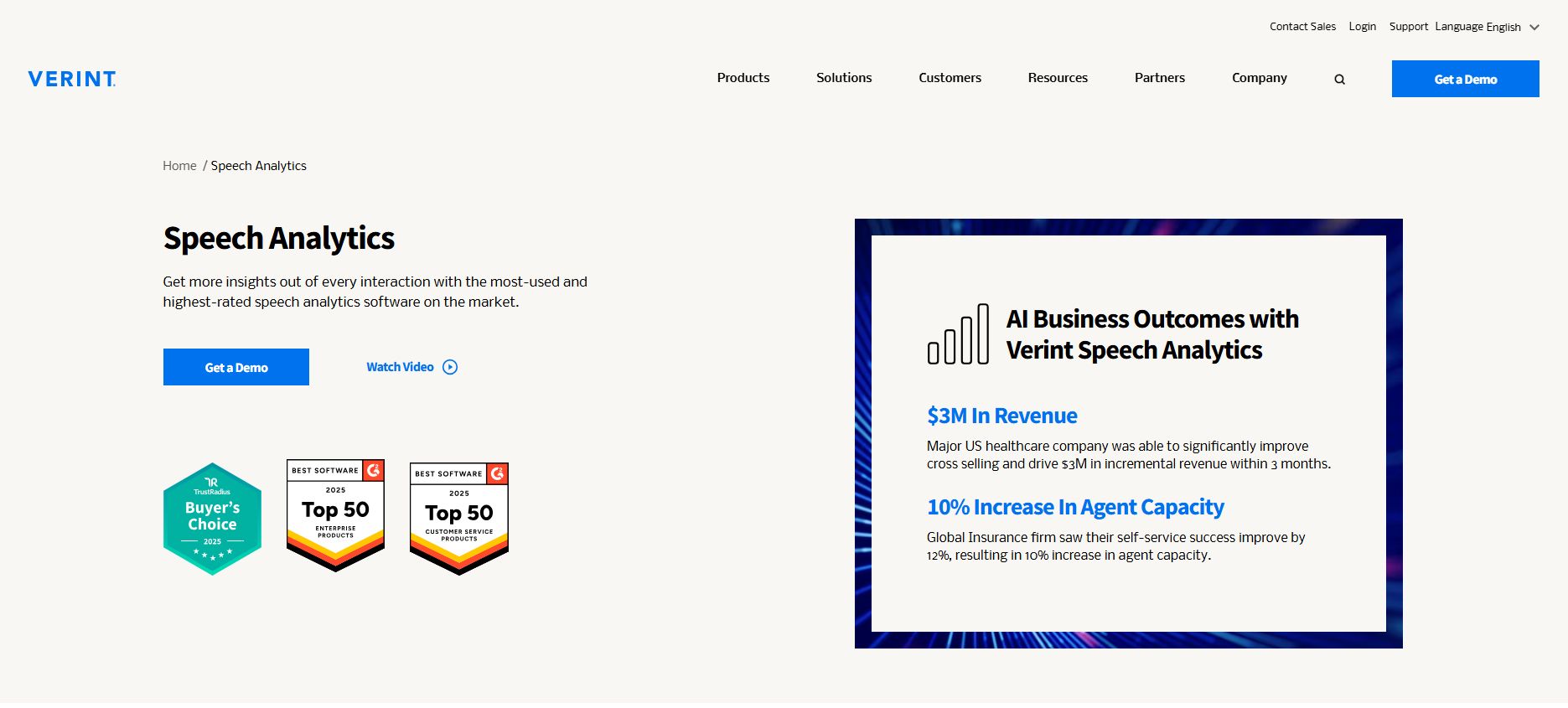
Verint Speech Analytics is built for contact centers that need transcription, sentiment analysis, call categorization, compliance support, agent improvement, and operational reporting. As of October 5, 2026, Verint's speech analytics page (opens in a new tab) says it transcribes and analyzes customer interactions from phone calls and chats and automatically extracts issues and service gaps.
Verint is especially relevant for organizations that already use workforce engagement, quality, compliance, or CX automation tools.
Good fit for: Large contact centers, regulated industries, workforce-focused operations, and mature QA programs.
Consideration: Best suited to larger organizations that want speech analytics alongside workforce engagement and quality on one platform.
2. NiCE Interaction Analytics
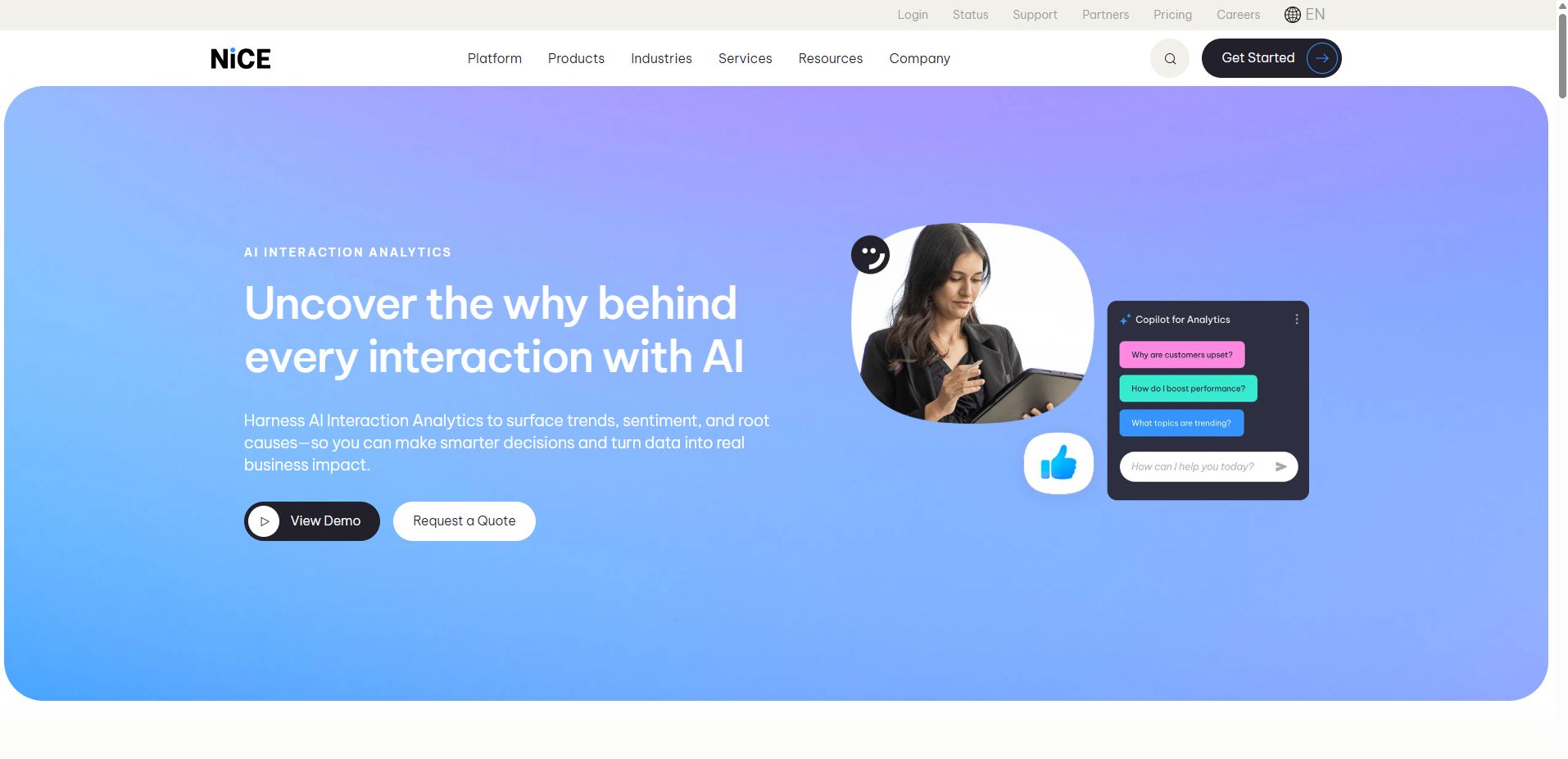
Best for: AI-enabled contact center analytics
As of October 5, 2026, NiCE Interaction Analytics is designed (opens in a new tab) to surface root causes and trends across interactions, including what drives repeat contact, churn, and poor CSAT, along with coaching opportunities. NiCE also highlights prebuilt analytics dashboards and reporting, monitoring of every interaction, faster quality evaluations, and identification of compliance issues.
NiCE suits teams that want speech and interaction analytics connected to broader contact center performance and CX automation.
Good fit for: CX teams, contact centers using NiCE CXone, QA leaders, and teams focused on trend discovery and root cause analysis.
Consideration: Buyers usually get the most value when they are already aligned with the NiCE ecosystem.
3. Genesys Cloud Speech And Text Analytics
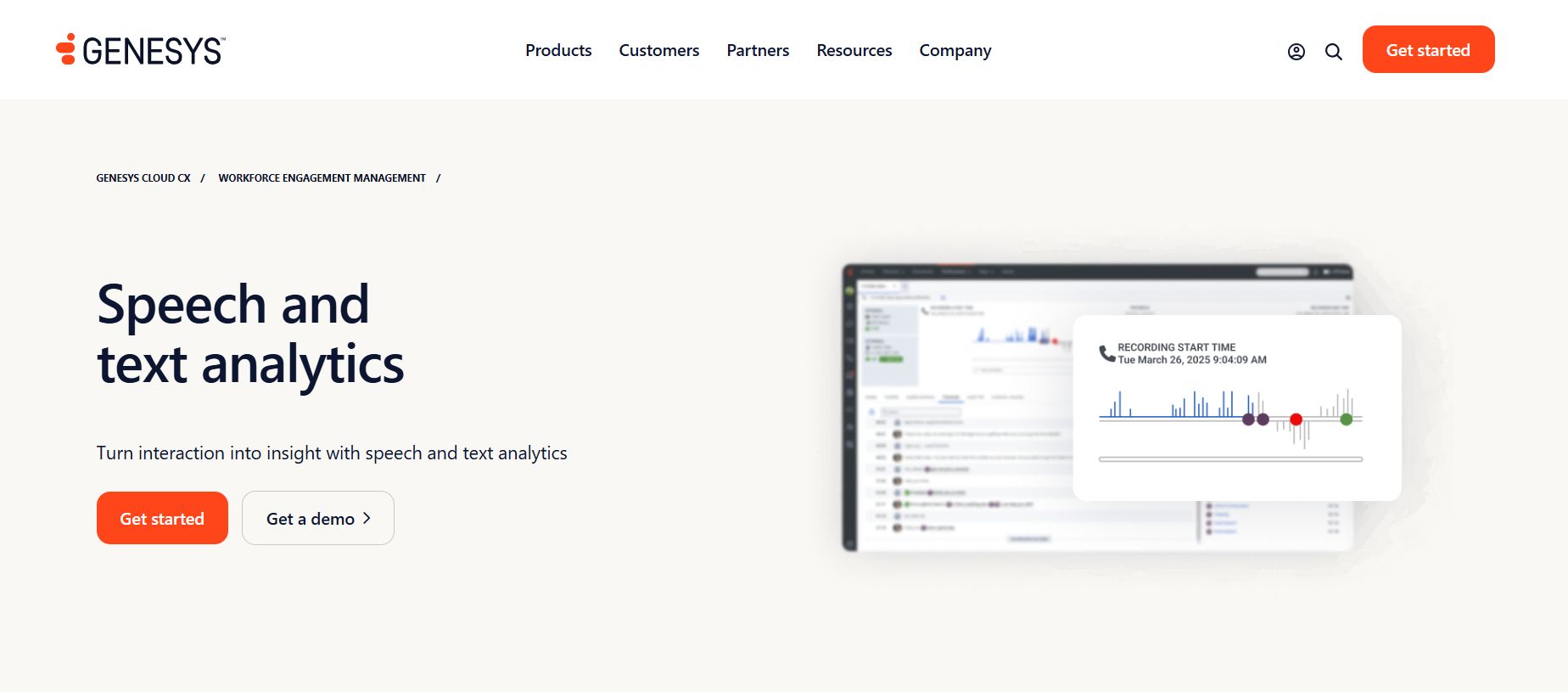
Best for: Genesys Cloud contact centers
Genesys Cloud Speech and Text Analytics fits teams (opens in a new tab) already running service operations on Genesys Cloud. It supports voice transcription, sentiment analysis, topic spotting, and interaction insight for use cases such as agent performance improvement, compliance, customer satisfaction, and business intelligence.
Genesys is useful when analytics should sit close to routing, workforce engagement, customer service operations, and existing Genesys workflows.
Good fit for: Genesys Cloud users, support teams, and contact centers that want native analytics inside their existing platform.
Consideration: Best suited to teams already running Genesys Cloud that want analytics inside that suite.
4. Talkdesk Interaction Analytics
Best for: Fast setup and CX analytics
Talkdesk Interaction Analytics reviews customer conversations to identify topics, sentiment trends, and emerging patterns. As of October 5, 2026, Talkdesk says its interaction analytics (opens in a new tab) reviews conversations for topics, sentiment trends and automation opportunities without setup, helping teams improve customer experience and operational performance.
Talkdesk is useful for CX teams that want faster visibility into customer conversations without building a heavy analytics program from scratch.
Good fit for: Talkdesk users, contact centers, CX teams, and operations teams that want quick topic and sentiment visibility.
Consideration: Best suited to teams already on Talkdesk that want analytics inside their contact center platform.
5. Observe.AI
Best for: QA and coaching workflows
Observe.AI is closely connected to QA, performance monitoring, coaching, and contact center conversation intelligence. As of October 5, 2026, Observe.AI's speech analytics page (opens in a new tab) describes analyzing every call with transcription and conversation intelligence, along with brand-standard monitoring and compliance risk mitigation.
Observe.AI is especially useful for teams that want to evaluate more conversations consistently.
Good fit for: QA teams, coaching teams, BPOs, contact centers, and teams focused on agent performance.
Consideration: Teams looking primarily for broader CX research or VoC program management may prefer a CX-focused analytics platform.
6. Dialpad AI
Best for: Real-time speech insights
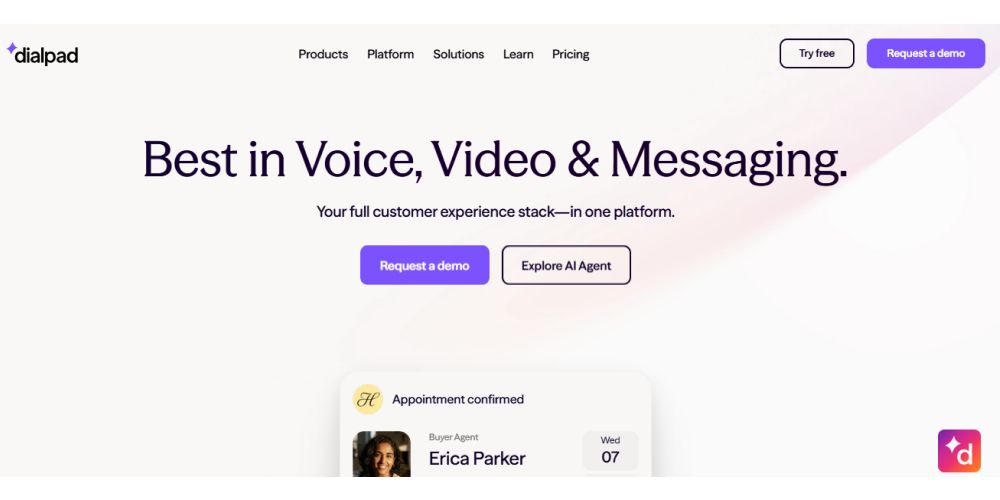
Dialpad AI suits teams that want speech analytics built into live communication workflows. As of October 5, 2026, Dialpad's site (opens in a new tab) lists AI Transcription, AI Scorecards, sentiment analysis and AI Recaps among its AI features.
Dialpad is useful when teams want immediate insights during and after calls, alongside post-call reporting.
Good fit for: Support teams, sales teams, and service teams already using Dialpad for communications.
Consideration: Best suited to teams that want analytics built into the Dialpad platform they already use for calls.
7. Qualtrics Contact Center Analytics
Best for: CX-focused analytics programs
Qualtrics Contact Center Analytics suits organizations that view speech analytics as part of a broader customer experience program.
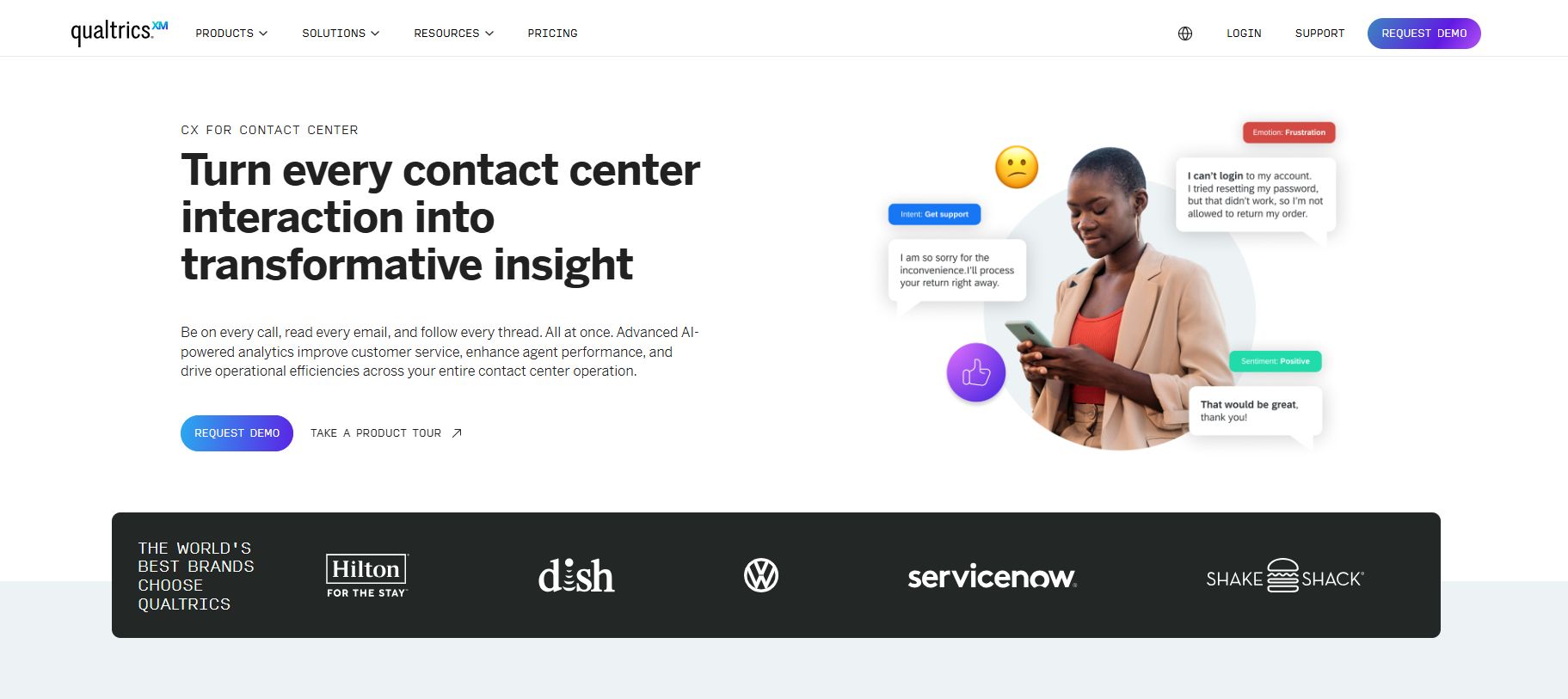
Qualtrics fits teams that want to connect call insights with surveys, feedback, customer journeys, and broader VoC programs. As of October 5, 2026, the Qualtrics customer experience page (opens in a new tab) lists Contact Center Experience Analytics alongside feedback captured across surveys, calls, chat, social, and digital behavior.
Good fit for: CX leaders, VoC teams, service organizations, and brands focused on experience management.
Consideration: Best suited to teams that run speech analytics inside a wider experience management program. Teams buying for contact center QA alone should compare it with the QA-focused tools above.
8. Gong
Best for: Revenue and sales conversation intelligence
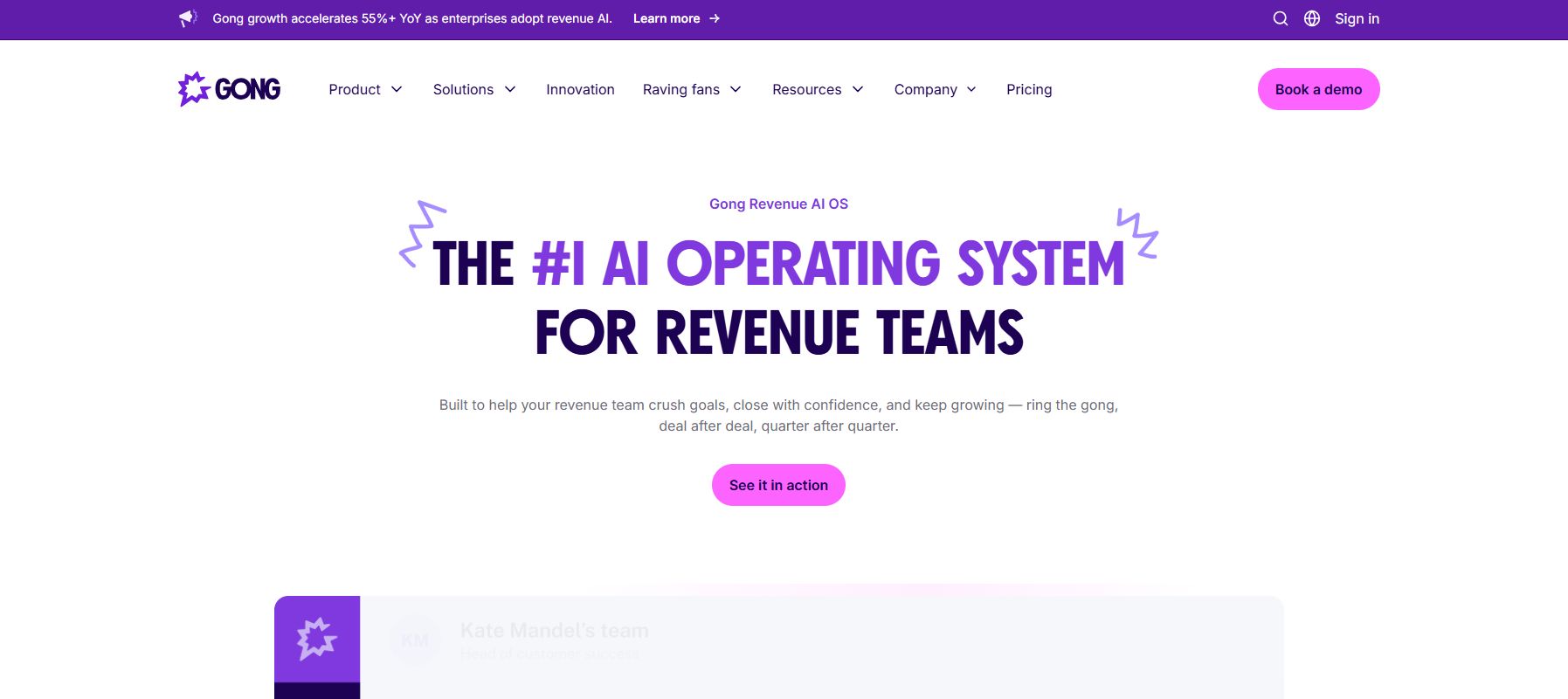
Gong is a revenue intelligence platform built for sales teams. It fits sales and revenue teams that need automatic call recording, transcription, keyword and topic detection, sentiment analysis, talk ratio analysis, deal tracking, and pipeline insights.
Gong helps sales teams understand buyer conversations, objections, deal risks, and revenue signals. As of October 5, 2026, Gong's conversation intelligence page (opens in a new tab) positions the product for revenue teams.
Good fit for: Sales teams, revenue leaders, account executives, sales managers, and customer-facing revenue teams.
Consideration: Best suited to sales teams. Support contact centers with QA, compliance and escalation needs should compare it with the contact center tools above.
9. Invoca
Best for: Marketing and inbound call intelligence
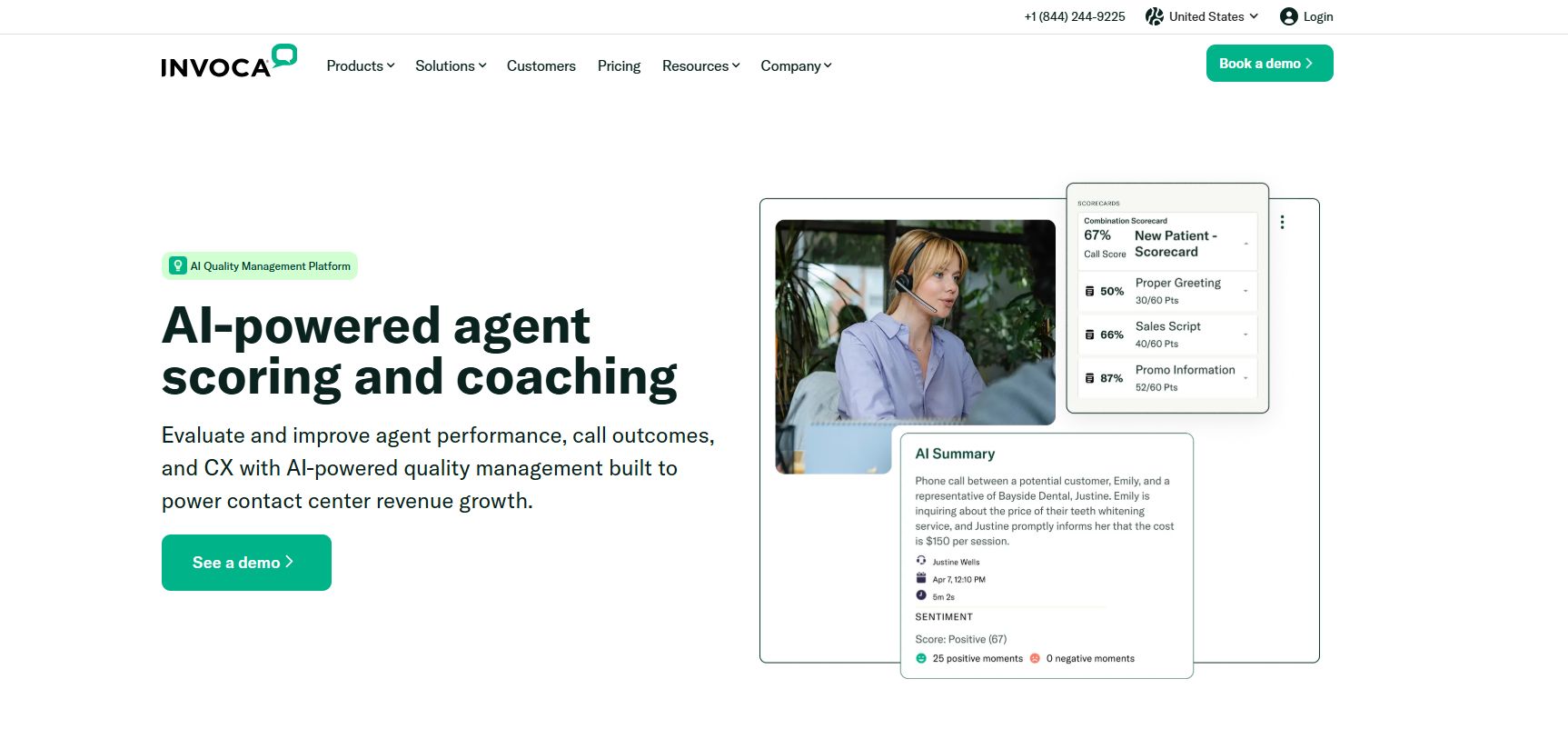
Invoca is built around conversation intelligence for phone calls, marketing attribution, CX, QA, and conversion insights. As of October 5, 2026, Invoca says its conversation intelligence software (opens in a new tab) uses AI to analyze calls, improve CX, automate QA, and drive more leads, sales, and conversions.
Invoca is especially relevant for businesses where inbound phone calls are connected to campaigns, digital journeys, call tracking, and revenue conversion.
Good fit for: Marketing teams, multi-location businesses, inbound sales teams, and performance marketing programs.
Consideration: Best suited to marketing and revenue teams that tie inbound calls to campaigns and conversions.
10. Orvera AI (our product)
Best for: CX operations that want AI agents, Agent Assist and Auto QA on one platform
Orvera fits contact centers (opens in a new tab) that want conversation analytics on the same platform that runs their AI agents and supports their human agents. It combines AI agents across voice, chat and digital channels with Agent Assist, automated summaries, Auto QA, Voice of Customer analysis and reporting.
Orvera AI delivers AI agents for customer experience teams, built on 18+ years of contact-center experience. First-contact resolution runs at roughly 80%, and full deployment typically completes in 3 to 6 weeks. Both figures are Orvera customer averages.
Key strengths include:
- AI agents for inbound and outbound conversations across voice, chat and digital channels
- Call summaries that reduce manual after-call work
- Built-in QA and analytics (opens in a new tab) across AI-handled and human-handled conversations
- Reporting with transcripts, summaries and logs
- Governed escalation when human support is needed
- 500+ integrations across CCaaS, CRM, helpdesk and other business systems
Orvera fits contact centers that want quality and analytics data tied to the conversations their AI agents and human agents handle. Teams can use interaction data to monitor quality, track outcomes, review summaries, identify service patterns, and connect insights with supported customer interaction workflows.
Good fit for: Contact centers, BPOs, customer service teams, CX leaders, and operations teams that want AI agents, Agent Assist, Auto QA and analytics on one platform.
Consideration: Teams that want a speech analytics module inside an existing CCaaS suite should compare Orvera with the CCaaS-native options above.
Quick Comparison Table
Here is a simplified comparison of the speech analytics tools in this guide, showing the buyer each one fits. Use this table as a shortlist guide before reviewing each platform in more detail. Each entry above links to the vendor's own pages, read on October 5, 2026, so confirm the capabilities you need in a demo.
| Tool | Best For |
|---|---|
| Verint Speech Analytics | Large enterprise contact centers |
| NiCE Interaction Analytics | AI-enabled contact center analytics |
| Genesys Cloud Speech And Text Analytics | Genesys Cloud users |
| Talkdesk Interaction Analytics | Fast setup and CX analytics |
| Observe.AI | QA and coaching workflows |
| Dialpad AI | Real-time speech insights |
| Qualtrics Contact Center Analytics | CX and VoC programs |
| Gong | Sales conversation intelligence |
| Invoca | Marketing call intelligence |
| Orvera | AI agents, Agent Assist and QA on one platform |
Best Speech Analytics Software By Use Case
Different teams buy speech analytics software for different reasons. A contact center may need QA and compliance visibility, while a sales team may need deal insights, and a CX team may care more about sentiment and journey friction.
Choosing by use case helps buyers avoid overbuying or selecting a tool that looks strong in demos but does not fit the team's actual operating model.
Best for enterprise contact centers
Verint, NiCE, Genesys and Talkdesk fit large contact centers where analytics needs to sit inside a broader contact center, CX or workforce ecosystem.
Teams buying speech analytics as part of a broader CCaaS, CX or workforce engagement suite should compare these suite-native options with specialized platforms on analytics, QA and reporting depth.
Best for QA and coaching
Observe.AI, Verint and NiCE fit QA and coaching programs, with Observe.AI the closest fit for teams whose main focus is agent performance.
Best for CX and sentiment insights
NiCE, Qualtrics, Talkdesk and Genesys suit CX and sentiment insight programs.
These tools help leaders understand customer friction, sentiment trends, repeat-contact drivers, and the root causes of service issues.
Best for sales conversation intelligence
Gong suits sales conversation intelligence. It is built around revenue conversations, buyer sentiment, topics, talk ratio, deal risk, and pipeline insight.
Invoca is also valuable when inbound calls are connected to campaigns, digital journeys, and conversion outcomes.
Want analytics and AI agents on one platform? Orvera AI runs AI agents across voice, chat and digital channels alongside Agent Assist, automated summaries and Auto QA across AI-handled and human-handled conversations. (opens in a new tab)How To Choose The Right Speech Analytics Software
A practical buying decision should start with the business outcome your industry cares about (opens in a new tab). Some teams need more QA coverage. Others need faster root cause analysis, compliance monitoring, sales coaching, customer sentiment visibility, or analytics connected to AI agents across channels.
If you already use a CCaaS platform
Genesys, Talkdesk, Dialpad and NiCE each offer analytics inside their own contact center platform. Ask every vendor you shortlist to show its analytics running on your current CCaaS, with your own queues and reporting, before you sign.
If your priority is QA and compliance
Look for automated scoring, policy checks, required phrase detection, evaluation workflows, coaching queues, audit trails, and reporting by agent, queue, topic, and risk category.
Observe.AI, Verint and NiCE suit human-agent QA programs.
If your priority is sales insight
Sales teams usually need conversation intelligence (opens in a new tab) more than classic contact center speech analytics.
Gong fits deal-risk tracking, buyer sentiment, objection tracking, sales coaching, and pipeline visibility. Invoca is better when inbound calls are connected to campaigns and conversion journeys.
If you need analytics connected to AI agents across channels
Orvera AI (our product) runs analytics on the same platform as its AI agents and Agent Assist, so the QA score, the transcript and the summary for a conversation sit in one place.
Common Mistakes To Avoid When Buying Speech Analytics Software
Speech analytics can create strong operational value, but only when teams know how they will use the insights. Many buying mistakes happen when teams weigh transcription above workflow fit, reporting depth, ownership, and action after implementation.
Choosing based only on transcription
Transcription matters, but it is only the first layer, so score the other four criteria above with the same weight.
Ignoring workflow fit
A platform may produce insights, but the value depends on whether supervisors, agents, QA teams, compliance teams, and leaders can use them in daily workflows.
Overlooking reporting depth
Basic dashboards drawn from a single system may not be enough. Mature teams often need reporting by topic, queue, agent, sentiment, compliance risk, escalation, call outcome, repeat contact, and customer effort.
Forgetting ownership after launch
Speech analytics needs ongoing management. Someone must review trends, update categories, refine scorecards, align insights with business goals, and turn findings into action.
Treating speech analytics as the final step
Speech analytics shows what is happening. Operational improvement comes when teams use those insights to improve coaching, routing, workflow design, escalation, automation, and resolution quality.
Conclusion
The best speech analytics software in 2026 depends on your operating model, customer interaction volume, team structure, and business goals. Dedicated analytics platforms are useful for deep insight, while broader suites can work well when analytics needs to stay close to existing contact center workflows.
The suite-native platforms suit teams already inside those ecosystems, and Observe.AI suits QA and coaching programs. Gong and Invoca are better suited for sales and marketing-focused conversation intelligence. Orvera AI (our product) fits CX operations that want AI agents, Agent Assist and Auto QA on one platform.
Shortlist two or three platforms against the criteria above and run each one on a week of your own recorded calls before you sign.
Frequently asked questions
It depends on the use case. Verint, NiCE, Genesys, Talkdesk and Observe.AI suit contact centers, Gong fits sales teams and Invoca fits marketing-driven call programs. Orvera AI fits CX operations that want AI agents, Agent Assist and Auto QA on one platform.
The right choice depends on your priority: QA and coaching (Observe.AI, Verint, NiCE), analytics inside your CCaaS (Genesys, Talkdesk, NiCE), CX insight (Qualtrics), or analytics on the same platform as your AI agents (Orvera AI, our product).
Strong speech analytics software should include accurate transcription, sentiment analysis, topic detection, QA scoring, compliance monitoring, searchable records, reporting, coaching workflows, and integration with contact center systems.
Speech analytics typically focuses on voice calls, transcription, sentiment analysis, topics, and contact center insights. Conversation intelligence is broader and may include sales calls, meetings, emails, CRM activity, deal insights, marketing attribution, and revenue signals.
Choose speech analytics when your main need is to understand conversations after they happen. Choose AI voice automation when your team also wants to resolve customer interactions, automate supported workflows, generate summaries, monitor QA, and track outcomes during live customer service operations.
Topic spotting, or topic detection, identifies which subjects come up across calls, such as billing, refunds, claims, delivery updates or cancellations, so teams can see which topics are driving volume. In sales calls, it shows which subjects buyers raise most often.
Written by
Anindita Majumder
Anindita Majumder is a communications professional with nearly four years of experience in public relations, corporate communications, and journalism. She creates content that helps brands communicate their vision, products, and expertise through press releases, thought leadership, and editorial pieces. Outside of work, she is a vocalist, which keeps her creativity flowing.